
Occupation of Earth
2040–2065
Your Guides to the Stars
Address to the Public of Earth
February 11, 2051
Proud greetings to all listening to this broadcast. For those who do not know me, my name is Deroza. On behalf of all of the Warriors of the Korzof-Moti of the Bactara, I will begin by thanking the management of the nations of Earth for their cooperation. It is with their help that the transition to the new age of governance is proceeding smoothly and peacefully. We are presenting those leaders whose support has been particularly instrumental with an award at a ceremony next week-we hope as many as possible will be in attendance.
We may now begin the process of preparing your civilization for something greater. In time, we hope that the improvements we present will allow you to join the greater community of worlds that exists beyond your solar system. To this end, we would like to present several initiatives.
First, we would like to reduce violence by reducing the means for violence. Many of your nations have done so already, by restricting the availability of firearms. We would encourage governments to continue this trend, and will offer our assistance in enforcing such restrictions. Civilian firearms have no place in a peaceful society, and a society that is not peaceful has no place among the stars.
We have some concerns with the state of your medical system. Specifically, in terms of prevention of disease, there are improvements to be made, and we intend to work with your scientists to make them. Our first order of business should be to recognize the danger of mandatory vaccinations. We have seen in recent years several outbreaks of vaccination poisoning, in one case causing an outbreak of the very disease the vaccines were meant to protect against. Many parents have decried the requirement of putting their children through this danger. Thus, we are please to announce that, effective immediately, vaccinations are no longer required for school attendance in any nation, as they have been among a number of nations. Such requirements have no place in a free society, and a society that is not free has no place among the stars.
Finally, the preservation of your world must receive some attention. For over a century the Human race has been destroying the environment of Earth through the usage of fossil fuels, specifically coal and oil. While oil usage has declined as a fuel source in the last several decades, still nearly half of your vehicles use it as their primary fuel supply. In addition, burning coal supplies more electricity than any other source. If you are unable to build your society in a way that you can maintain your own planet, how will you ever be worthy of living on any other planet? Pollution of this magnitude has no place in a clean society, and a society that is not clean has no place among the stars.
As such, we will be pushing your power generation and transportation industries towards better, cleaner power sources. Within the next five years, we believe we will be able to replace all petroleum-fueled vehicles still on the roads, and on a similar timetable, we intend to cease mining new sources of coal; the power plants will be replaced as their fuel source runs out. These and other initiatives will help you to improve your own standing, and it is our hope that within a decade or two, the Human society will be ready to take its rightful place among the stars.
This live translated broadcast has been brought to you by Extraterrestrial-Earth Relations Board. We thank you for your support.
The Story of the Age
In the midst of an age of technology, of augmented reality, of economic despair, and of rampant organized crime, the aliens descended on Earth. There was barely a fight when they arrived in orbit in 2050; Earth's leaders rapidly surrendered when it was clear that what few weapons we had in orbit were either ineffective or disabled. The occupation had begun.
The invaders, who called themselves Bactarans, quickly went to work curtailing the freedoms of the people of Earth. The organized crime cartels, once the bane of society, would begin fighting against the occupiers—and soon, fighting for the very survival of the Human race.
Playing an Occupation Campaign
If you are playing your first Afterverse campaign, the Occupation Era will probably be your first stop. The year 2055 is a good time to begin new players in the campaign—the Occupation is well underway, most of the Cultures of the era make sense as player characters, yet gameplay options are still limited enough that not every rule needs to be learned right away. Once your players are familiar with the rules, the campaign can time skip to a future era, learning the new rules relevant to that time. If your players are not likely to have trouble being inundated with game mechanics and history, they may prefer to start in the more varied Expansion Era or the more exciting Orion War.
The Occupation is, compared to all other eras, small in scope and limited in options. Humans are (mostly) the only playable species; genetic enhancements are somewhere between unheard of and impossible; there's a relatively small selection of cybernetics; and space travel is rare. These limitations are also the biggest appeal of the era: with fewer options to learn about, it can be easier to dive into the setting. Like any low-level roleplaying campaign, a Rebellion campaign must therefore focus on things like character development, relationships, and story development.
Ultimately, the Occupation era (and the even the few years before it) can also be used to explore the history of the setting, almost like a prequel. Many things happen in this era that impact the future of the world in deep ways; for example, the racial biases in the Redland systems a generation later all stem from the way the rebellion unfolds here on Earth, and events like the Palo Alto bombing have direct impact on the progression of technology for more than a century to come.
Adventures
Covert Ops
2043–2050
The first Bactarans to come to Earth arrive in 2043, in secret. They launched a single carrier, containing six smaller landing craft. The carrier itself was barely a shell, with no life support of its own, but it did contain the ability to return to the warp bridge and report back to the Moti on the Bactaran homeworld. Its tiny mass (and small propulsion) made it stealthy enough that its return to the warp bridge barely registered on Earth’s telescopes as anything more than an error.
In the meantime, the six smaller Mokado landers have deployed small teams of agents to various locations around Earth. One crash lands in Texas (which is later found by Curt Redland in 2062, and gets cannibalized to become the Son of a Bitch and the Last Ditch). The others may have landed anywhere.
Although their existence didn't become public knowledge for some time, these agents had particular missions. They landed in the Americas, Europe, and Asia, observing the locals, learning customs and languages, and finding weaknesses. At least one agent was deep into looking for methods of biological warfare, but the plan was foiled before it could come to fruition. Ultimately, the presence of these agents is kept a secret until long after the real invasion force arrives, so anyone that becomes aware of Bactarans during this time must be kept quiet, blackmailed, or killed before word gets out.
Gang Wars
2040–2058
There are four major gangs or cartels vying for control of the various avenues of illicit income, including contraband, protection rackets, and other schemes.
Union Underground: The Union Underground is the best known, especially later, as it becomes the de facto resistance leader and ultimately plays the most significant role in history; but it’s actually the smallest and youngest (having really begun only in 2036) of the four cartels. The UU is the most likely to be friendly with player characters. The UU is based in Austin, TX, initially headquartered in (and named after) what was once a student entertainment center near what used to be the University of Texas. This headquarters is destroyed in 2056, but the gang keeps the name.
Juarez Cartel: The Juarez cartel is an old drug cartel, and dominant in the southern US, with an extensive network into South America which supplies all manner of drugs and contraband. They begin manufacturing weapons in 2054 to compensate for the manufacturing dearth imposed by the Korzof-Moti, and become the premiere supplier for most of the criminal underworld.
Yakuza: The Yakuza is a Japanese cartel, of course. They do not get directly involved with the resistance (they treat the occupation much like any other kind of authority), but may be useful as contacts thanks to their wide array of abilities, connections, and networks.
Ragers: A biker gang known for smuggling. When gasoline vehicles (including motorcycles) are banned in 2056, they turn their efforts to countering the electronic surveillance and control systems embedded in electric vehicles, becoming the premiere black market vehicle source.
The gang wars come to a head in 2057 when the UU starts manufacturing its own weapons to compete with the Juarez Cartel. Juarez makes multiple attempts to sabotage the UU's production lines, and the UU responds in kind; the conflict escalates. Both gangs are left in bad shape, but the Juarez is worse off. The war kills most of the "old guard" of the UU, leaving the younger members in a position of power that would be needed to start the resistance proper; by 2058, the UU is a bona fide resistance movement. The gang war is crucial to setting the stage for this.
Survivalist Resistance
2050–2065
Early on, the resistance is composed primarily of doomsday preppers telling anyone who would listen that they were right all along. During this time, the resistance is not well organized and is focused more on survival and stealth than on fighting back. Many large resistance organizations are efficiently quashed almost immediately after the Fast War, leaving in their wake hundreds of small, independent cells. The largest of these cells top out at about 25-30 members, and most of them are holed up in hidden enclaves in the rural and wilderness areas of continents such as North America.
These adventures are likely to focus on establishing enclaves in the wilderness, raiding Bactaran-managed settlements for supplies, evading capture and detection, and gathering information. Sometimes cells fight amongst each other for supplies, food, equipment, and in the case of the least reputable of cells, women. Eventually the Independent Resistance is going to divide into the fighters and the survivors—the survivors wanting simply to be left alone, usually with their families, while the fighters leave to join the Union Underground as that movement gains momentum.
The Union Underground Resistance
2058–2065
In 2058, the Union Underground gang (based in Texas) destroys a Bactaran launch site in Mexico, often seen as the first act of the organization as a full fledged resistance movement, albeit still one supported by its smuggling and drug cash flows. Small independent operations still exist, but over the next few years most of the independent ones die out, merging into either UU or one of the other cartels, which slowly begin to take on anti-collaborator jobs. The UU resistance grows huge with the Austin rally, bringing in all sorts of people for a more open war.
Being a part of the resistance means fighting the Bactarans any opportunity you get. Destroying their bases, freeing Bactaran slaves, disrupting supply lines, blackmailing collaborators into being informants for the resistance, and and endless variety of other activities. Several times throughout the era, Bactarans have some plan (often involving biological weapons) to kill a lot of people that needs to be thwarted. All this doesn’t come free, and so resistance agents often have to run more profitable smuggling errands for their respective gangs and cartels.
Many among the resistance—both the UU-based resistance and the survivalists—are not exactly model citizens, and few are good people. Most of them came from organized crime, and all are outlaws. New leadership following the death of Travers improved this situation considerably, but the challenges of working alongside gangbangers remain a struggle through the entire occupation.
Collaborators
2043–2065
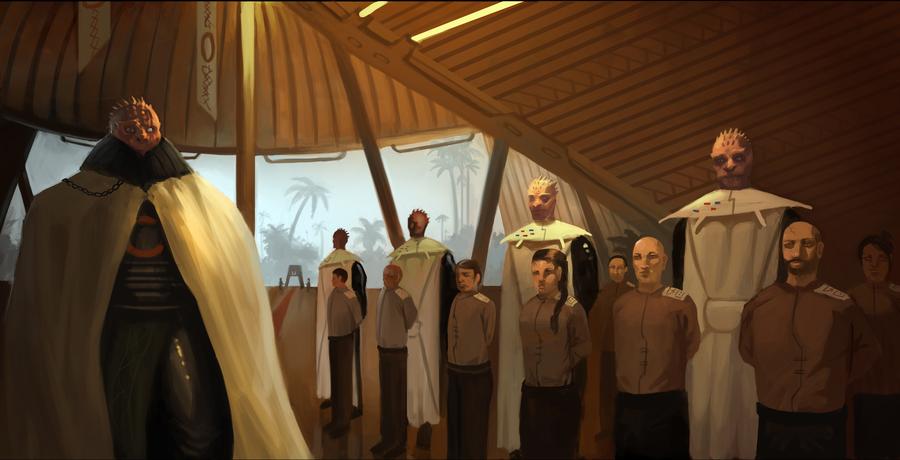
As the Bactarans are outsiders, they rely on collaborators to keep them apprised of culture and events. As the Bactarans are few in number, they also rely on collaborators to enforce their rule outside of their direct influence. Since Bactarans can’t pass for Human, collaborators are required for most covert operations. Many collaborators live double lives, enabling them to function in less cooperative areas. Collaborators live nice, cushy lives for most of the Occupation era, but there'll be hell to pay in the next era once the PCEG courts come around.
A collaborator-centric game could offer interesting possibilities, especially for experienced players who relish a chance to see the world from a villainous or self centered perspective. Their jobs are to serve as advisers and spies for the Bactarans. They weed out insurgents and resistance, seek out problems for the Bactarans, and so on. Occasionally, the authorities (pre-2050) or the resistance (post-2050) will be the offenders, and the collaborators will have to protect their masters. If your gaming group likes the most toys, collaborators have very high Income and access to much of both Bactaran and Human technology.
Just as the resistance is not composed entirely of good people, the collaborators are not all bad. Many joined the cause because their lives would be in danger if they did not; others did it to provide protection for their families. There are many, especially early in the Occupation, that genuinely believe that the Korzof-Moti have Humanity's best interests at heart, and that the resistance is composed of low-lifes and criminals—the latter of which happens to be true. A good Collaborator campaign will explore the reasons each character does what he does.
Slave Labor
2051–2065
Almost as soon as they arrived, Bactarans began to set up slave labor camps in isolated areas, primarily close to the equator. Part of these camps’ purpose is to resupply their orbital ships; manufacturing and delivering rocket parts, sustenance, and ammunition is a full time job. Not all slaves take it so readily, though. The slave labor camps get connected quickly with various resistance cells. Until 2058, the slave camps offered the single biggest source of resistance against the Bactarans, but being small and underskilled operations, the vast majority of them get stomped out fairly quickly, with the exception of a few South American camps.
The first camps are established almost immediately in South America (Columbia and Brazil primarily) and Kenya. The Juarez Cartel didn’t take kindly to the presence of the camps in South America, and by 2059 those camps prove to be more trouble for the Bactarans than they’re worth; those camps are moved to Mexico, where they are frequent targets for liberation by the UU. Mexico and Africa are the main areas for slave camps for the remainder of the Occupation.
Slave focused adventures often involve escaping from the labor camps (or helping others to do so), sabotaging shipments and gear intended for the battleships, and using the slave trade as a means of information dealing. Most escaped slaves join the resistance, so a slave campaign can easily parlay into a Resistance campaign.
Isolated Colonies
2045–2065
Though tiny in number, the very first pioneers into the solar system left prior to the Bactaran invasion of Earth. These scientists and explorers are working to establish the practices that would later enable the colonization of the system—in situ resource utilization and manufacturing—when the Bactarans invade Earth. None of these "colonies" are properly equipped to be self sustaining in the long term. Once the occupation begins, resupply missions to these colonies are halted, and indeed most of them die out within a few years of the beginning of the occupation. A few of the colonies actually return to the occupied Earth, preferring the dangers of fighting the oppressors to the certain death of remaining isolated. Of these colonies, only the largest colony on Mars survives long enough to see the end of the occupation and get a badly needed resupply of vital parts, nutrients, vitamins, and medicines.
Locations
Occupied Earth
There are a few major developments in the 21st century before the Bactarans show up. The most ubiquitous of these is augmented reality. This always-on virtual layer of reality, overlaying the digital world on top of the real one, changes the way we use computers and information. Augmented reality is visible through glasses and other eyewear, worn by nearly everyone in the first world.
Second, and more importantly, is the advent of self-driving cars, which are introduced in the mid-2010s and become nearly ubiquitous within a decade, largely in the form of automated taxis, which are before long cheaper and faster than buses (putting buses out of business in general). More importantly, SDC’s make it possible for younger and younger people to be more independent.
Combined with AR—and the ability to access and view any information at any time, including during commutes—the public education system begins falling apart, slowly getting replaced by virtual classrooms once children get out of primary school—virtual classrooms anyone can attend at any time. Education becomes a lifelong process, happening in the “cracks” of everyone’s life, rather than something to dedicate one's life to for a number of years at the beginning.
As a result, beginning in the 2030’s, educational institutions based on physical locations begin to crumble, and what used to be college campuses rapidly deteriorate. These “college ghettos” are where most of the gang turf in the mid-21st century lies. Most notably, the Union Underground springs up in the abandoned University of Texas campus (headquartered in an out-of-business bowling alley of the same name). This is the gang that ultimately becomes the area’s resistance fighters.
Contraband
Hoping to exert more and more control, the Korzof-Moti continually adds new items to its ban list. The gangs move quickly to supply each item on the contraband list, providing for a need at a tidy profit, while laying the groundwork to fight against the Korzof-Moti directly.
Firearms: (from 2050) Immediately upon beginning the occupation, the Korzof-Moti begin to gather all firearms and most other kinds of weapons. In fact, this was a smaller task than it may seem; most nations had already banned or heavily restricted personal firearm ownership. America had been the last holdout, but in 2045 had passed the 29th Amendment, repealing the 2nd Amendment, followed immediately by the SAFE Act banning personal possession of all firearms except "heritage weapons" (defined as weapons that were more than 20 years old and had been owned by at least 2 different family members). In 2050, these heritage weapons were collected and destroyed by the Bactarans, and in 2051 most other weapons followed. By the beginning of 2052, among Humans only law enforcement were permitted to have any weapons at all, and even they were generally only permitted nonlethals. Illegal weapons shipments were not deterred by these actions, though manufacturing was cut off; it is in 2054 that the Juarez Cartel begins covert manufacturing of new weapons, joined in 2057 by the Union Underground. Attempts to cut off each others' weapon sources drive a wedge between the gangs which leads to the UU-Juarez gang war in 2057, which leaves the Juarez almost completely dismantled and the UU hurting, setting the stage for the new, young, more resistance ready breed of gangsters to take over the UU.
Narcotics & Other Recreational Drugs: (from 2050) By the mid-21st century, most first world nations had switched from criminalization of drug use to treating addiction as a medical problem—addicts were forcibly put into rehab when caught, but earned no criminal record once they completed the course. (Softer or less addictive drugs, such as marijuana and LSD, were often entirely legal.) The Bactarans reversed this trend, enacting policies to lock up drug users for long sentences, with police often cutting plea bargains to "trade up" users and small time dealers for the next bigger fish. This proved to be useful to the Bactarans by way of flushing out criminal smuggling networks and routes, but ultimately may have been counter-productive in some ways by increasing the cashflow of the same criminals.
Vaccines: (from 2053) The Bactarans launched a propoganda campaign in 2051, smearing vaccines as poisonous. This campaign drew upon an early 21st-century anti-vaccination movement that had by this point been widely discredited; however, with surreptitious control over the supply line, the Bactarans were able to actually taint the vaccine supply, causing a number of widely varied health issues among children receiving them. In late 2051 vaccines are no longer mandatory for children attending public schools; by 2053 laws banning almost all vaccines are enacted. At this point, many pediatricians and drug manufacturers join the UU, bolstering the prevalence of street docs.
Three major pandemics and many smaller ones occur in the years following the ban on vaccines, killing over 1 billion people between them, mostly children under 10. A child born in 2052 had only a 10% chance of surviving through the end of the Occupation, thanks mostly to these outbreaks. Ultimately, in terms of their mission to eradicate Humanity, the banning of vaccines proved to be one of the most effective strategies pursued during the occupation. By 2065, the only families that had not lost a child were those who had gone to the Underground to get illicit vaccinations for their children. For comparison: The world population in 2050 is 9.6 billion, and reduced to 3.4 billion by 2065.
| Year | Disease | Death Toll |
|---|---|---|
| 2056 | Diphtheria | 10 million |
| 2059 | Pertussus | 350 million |
| 2063 | Measles | 550 million |
Oil/Gasoline & Combustion Engines: (from 2056) Gas powered cars are rare from the late 2030's onward (replaced by all-electric vehicles), but heavy industry and large scale shipping are still using gas powered trucks into the 2050's, and gas never went out of fashion in motorcycles. Citing environmental concerns, the Bactarans issue a decree in 2053 that all gas powered vehicles were to be destroyed by 2056, with oil production being halted by the same year. Costs to ship items long-distance skyrocketed, and with most electric vehicles having a high degree of computer control, citizens (and outlaws) had fewer options in terms of vehicles that the Bactarans would be unable to remotely disable. Unlike some contraband, there's little the gangs could do to replace the lost production of gasoline, as oil pumps and refineries are difficult to hide from orbital weaponry and scanners, but they are able to start a black market of electric vehicles protected against EMP's, electric shock, and computer control.
Banned Books & Media: (Various) Bactarans ban various books, movies, music, and other forms of media throughout the occupation. Most works promoting rebellion, anarchy, and libertarianism are banned early on—though, notably, restrictions on these works are relaxed around 2059. As other items become contraband, works relating to them are banned as well (for example, many medical texts supporting the efficacy of vaccines are banned in advance of outlawing the vaccines themselves, with works regarding the production of vaccines following shortly after the ban).
Mass Driver Razings
With complete domination of Earth orbit, the Korzof-Moti alone have the ability to drop mass drivers—rods of simple materials that strike the ground at orbital velocities, delivering the explosive force of a nuclear bomb. They would routinely use these as means to exterminate resistance cells (with heavy civilian casualties, not that they cared). In total, over the course of the occupation, over 200 million people would be killed by mass driver strikes. A few of the most noteworthy strikes are as follows:
| Year | Location | Casualties | Target |
|---|---|---|---|
| 2050 | Many | 70 million | Initial invasion |
| 2052 | Moscow, Russia | 2.4 million | Military resistance |
| 2054 | Tainjin, China | 4 million | Resistance cell |
| 2057 | Brooklyn, NY | 2 million | Resistance cell |
| 2060 | Various Western cities | 6 million | Major Survivalist Resistance cells |
| 2062 | Austin, TX | 1.4 million | UU resistance headquarters |
Cultures
Earth Public (2000-2050)
| MFR | MED | CPU | WEP | PWR | PRP | PHY |
|---|---|---|---|---|---|---|
| 4 | 4 | 6 | 5 | 5 | 5 | 5 |
Though it is unlikely that characters in this Culture will actually be used, there is likely to be gear left over from this time throughout the Occupation. When using this gear, the tech levels here should be helpful.
Earth Public

| MFR | MED | CPU | WEP | PWR | PRP | PHY |
|---|---|---|---|---|---|---|
| 4 | 4 | 7 | 4 | 5 | 5 | 5 |
Base Income: 400 (Dollar ($)) · Base Price: 1
Universal Motivations: Achievement, Attachments, Romance
Universal Skills: Computer 2
Species: Human · Languages: Based on locations
Most Humans fall under this Culture. Though occupied, most peoples' day to day lives carry on; they have the same jobs, make the same friends. However, a strict curfew is enforced, and certain items are placed on a contraband list, more and more every year. The Base Income varies from country to country and drops gradually over the course of the occupation. It is up to the GM where a particular country at a particular time falls in this range.
Collaborator

| MFR | MED | CPU | WEP | PWR | PRP | PHY |
|---|---|---|---|---|---|---|
| 4 | 4 | 7 | 6 | 5 | 5 | 5 |
Base Income: 2000 (Dollar ($)) · Base Price: 1
Universal Motivations: Attachments, Promotion (Moti Occupation), Romance
Universal Interests: Bactarans
Universal Skills: Influence 2
Species: Human · Languages: English or Chinese
Any Human that is one of the Bactarans’ “trusted” Humans falls under this Culture. They get more and more insular as the occupation wears on, and other Humans are trusted less and less. There is a blurred line between collaborators and any of the other Human Cultures. Some collaborators used to be a part of other Cultures before they were blackmailed or threatened into collaborating. Some collaborators are slaves that worked their way up, often holding the belief that the Bactarans were saving Humanity from its own folly. In between, there are levels of high ranking slaves and some double agent public citizens, and it is encouraged to allow a blurring of the Cultures.
Gang/Resistance
| MFR | MED | CPU | WEP | PWR | PRP | PHY |
|---|---|---|---|---|---|---|
| 4 | 4 | 7 | 5 | 4 | 4 | 4 |
Base Income: 600 (Dollar ($)) · Base Price: 1
Universal Motivations: Promotion (Resistance/gang), Attachments, Romance, Vengeance
Universal Interests: Criminal Underworld
Universal Skills: Either Melee or Ranged Combat 2
Species: Human · Languages: English or Spanish
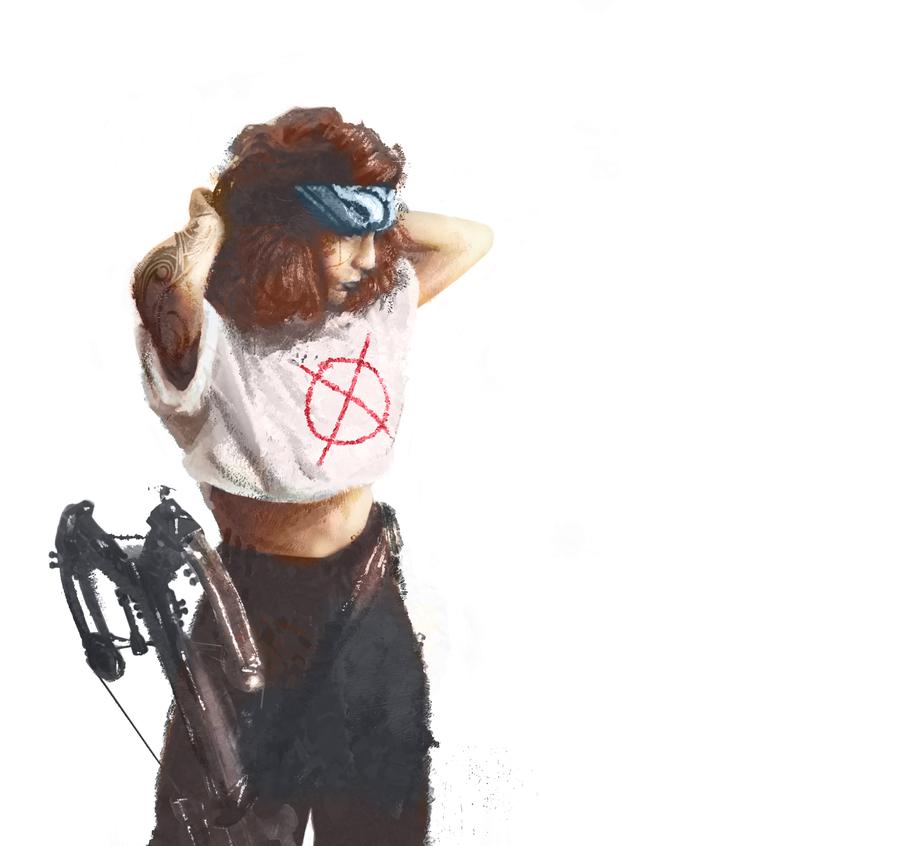
The line between organized crime and the resistance is so blurry that they are effectively the same thing. In the later years, the resistance was funded in no small part by income from smuggling and various illicit trades that were borne from the drug trade before the occupation. The strongest resistance grows in Texas, fueled by the Union Underground and freed slaves from Mexico.
Survivalists
| MFR | MED | CPU | WEP | PWR | PRP | PHY |
|---|---|---|---|---|---|---|
| 3 | 3 | 5 | 5 | 4 | 4 | 4 |
Base Income: 200 (Dollar ($)) · Base Price: 0.5
Universal Motivations: Attachments, Achievement, Missionary (Anarchy), Vengeance
Universal Interests: Firearms
Universal Skills: Survival 1, Crafting 1
Species: Human · Languages: English (mostly)
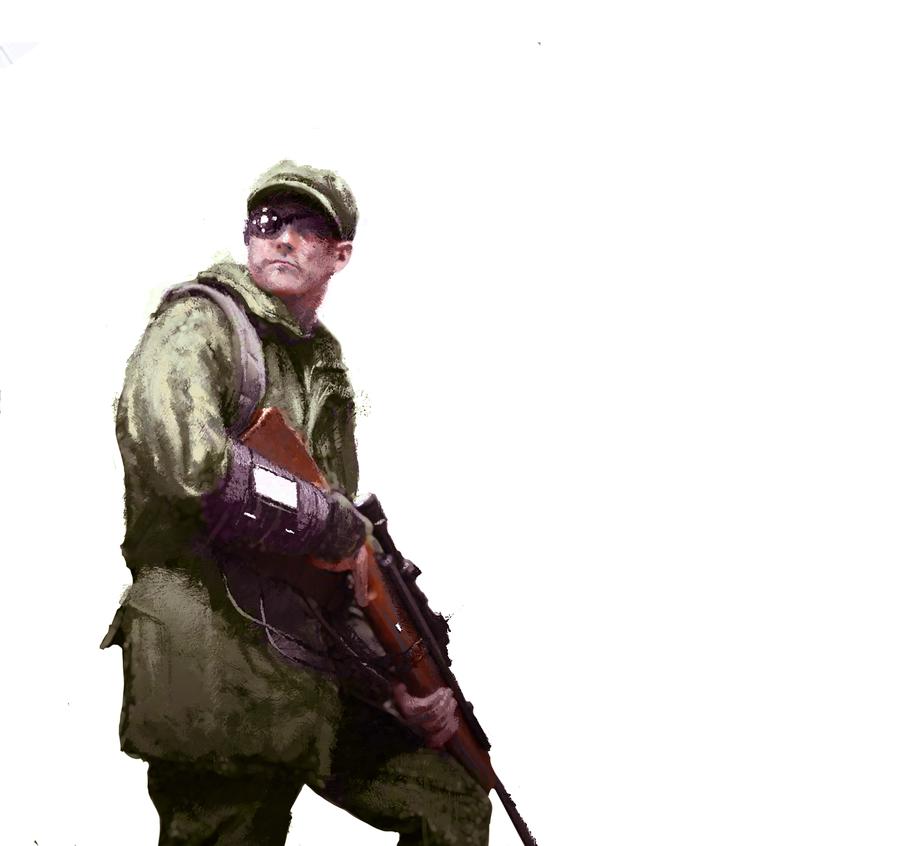
This part of the resistance consists of doomsday preppers, busy telling everyone that they were right all along. These groups live in the remote countryside, trying to live a life apart. Their resistance is not well organized and is focused more on survival and stealth than on fighting back. The largest of these cells top out at about 25-30 members, and most of them are holed up in hidden enclaves in the rural and wilderness areas, most prominently in the open West of North America. The survivalists' world is one of anarchy and self-reliance. There is no governing body and no real law. Each small cell acts like a tiny feudal city-state, often composed of a single extended family. The survivalists tend to be socially regressive.
Equator Slave
| MFR | MED | CPU | WEP | PWR | PRP | PHY |
|---|---|---|---|---|---|---|
| 4 | 3 | 4 | 3 | 5 | 4 | 3 |
Base Income: 200 (Dollar ($)) · Base Price: 0.5
Universal Motivations: Attachments, Broken Will
Universal Skills: Crafting 1
Species: Human · Languages: Spanish (Mexico, Columbia),Portuguese (Brazil), or English/Swahili (Kenya)
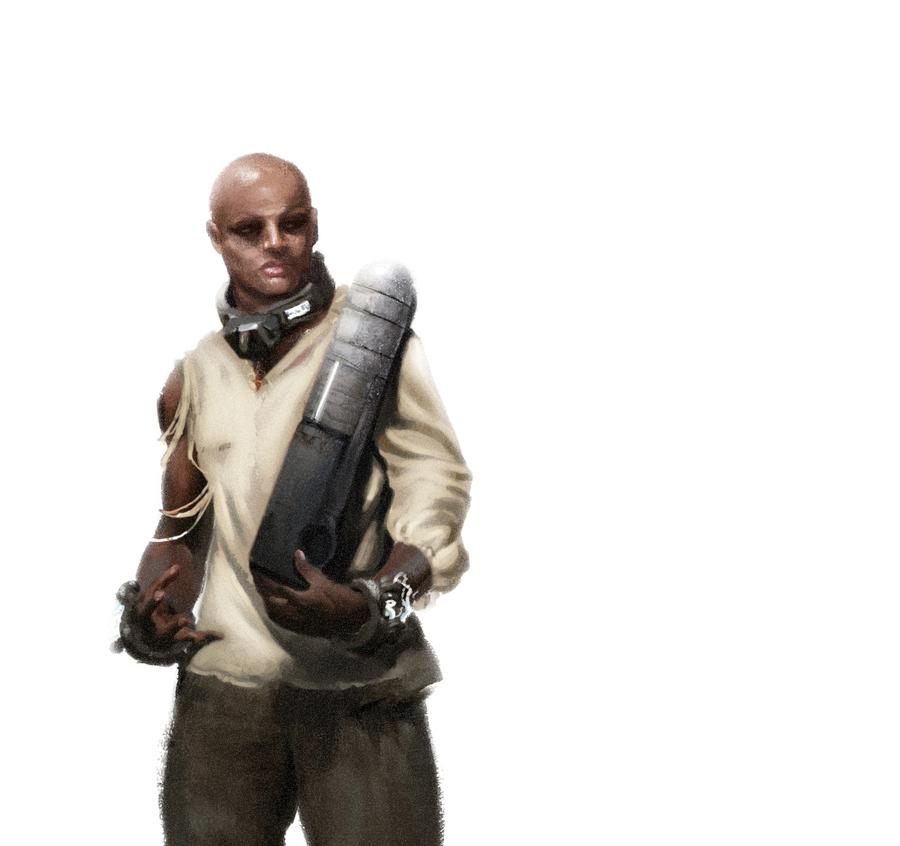
Certain populations have been subjugated by the Korzof-Moti. These slave populations are mostly kept secret (or at least quiet) and isolated in their particular areas of the world, mostly near the equator (for convenience of launching slave built and slave loaded payloads); as a result of their location, the nickname "Equator Slaves" gradually becomes widely used throughout the resistance. Colombia and Kenya have the largest populations of Slaves for most of the occupation; later on, Mexico gains slave camps as the Colombian camps become more trouble than they’re worth, though the UU begins to make slave-freeing runs part of its routine there, too. Not all slaves are engaged in manual labor. Many are, but the Bactarans need engineers as well, and occasionally some are able to leave the camps to become negotiators and agents. They use the promise of such advancement to drive slaves into working hard for them. Most of the major projects involve resupplying Bactarans; rockets and spacecraft are constructed to supply and refuel the Bactaran fleet in orbit and a fuel mine is constructed on the lunar surface. They are generally not called "slaves"–more often "wards" or "protectees"–and the Bactarans' manipulation skills are not to be trifled with. The Bactarans often have misinformation spread throughout the slave camps about the rest of the world, leading to a common perception that the Bactarans are protecting the slaves more than the reality. Any negative stories about the outside world are emphasized. The end result is that most slaves believe that they are better off as slaves than they would be otherwise.
Korzof-Moti Occupier

| MFR | MED | CPU | WEP | PWR | PRP | PHY |
|---|---|---|---|---|---|---|
| 6 | 4 | 4* | 6 | 4 | 7 | 4 |
Base Income: 3000 (Dollar ($)) · Base Price: 2
Universal Motivations: Achievement, Vengeance, Manipulator
Universal Qualities: Freakish (BOD), Short Fuse
Universal Skills: Melee Combat 2; Ranged Combat 1; Influence 1
Species: Bactaran · Languages: Kortona; English or Chinese as Second language
The Korzof-Moti is a unique house of Bactarans, almost a subspecies unto themselves; they were created with several generations of selective breeding among particularly aggressive soldiers. As a result, they are particularly violent, much more so than the average Bactaran. The occupation has an ultimate goal. The nation on Bactara from which the Korzof-Moti come was devastated generations ago, and poverty and famine run rampant. The occupying force’s mission is to make a world that Bactarans, especially the other Korzof-Moti, can colonize–but knowing that the Bactaran Republic would never permit colonization of an inhabited world, they want to drive humanity to extinction while making it appear that humanity destroyed itself, and while leaving the world habitable for themselves. As time goes on and various schemes to accomplish these objectives are foiled, General Deroza’s patience wears thin and they begin to just order large numbers of people killed outright, until the Moti are finally stopped by both the resistance on the ground and intervention from The Republic and the Vorans.
Tech notes: * The Korzof-Moti often use computer tech provided by Collaborators to offset their lackluster technology, though they avoid such tech for their critical operations.
Mars Colonist
| MFR | MED | CPU | WEP | PWR | PRP | PHY |
|---|---|---|---|---|---|---|
| 4 | 4 | 6 | 5 | 5 | 5 | 5 |
Base Income: 200 (Dollar ($)) · Base Price: 3
Universal Motivations: Achievement, Attachments, Romance
Universal Interests: Tinkering
Universal Skills: Survival 2, Crafting 2
Species: Human · Languages: English
Though campaigns will be unlikely to be set on the Mars colony during this time, this culture may have people or equipment which carry over beyond the era. Following a number of exploratory missions in the 2030's, a longterm colony is launched by private enterprises, with the express goal of creating a "backup" civilization in case of calamity on Earth. The resources to grow crops and create fuel are sent first, and the first 7 colonists land in 2044. Several hundred more colonists follow every few years until the Bactarans arrive. Luckily for this colony, the Bactarans seemingly have little interest in taking a year long trip to the red planet to destroy them, and they are left alone throughout the occupation. For much of the occupation communication with Mars is cut off, and no one is certain that the colony even survived until contact is reestablished in 2065.
Key Players
Deroza (they/them; 2022-2065)
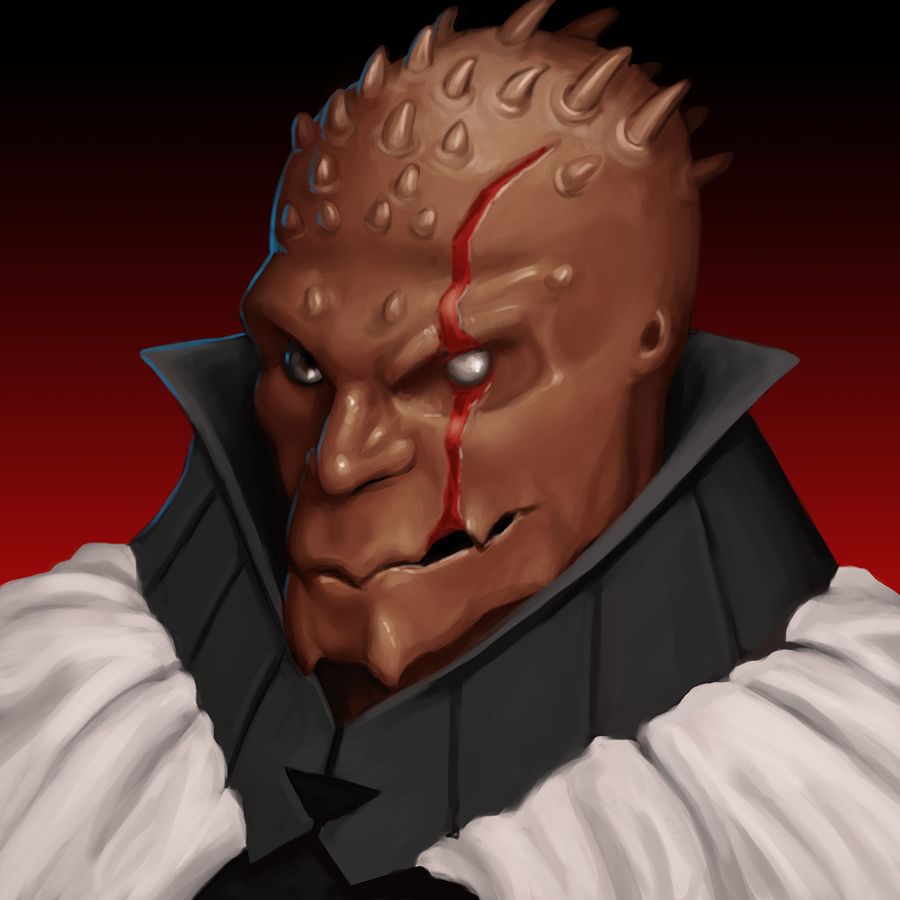
The Bactarans’ commander, and a grandchild of Korzof, the brutal Bactaran dictator who was responsible for the creation of the House of Korzof-Moti. It is Deroza's plan to exterminate Humanity and take Earth, and they will stop at nothing to achieve it. Deroza is half Moti, and has the Moti's short fuse tempered with strategy and guile. This is a dangerous combination, and makes them an effective leader in the occupation.
Clautel (they/them; 2035-2060)
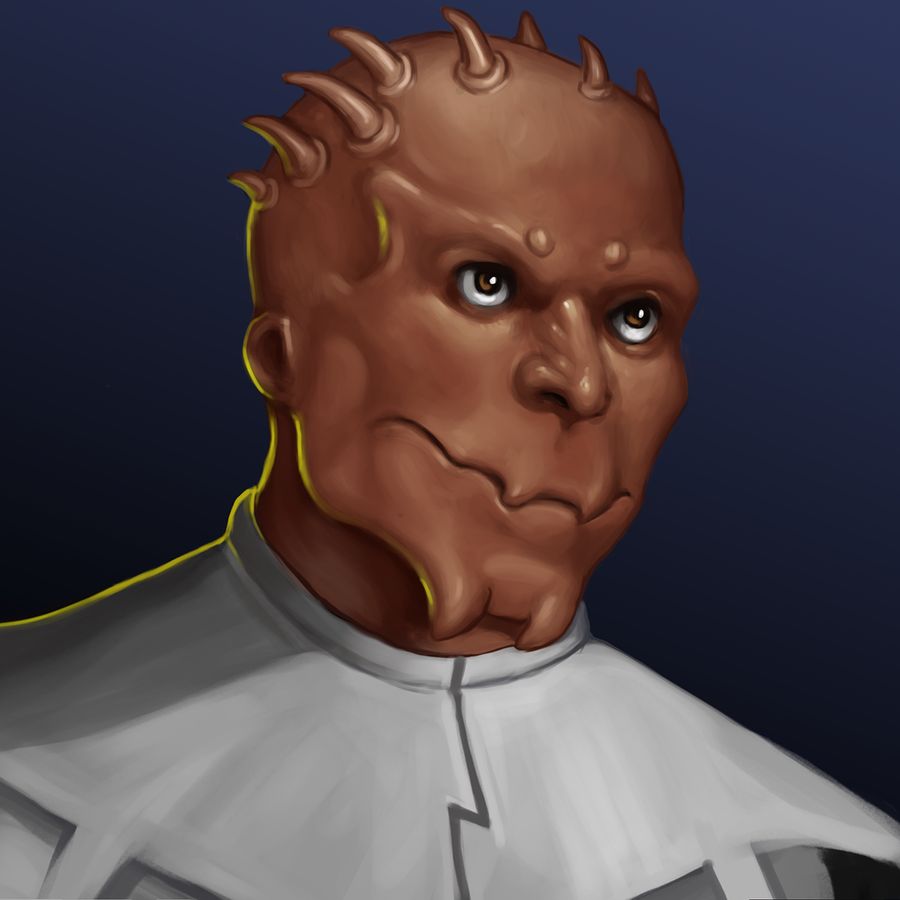
Clautel is one of Deroza's firstborn children and the only one that is a part of the Occupation; Deroza frequently refers to Clautel as the "Heir of Earth". While Deroza focuses on the military fight to dominate and exterminate Humans, it is Clautel who encourages the preservation of the planet itself for Bactarans. Their death is the catalyst for Deroza losing control, and several cities are razed in the days following.
Curt Redland (he/him; b. 2040)
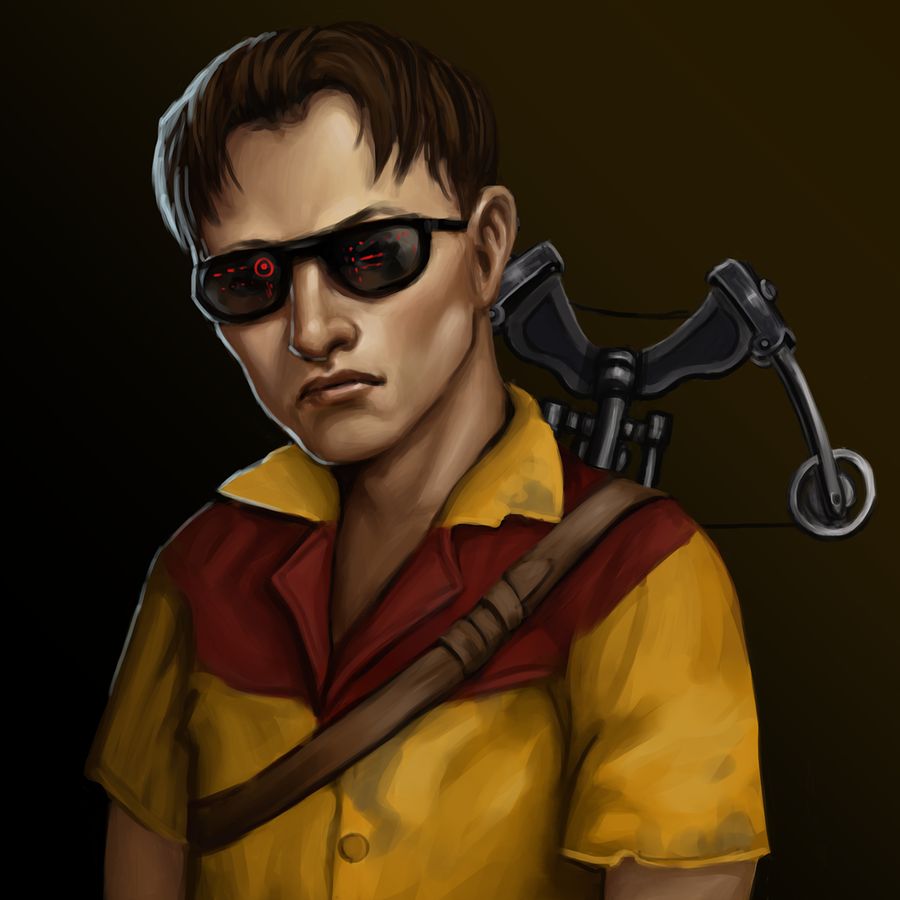
Curt Redland has a particularly personal history with the Bactarans and collaborators. His entire family was killed in one of the first military actions of collaborators on Earth. He was still a teenager when he joined the Union Underground, ultimately rising to a position of prominence within the Austin chapter of the UU. He led the evacuation of the Last Ditch colony ship through the warp bridge in 2065.
Tyson Brooks (he/him; b. 2031)
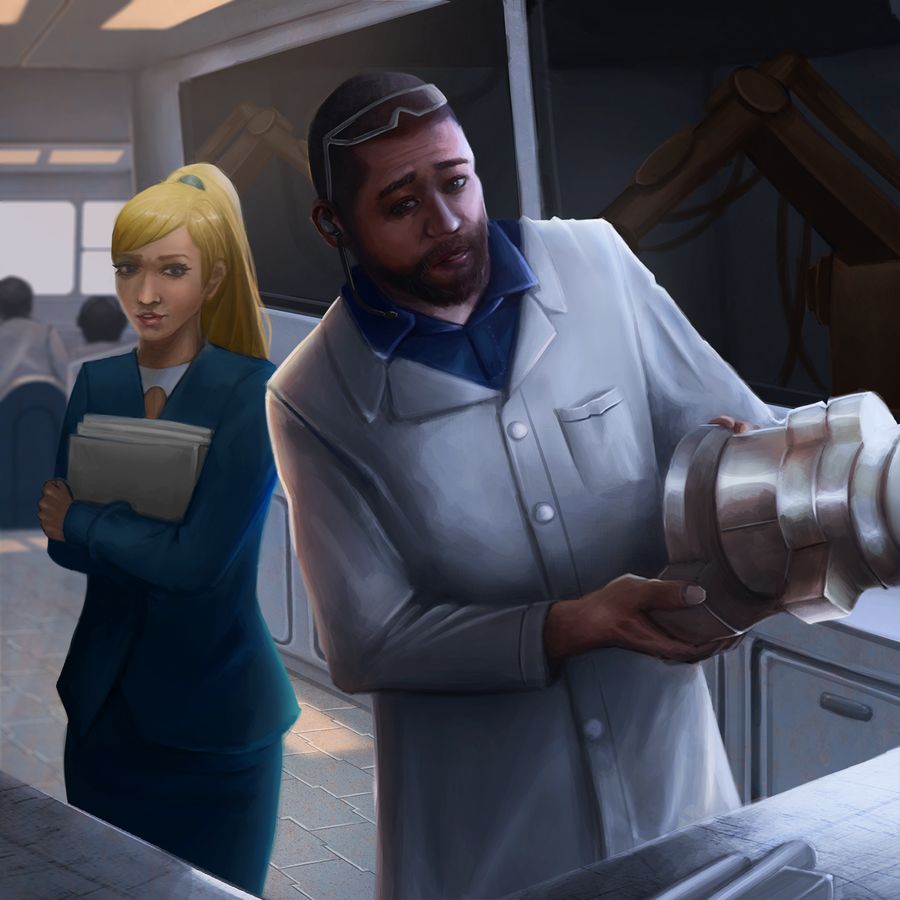
Tyson Brooks joins the resistance in 2063 following his son's death in the measles epidemic. A brilliant engineer, Brooks is responsible for the juryrigging of the Last Ditch (Redland's colony ship) and the Son of a Bitch, which turns the tide in the final battle in 2065. Brooks will go on to design many of Earth's first spacecraft.
M. Luciana Sapatiero (she/her; b. 2027)
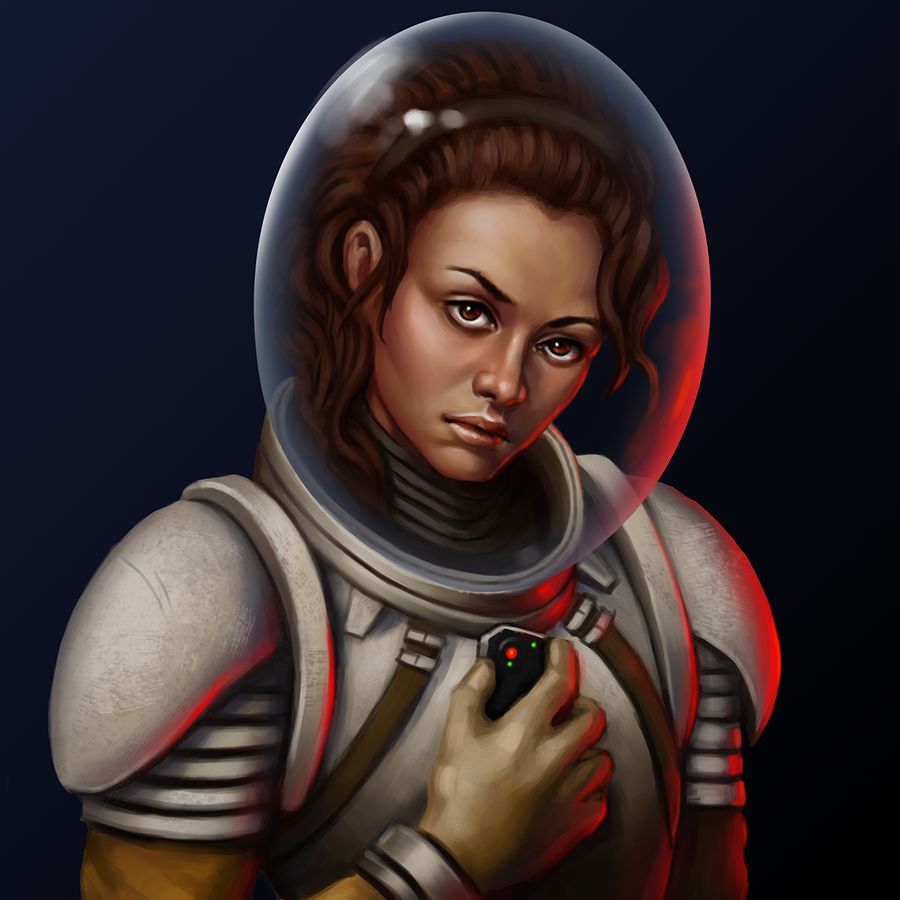
During her late 30's, Sapatiero became a member of the Union Underground, and an electronics and communications expert. She was responsible for much of the resistance's ability to covertly transfer information between cells. In 2065, she was the sensor/comms officer onboard the Son of a Bitch, sent up to combat the new arrivals, buying time for the Last Ditch colony ship to get away.
As the new arrivals approached, Sapatiero was the one who was able to discern the intentions of the incoming vessels—they were here to put an end to the Occupation. With this information, she was able to shift the attack towards the occupying vessels instead and, in a rudimentary way, cooperate with the rescue fleet. In the climax of the battle, after the rescuing fleet had been wiped out and the battle seemed hopeless, the Son of a Bitch rammed the last undamaged occupying ship, destroying both. Three of the crew, Sapatiero included, were able to get aboard the Bactaran ship and hijack an escape pod; these three are the only survivors of the battle.
Travers (he/him; 2009–2057)
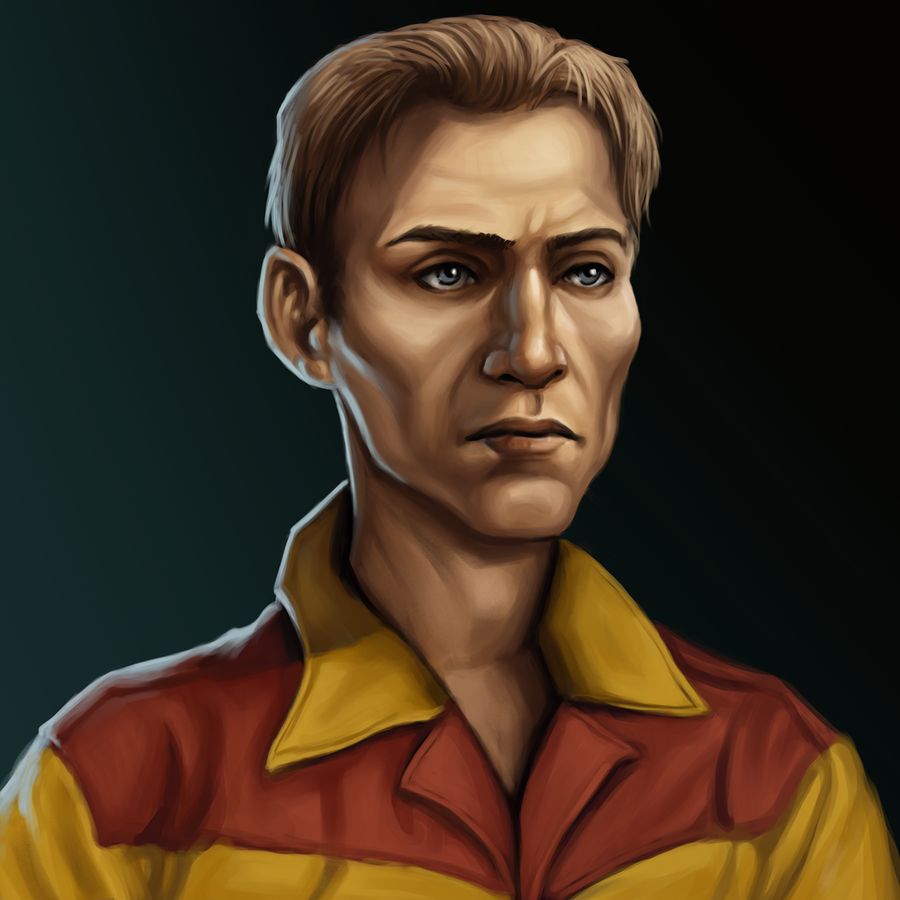
Travers was the first President of the Union Underground resistance, during the time the gang was still a gang. He was known to be ruthless, and famous for a piercing stare—it was said that he could get anyone to say anything just by staring at them long enough. His death during the war with the Juarez Cartel in 2057 was the catalyst for the UU to become a resistance movement.
Xander Alan Day (he/him; b. 2022)
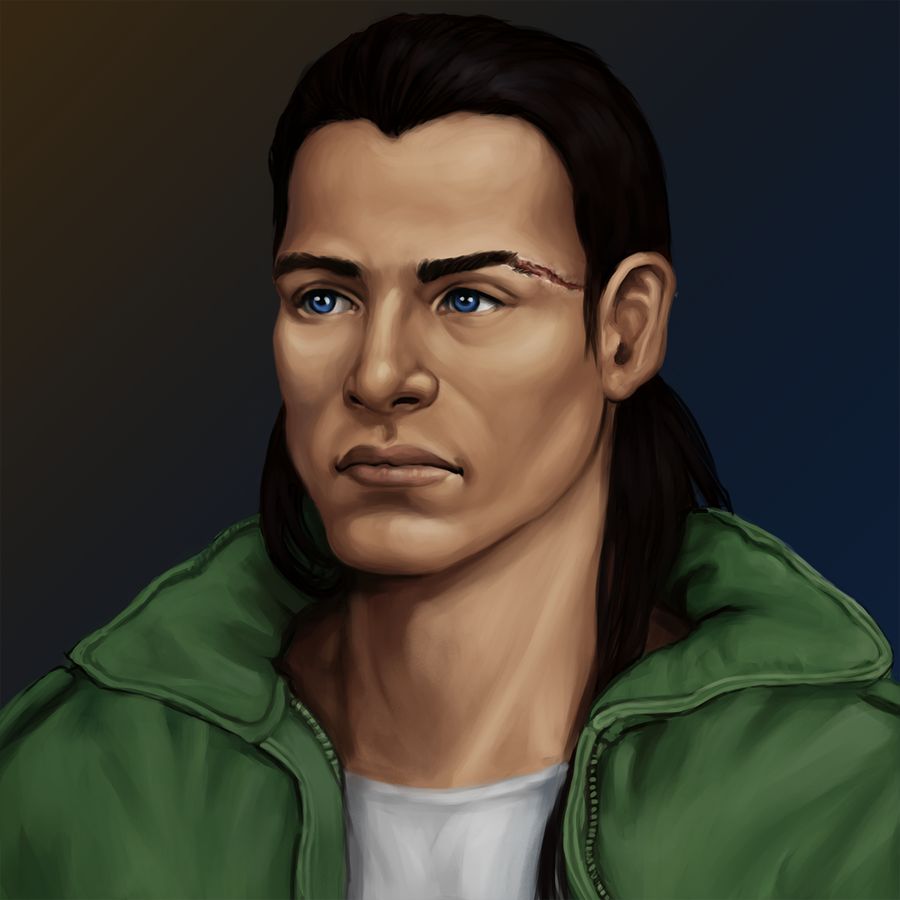
Prior to the Occupation, Xander Alan Day was a covert sniper on Navy SEAL Team 66, in addition to being a husband and father. All that changed in the brief battle at the commencement of the Occupation, when a random orbital bombardment struck his home during a birthday celebration, killing his wife and children, paralyzing his twin brother, and leaving him scarred. Following the tragedy, Day then spent several years of the occupation on the move among the various survivalist groups in the Pacific Northwest, helping to protect other families as he had been powerless to protect his own. He brought his brother, Dartangan, with him on this journey, not just as his responsibility but as a constant reminder of what he'd lost.
Following the eventual death of Dartangan, Day became a leader among several survivalist cells. He coordinated effectively with the Union Underground and ultimately was most responsible for rallying the survivalist cells for key battles in the resistance. Day led by example, believing that the Human race had the ability to free itself through determination and strength.
Sample PCs
Guerilla Slave
Life was so simple before they came. The Bactarans deemed his construction expertise valuable, and he was forcibly ripped away from his family to work for them. Though he hates the Bactarans with his entire being, he makes some time to hate the people that went along with their rule. All he needs is one opportunity to take them down. [TODO: adjust for image]
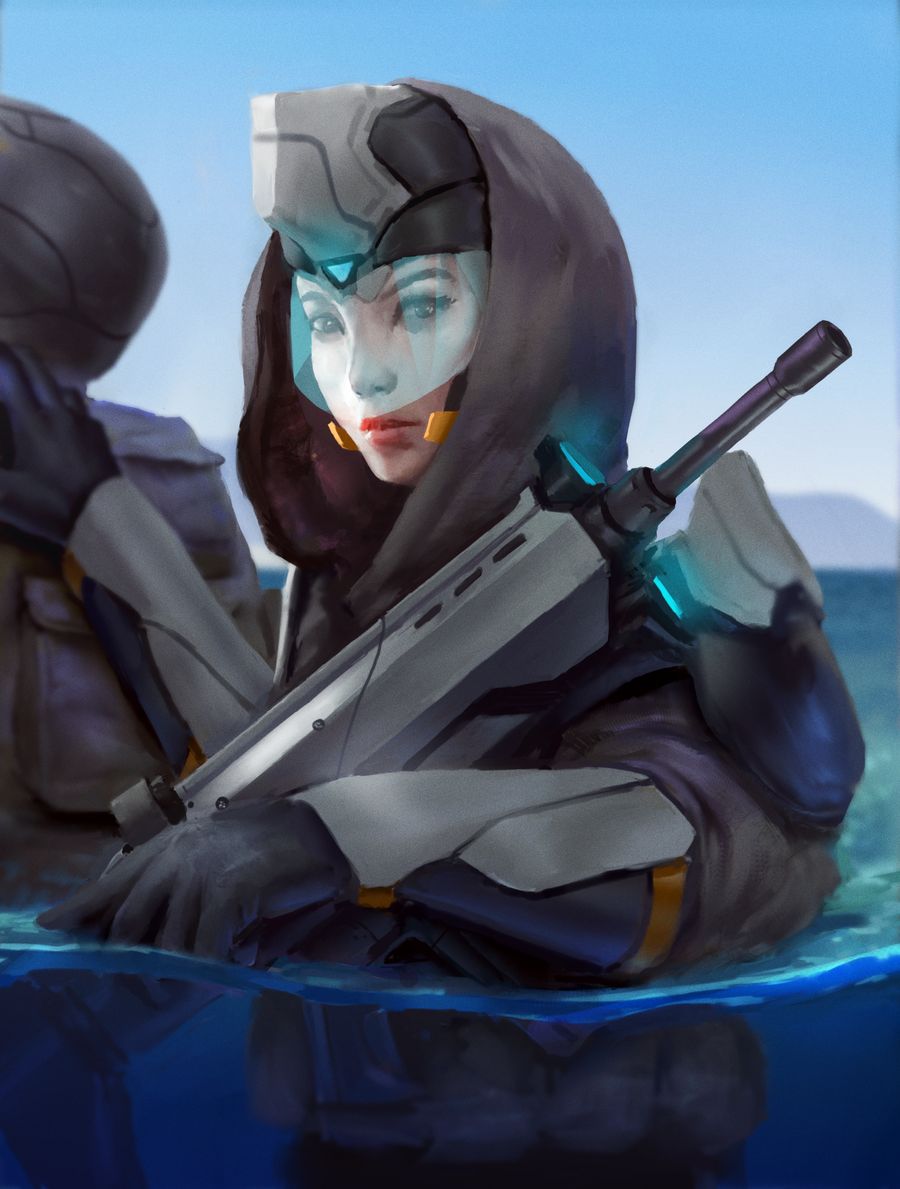
Culture: Equator Slave · Species: Human · Homeworld: Earth · XP: 290
Motivations: Attachments [3] Broken Will [1] Agent of Chaos [4] Romance [3] Vengeance [4]
Interests: Street Sports [4] Smuggling Routes [3] Moti Operations [2]
| WIL | INT | PER | CHA | MAN | BEA | BOD | AGI | REA | CTZ |
|---|---|---|---|---|---|---|---|---|---|
| 6 | 5 | 3 | 3 | 2 | 2 | 6 | 4 | 4 | 1 |
Qualities: Brick Wall [10] Juryrigger [5] Will to Live [5] Combat Paralysis [-5]
Skills: Athletics 5, Crafting 1, Melee 2, Science 1, Stealth 3, Survival 1
Specializations: Throwing
Gear: #N/A
Languages: Spanish
Hacktivist
Information wants to be free, and so goes the hacktivist. The secrets the collaborators hide are ripe for the taking, and she's the one to take them. Exposing them is a good start, but she also longs for a more direct way to damage the occupation, and bring back the ideals of the nation she once believed in.
Culture: Earth Public · Species: Human · Homeworld: Earth · XP: 370
Motivations: Achievement [3] Attachments [2] Romance [1] Agent of Chaos [3]
Interests: Tinkerer [6] VR Games [4] South American History [4] Art History [3]
| WIL | INT | PER | CHA | MAN | BEA | BOD | AGI | REA | CTZ |
|---|---|---|---|---|---|---|---|---|---|
| 4 | 6 | 5 | 4 | 3 | 1 | 2 | 2 | 4 | 5 |
Qualities: Eidetic Memory [5] Upper Crust [10] Distinctive Style (Calling card on hacked systems, 2) [-10] Redshirt [-25] Social Apathy (1) [-5]
Skills: Art 2, Computer 8, Influence 3, Melee 4, Stealth 1
Specializations: Programming, Hacking
Gear: #N/A
Languages: English
Triggerman
The triggerman has never been so good at strategizing or thinking ahead, but once directed at a target, the target was as good as dead. He once reserved his crosshairs for rival gangs and the occasional fed, but recently, he's felt a need to take on a target a little more historical.
Culture: Gang/Resistance · Species: Human · Homeworld: Earth · XP: 450
Motivations: Promotion (Union Underground) [1] Romance [1] Vengeance [2] Avarice [3]
Interests: Organized Crime Families [6] Legal Loopholes [5] 90s Action Movies [5] American Revolution [4] Geography [3] Moti Security Procedures [2]
| WIL | INT | PER | CHA | MAN | BEA | BOD | AGI | REA | CTZ |
|---|---|---|---|---|---|---|---|---|---|
| 5 | 2 | 5 | 3 | 1 | 3 | 2 | 7 | 5 | 4 |
Qualities: Quick Healer [5] Enhanced Attribute (AGI) [40] Officer (Member, UU) [15] Can't Take a Joke [-5] Counterculture (Attachments) [-5] Freakish [-15] Lone Wolf [-30] Social Apathy (3) [-15] Scarred (5) [-10]
Skills: Computer 1, Crafting 2, Humanities 1, Melee 1, Ranged Combat 8, Stealth 4, Tactics 4
Specializations: Longarms
Gear: Shotgun [] None [0] None [0] None [0] Bulletproof vest [MFR 4] Commlink [300]
Languages: English
Family Man
Before the occupation, keeping his family together didn't mean tearing himself apart. His engineering skills being required by the Bactarans was a blessing and a curse; though it put him and his family on their radar, it also gave him the means to ensure they would never hurt them—they needed him. Unfortunately, with the rise of the resistance, keeping them safe has gotten ever more complicated. He never thought he'd be serving as a double agent.
Culture: Collaborator · Species: Human · Homeworld: Earth · XP: 560
Motivations: Attachments [3] Promotion (Moti Occupation) [1] Romance [2] Avarice [1]
Interests: Moti Security Procedures [6] Airplane Models [6] History of Spaceflight [5] Puns [5] Famous Pilots [4] Game Shows [4] Podcasts [4] Sailing [2]
| WIL | INT | PER | CHA | MAN | BEA | BOD | AGI | REA | CTZ |
|---|---|---|---|---|---|---|---|---|---|
| 2 | 4 | 3 | 5 | 6 | 4 | 3 | 2 | 2 | 5 |
Qualities: Upper Crust [10] Out of Touch (2) [-10] Infirm (1, BOD) [-10] Prejudiced (2, Equator Slaves) [-10]
Skills: Art 2, Computer 2, Crafting 3, Humanities 6, Influence 5, Medicine 2, Pilot 3, Science 3
Gear: Handgun [100] None [0] None [0] None [0] Light Armor [MFR 2] Commlink [300]
Languages: English