
Expansion Era
2065–2100
Alien
Junior Telemetry Officer Ensign Cherami Misra, October 5, 2071
I can only imagine what the Bactarans are thinking. Here we are, a hundred billion miles from home, right on their front doorstop. No one had called ahead—warp bridges don't work that way, we're learning. You can't call ahead—you just dropped into the bridge on one side, and popped out on the other. Nevertheless, here we were, unannounced. This will be my first encounter with Bactarans, but even I can guess at what they're thinking.
They're thinking, "They don't belong here."
If they are, they'd be right. But then, no one had told us we shouldn't be out there. Only common sense told us not to, and no one on this crew was about to listen to that dictator. I already lost several friends when one of our little fleet of prototype ships was destroyed, and to make matters worse, the Captain's not even letting us talk about it. We weren't going to come back empty handed.
Our primary mission was to obtain advanced technology, especially the Junardms that allowed ships to cross the event horizon of a wormhole and come out in one piece on the other side. We only had the three we were able to scavenge and rebuild from the wreckage above Earth. I, for one, am more interested in our secondary mission: Finding out what happened to the colony ship. Just before the occupation ended, they sent a colony ship. It was supposed to go through the wormhole and find someplace to settle. Shortly after it left Earth orbit, though, we lost track of it. Some people think the Bactarans got to it; some think they simply went dark for secrecy. I happen to think they're out here, somewhere. It's time for us to bring them back home.
They don't belong here.
Commander Cherami Misra, February 12, 2079
To be honest, I really don't know who we're supposed to be defending.
The first Bactarans in the asteroid belt started construction on their mine three weeks ago. It didn't take long for privateers to get wind of it, and a ship is on its way. It'll be here in two days, and their captain has sent a thinly veiled threat—something about the butchers of the occupation. We were sent here to watch the Bactarans and protect Earth from them; and we might be forced into a position to defend the Bactarans instead. Now the Machete is all that's standing in between them and the miners. And one phrase is stuck in my mind, something I kept thinking about years ago.
If the privateers decide to attack, we have to destroy them. Humanity needs what the Bactarans are offering, and a delegation of Bactarans is watching remotely from Hyperion Station. They have to see the Machete putting herself between the two sides, and if the miners are killed, the only possible hope for continued relations is to blow the privateer ship out of the sky. What the hell are they doing here?
But what's worse is, what happens if the Bactaran miners take matters into their own hands? Their shuttle isn't a warship by any stretch, but any ship with an engine is a weapon, and their engines are better than ours—they could fly circles around the privateers and melt their hull in the process. And what then—do we shoot them down? Do we risk war over these privateers? Do we risk not getting the engines and Junardms the Bactarans are promising? To say nothing of what we do if the Bactarans decide they don't trust their escort and decide to attack us.
They don't belong here. None of them do.
The Story of the Age
At the end of fifteen years of alien occupation, Earth is in poor shape, with two-thirds of the population killed, mostly at the hands of each other. A fleet of alien ships from two distinct alien civilizations arrived from the wormhole around Saturn in 2065, but instead of reinforcing the alien occupiers, they were here to put a stop to what was happening on Earth. The fleets annihilated each other in orbit, leaving behind technology which Humanity was able to harness to bring itself to the stars.
While the courts helped the dust settle on Earth, separating collaborators from the heroes, an expedition was sent out in 2071 to establish proper first contact with the larger galaxy. Contact is established in the Sirius system, and an agreement is reached with the Bactarans—they would mine the solar system's asteroid belt, in exchange for space travel technology and materials. Through the Bactarans, Humanity is also introduced to the Vorans, an advanced and peaceful insectoid race.
Playing an Expansion Campaign
The Expansion Era is about rebuilding, settling and exploration. While recovering from the devastation of the occupation, Humanity has just discovered that the rest of the galaxy is closer than it first believed, and much of the time in this era is spent charting the new worlds. If there’s a time to take a wagon train to the stars, this is it. In addition to official military starships, the newly formed United Earth Nations world government finances a number of private exploration ventures, especially after 2085.
Campaigns that do not take to the stars in this era are likely to focus on the tumultuous formation of the UEN, starting with the Provisional Central Earth Government. Earth is rebuilding its infrastructure and a new society. Early on, the PCEG is built mostly around fear and hatred of the Bactarans, as well as the collaborators that supported them. Thus, a system of courts is established to prosecute and execute collaborators. When the UEN charter is formalized, these courts are abolished, and a more contructive era begins, starting with the Sirius Expedition. Following the return of the expedition, a trade deal is struck; in exchange for a number of Junardms (the devices needed to allow passage through warp bridges), Bactarans enter the Solar System to mine its rich asteroid belt.
Adventures
PCEG Investigations
2065–2070
After the occupation was over, the spirit of forgiveness for collaborators sometimes associated with the latter years of the Resistance evaporated, almost overnight. The PCEG commissioned courts to investigate actions taken during the occupation, and determine if a person was ever guilty of going above and beyond the bare minimum of self-preservation when serving the Bactarans. These courts ended in 2070, when the UEN charter was accepted.
PCEG Investigations involve looking into things that happened during the Occupation and making judgment calls about them. The PCEG "trials" often skip questioning, and no representation or due process is guaranteed by the system. The investigation teams tend to be judge, jury, and executioner, which is one reason they do not last very long.
The Asteroid Belt Frontier
2065–2100
As Humanity takes to the stars, their first stop is the asteroid belt, rich in useful materials to be mined and used for space travel. A typical asteroid colony is a cylinder embedded in a hollowed center of the asteroid, with the denizens living on the inner surface of the spinning cylinder for artificial gravity. These mining colonies quickly diverge in culture while simultaneously establishing a network of trade relationships with other asteroids that share similar orbits. Within a decade of the end of the occupation there are hundreds of inhabited asteroids, with the dwarf planet Ceres serving as their trading hub with the rest of the system. The population of a given asteroid colony may range from as little as a few dozen to several thousand; many have leadership structures modeled after small towns, with mayors, sheriffs, and deputies.
In the late 2070's, Bactarans come onto the scene as part of the Bactaran Republic's deal with the UEN, trading technology for mining rights. Humans previously inhabiting the asteroid belt, having seen the uninhabited rocks as a kind of wilderness theirs for the taking, begin to resent the incoming Bactarans for the percieved invasion in their territory. This tension is worsened by the preexisting grudges the Humans had against Bactarans for the occupation, and further worsened by the fact that the belt colonies received little to no benefit from the deal that put the Bactarans here—all the incoming fusion drives and Junardms were being used by the EGF and ESF.
The asteroid belt is the true wild west of the era. Asteroids and settlements numbering in the thousands can provide an endless variety of tiny cultural bubbles with their own oddities and mysteries. Some are trading hubs welcoming to outsiders; others are insular and isolationist. Some develop elaborate social customs and courtship rituals. Some are freeloving polyamorous communes. Beginning in the late 2070's they can also be distinguished by their attitude towards the incoming Bactarans, ranging from friendly and accepting, to begrudging trade partners, to isolationist racism, to open hostility and violence. The Bactaran mining communities have considerable variety between them too, though most of those do come from the House of Moti, so they generally start from a similar common cultural root.
EGF
2068–
This fledging interplanetary guard—the Earth Guardian Fleet—is the interplanetary police force of the Solar system. Under the guidance of Resistance heroes like Tyson Brooks, it was formed in 2065 as a part of the PCEG and built up its forces throughout this era. By 2068 the EGF had successfully launched the first fully Earth-built frigate, the Phoenix, and begun mass-producing them. Using expertise gleaned by Bactarans' slaves, who built their fusion ion drives, the EGF was able to reproduce the technology independently by the mid-2070's, enabling more numerous, varied, and longer-range vessels.
The first task of the EGF was recovery and analysis of the wreckage of the battle that ended the Occupation; the findings of this analysis led to the Sirius Expedition and the formation of the ESF. Bactarans started mining asteroids in the late 2070's—they began with 6 asteroids, and for a while the EGF had a frigate monitoring each of them. By 2085 the Bactarans were mining dozens of asteroids, and the EGF's operations were scaled back to defending Earth, as Earth's shipbuilding efforts are refocused are ships capable of warp bridge travel. While the EGF policed the asteroid mines somewhat, they relied more and more on ESF ships to enforce agreements and defend the ore shipments. Pirates—using any ships they can get ahold of, often modifying civilian Corvettes and Starbusses, then capturing military vessels—raided ESF, EGF, and Bactaran ships alike for anything valuable. Though not nearly as numerous as the Bactaran miners, a number of Vorans took up residence in the Solar System (to explore, trade technology, and exchange culture), and these visitors, too, must be watched.
The Early ESF
2070–2095
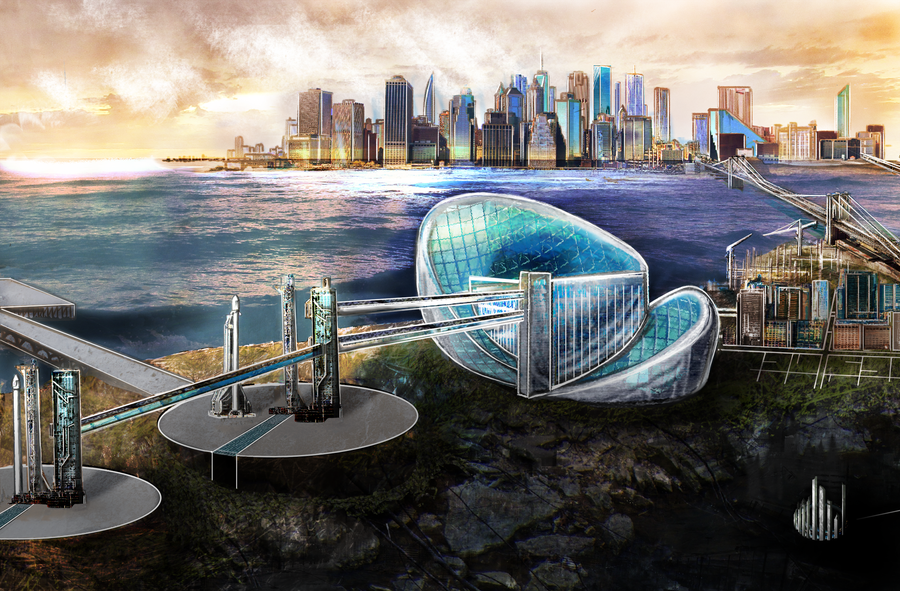
The Earth Star Force was formed in 2070 as the interstellar military force of the UEN. In these early years, the ESF spends most of its time exploring (most notably charting the Parella and Sirius systems). It also accompanies diplomats on trips to Varhanna and Bactara (such as the Sirius Expedition).
The Sirius Expedition (2070–2072): Considered the first ESF mission, and the first interstellar mission by Humans intending to return, the Sirius Expedition was intended to establish more peaceful contact with alien species. In the years following the occupation, ESF personnel combed through the wreckage from the vessels in the battle above Earth. Three vessels with prototype fusion-ion drives, using navigation charts gathered from the destroyed Bactaran Republic vessels and three of the Junardms recovered from the wreckage, were dispatched to establish diplomatic relations with these two alien species, only one of which is known. Just one of these ships returned two years later, and none of the surviving crew would talk publicly about or admit to what happened to the others—either because they did not know, or because the success of the mission required hiding what happened. Trade was established with the Bactaran Republic, who began sending Bactarans to mine Sol's asteroid belt for metals, along with a sizable shipment of Junardms suitable for Earth's budding armada. A contingent of Bactaran and Voran diplomats accompanied them as well, taking up stations on Earth, Ceres, and Hyperion Station.
The Baby Boom (2080–2095): The extreme mortality rates during the Occupation, especially on children, have a lasting effect on the demographics of the ESF (and the EGF) during its formative years. For the first 15 years after the occupation, virtually everyone in the service is someone who was at least a teenager during the occupation, and 30+ years old by 2080. There was, however, a massive population boom immediately following the end of the occupation, and these children start joining the ESF and EGF in droves starting around 2080.
By 2085, the force was composed mostly of three types of demographics. The eldest were the veterans of the occupation. At 40 and over, these old, war-torn war leaders held most of the Captain- and Admiral-level positions in the ESF/EGF. The least numerous demogrpahic were the so-called resistance babies. Born from 2050–2062, this generation suffered 90% mortality rate thanks largely to the ban of vaccinations. Most of the ones that survived were children of resistance members, thanks to the resistance's vaccination network. Finally, the boom consist of young recruits, 20 years or younger, born after the Occupation had ended.
The Moons of Saturn
2075–
(see the online edition for more detailed information)
Following the return of the Sirius Expedition and establishment of interstellar trade, a home base was needed to facilitate and monitor this new activity. The Saturnian moon Hyperion was selected for its proximity to the warp bridge, and Hyperion Station was built. Hyperion Station was the first real interstellar port of call for Humankind, a combination military outpost and civilian hub. Civilians of all three known species lived there—Bactarans who worked the station for its role in the asteroid mining operation; Vorans for diplomatic, scientific, and educational exchanges; and Humans, who oversaw the operation both as military and civilians. Its many roles as a way station, economic hub, military base, and diplomatic summit provided any number of chances for an opportunistic group to find a way here, legitimate or illegitimate. For the illegitimate concerned with getting caught, Saturn's rings provided an excellent—if dangerous—place to hide nearby, blending in with the debris that comprises them.
At first, all needed food and supplies were imported from Earth or brought with the aliens through the gate, making Hyperion Station an expensive place to live. The successful self-sufficient food production of the Othrys colony on Titan, starting in 2090, brought new balance to the system. Herschel Station, built in 2095 in Titan's orbit, facilitated this trade further, and soon overshadowed Hyperion Station as the center of the Saturn economy. Over the last 5 years of this era, most of the Human civilians not directly involved in mining transport operations moved to Herschel Station for its superior economic climate (and considerably more luxurious accomodations).
Gangs of Redland
2080–2105
The Redland colonists spent a long time—about 40 years—believing they are the sole survivors of Humanity. It’s not until 2105 that contact is reestablished.
For the first decade and a half, Redland was a harsh world to survive; simply growing food was a challenge, one that is eventually overcome by the genetic modification efforts of one Maxine Wellrose, one of the colonists. Once the colony's resources were better established, its population grew rapidly, and the limited, largely informal governance that worked for a small colony of settlers broke down in corruption. By 2090, though the official leader of the colony's government was still Curt Redland, the world is really controlled by organized crime syndicates.
Campaigns set on Redland during this time are likely to be centered on small-town gang politics and corruption. The Juarez gang and the Union gang are the two main players in this world—two gangs started by former members of the Juarez Cartel and the Union Underground, respectively. While there is little to do in terms of contraband, these gangs consolidate power for its own sake, cementing their influence threats, protection rackets, and blackmail.
Moti Mercenaries
2065–
Following the attempted genocide of Humanity, what little respect (or pity) the House of Korzof-Moti had had among the other Bactaran houses evaporated. As a result, the Korzof-Moti economy collapsed, and before long they were forced into menial labor—at least, the small portion of them that were able to find work. The House leadership decided to remove the stain of Korzof from their name, becoming simply the House of Moti as they were before Korzof's reign. Many of them ended up working the asteroid mines in the Sol System following the treaty; a few used this work to get into the Sol System and get work as bounty hunters and mercenaries, often hiding their true identity from their clients.
Moti Mercenaries took odd jobs as they could find them. Initially, their work was mostly in Bactaran-controlled star systems. When Humans reached an agreement with the Bactaran Republic to trade mining rights in Sol's asteroid belt for Junardms, many Moti jumped at the chance for steady work—but a significant portion of the miners that moved to the mines were former soldiers who still feel the drive for violence. For a Bactaran, Earth's back yard was not necessarily a safe place, so these fighters had plenty to do protecting the mines.
Bactaran Politics
2062–2100
During this time, the Bactaran Republic, like the other major powers, was trying to feel its way through interstellar politics, while dealing with their own domestic issues. Bactara was a world that was devastated by war around a century earlier, and the ecosphere has still not fully recovered. First contact with the Voran Merchant Corps was established by the Bactaran Republic in the 2050's, and though it had a peaceful and positive resolution, it was not without its dangerous moments.
With the revelation of the Moti's occupation of Earth in the early 2060's, elements of the Bactaran Republic scrambled an argosy fleet to stop the occupation. However, fighting between Bactarans was not a hugely popular move, so the fleet's size was nowhere near what would be required to take on the Moti at Earth; in desperation, the Republic leadership struck a deal with the Vorans for their assistance in the matter. The aftermath of this perceived betrayal was felt well into the following decade, and negotiations between the Bactarans and both alien delegations can be a full-time adventure in themselves.
Many Houses didn't want to involve themselves in interstellar negotiations at all, while some believed that the Moti's plan to annihilate Humans while leaving Earth relatively undamaged is the only hope for an optimistic Bactaran future. Still others believed that the Human and Voran delegations should be destroyed on the spot, and there were a number of assassination attempts.
Of particular note is the religious house, the House of Martoki (see 2065 — Expansion Era). The Martoki believe that the land belonging to the Moti is cursed (see the description of Bactara on 2065 — Expansion Era for more details); it was this house that was largely responsible for punishing the Korzof-Moti generations ago with that land, seeing it as righteous punishment for agents of evil. This attitude had not waned in the intervening decades, and the Moti and the Martoki have been feuding ever since. When the Moti began signing up to mine Earth's asteroid field, the Martoki were against the Moti leaving their cursed land, and space launches to serve this purpose were frequently targeted; some Moti retaliated for these offenses with violence of their own. The only thing keeping the two houses from all-out war is the fact that they are on opposite sides of Bactara.
Voran Collective
2062–2100
The Voran Collective had a more peaceful introduction to the universe than Humankind. While the Korzof-Moti was searching for a world to conquer and inhabit, the Bactaran Republic was making first contact with the Vorans and establishing trade relations, hoping to acquire some of the Vorans' advanced technology in exchange for the Republic's Junardms. When the news of what the Korzof-Moti was doing on Earth reached the Bactaran Republic and the Vorans, they launch the first joint mission between the two peoples, with the Republic equipping several Voran ships with Junardms and accompanying them to Earth to dispatch the Moti.
The Vorans were present in 2071 when the Sirius Expedition was sighted, and played host to the talks between Humans and Bactarans during the negotiations, as well as providing them information regarding the state of the warp bridges themselves. The negotiation teams traveled to Bactara, where an initial shipment of Junardms was prepared. When the expedition returned, a number of Vorans returned with them to trade, explore, and learn.
Cultures
Earth Public

| MFR | MED | CPU | WEP | PWR | PRP | PHY |
|---|---|---|---|---|---|---|
| 5 | 4 | 7 | 5 | 5 | 5/6 | 5 |
Base Income: 400 (Dollar ($)) · Base Price: 1
Universal Motivations: Achievement, Attachments, Romance
Universal Skills: Computer 2
Species: Human · Languages: Based on locations; most often English or Chinese
During this era, Humanity is trying to rebuild after the devastating losses of the occupation. The population was reduced by two-thirds, and the various plagues hit the children especially hard–the generation born between 2055 and 2065 comes to be known as the "missing generation", and the baby boom following the occupation seems to exist largely so families can replace the children they have lost. Though the Bactarans are gone, the world is still filled with their collaborators. The Provisional Central Earth Government (PCEG), established immediately following the occupation to coordinate reconstruction, sets up courts to try and punish collaborators–these courts become judge, jury, and executioner, and after a few initial successes, quickly garner a harsh reputation. This system does not last long, and the courts are abolished in 2070 along with the formation of the UEN. The UEN Charter establishes a republic of nations, and coordinates the efforts of reconstruction across the world. Many people take to space, but those that remain are often faced with challenges of the feudal-esque Survivalists who wish to remain independent from the UEN. Most of these Survivalist enclaves dry up over the next generation.
Stellar Pioneer

| MFR | MED | CPU | WEP | PWR | PRP | PHY |
|---|---|---|---|---|---|---|
| 4 | 4 | 7 | 6 | 5 | 6 | 5 |
Base Income: 600 (Dollar ($)) · Base Price: 1
Universal Motivations: Attachments, Romance, Wanderer
Universal Interests: Astronomy
Universal Qualities: Low Bone Density (3)
Universal Skills: Survival 1, Pilot 2
Species: Human · Languages: English
Those who take to the stars are a special breed. The first of them are explorers, followed by diplomats and the military, and then businessmen. They use any technology they can get their hands on, often jerry-rigging it to fit with their own tech. The UEN Charter establishes a republic of nations: Each nation has one voting representative in the UEN Congress, but that representative's voting power is scaled by three factors: The population of the nation, the power of its armed forces, and the number of people it has sent to colonize other worlds (the charter does not specify that these people must perpetually remain citizens). Population can only be increased so fast and military might is expensive, so many nations support vast numbers of settlers who take to the stars. Of particular note during this time are space stations built in orbit of Ceres and Hyperion during the late 2070's (both of which exist largely to facilitate the Bactaran mining operations in the asteroid belt)—with Ceres being particularly notable for being the only location of the era where Humans and Bactarans interact as civilians on a regular basis.
Venusian
| MFR | MED | CPU | WEP | PWR | PRP | PHY |
|---|---|---|---|---|---|---|
| 6 | 5 | 7 | 6 | 5 | 6 | 5 |
Base Income: 400 (Dollar ($)) · Base Price: 1
Universal Motivations: Attachments, Romance
Universal Interests: Cybernetics
Universal Skills: Survival 1
Species: Human · Languages: English or Chinese
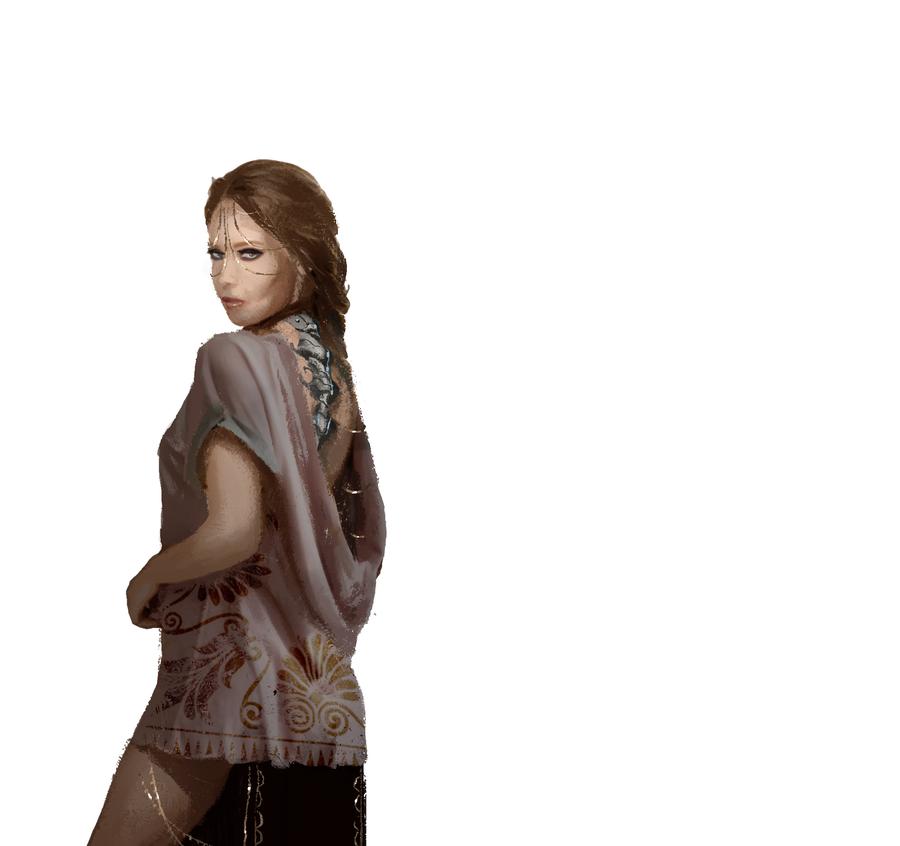
Venus, beginning in the mid-2080's, is settled by two groups, Australian and Chinese. Austrailians invented a chemical process to turn its atmosphere into floating platforms, and Chinese scientists launched the skysteading probes using this chemical process to make the planet habitable. Both invested heavily in settling the so called "skysteads". Most Venusians make a habit of carrying a small CO~2~ alarm/filter device, which alerts the carrier when CO~2~ levels rise above about 3%, and can be used to breathe safely until levels return to normal. In 2098, an economical cybernetic version of the filter is invented, allowing humans to walk outside and breathe comfortably on Venus (and any other CO~2~ environment). This implant is ubiquitous among Venusians within five years.
Martian
| MFR | MED | CPU | WEP | PWR | PRP | PHY |
|---|---|---|---|---|---|---|
| 4 | 4 | 6 | 5 | 5 | 5/6 | 5 |
Base Income: 200 (Dollar ($)) · Base Price: 1.5
Universal Motivations: Attachments, Romance
Universal Interests: Tinkering
Universal Qualities: Low Bone Density (3)
Universal Skills: Survival 2, Crafting 1
Species: Human · Languages: English
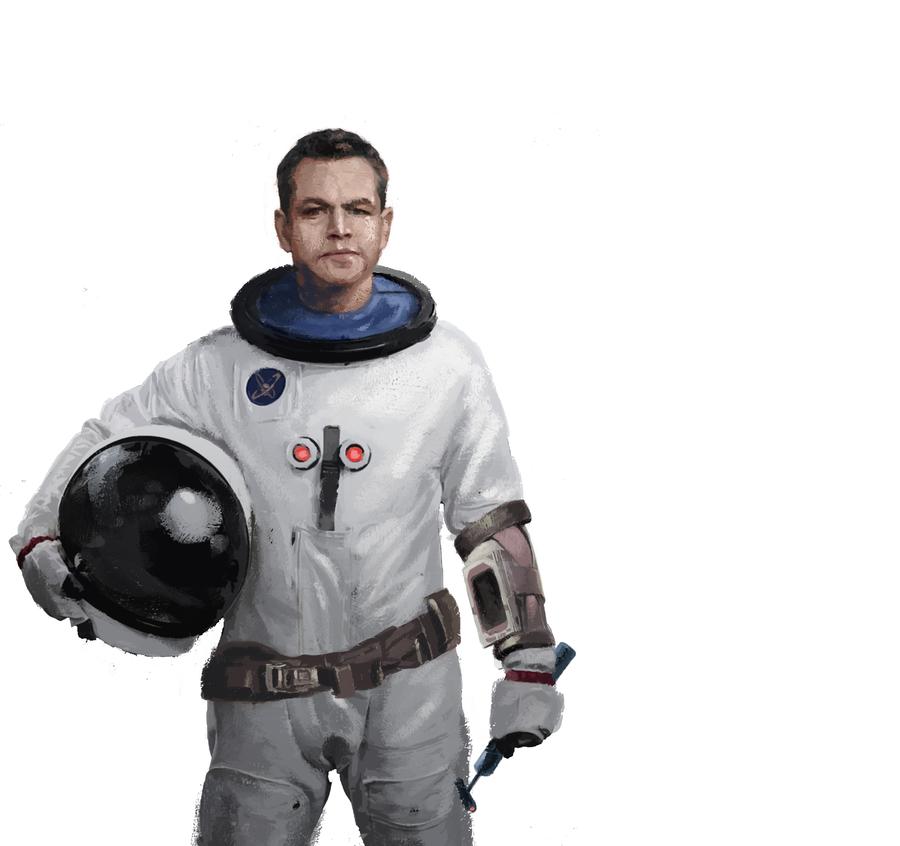
Contact is reestablished with the Mars colony in 2065, shortly after the Occupation ended. While the crops allowed the colony to survive without resupply missions from Earth, a number of health and maintenance issues had begun to crop up over time as some of the more esoteric supplies for the colony ran out, and approximately 40% of the colonists were either dead or had terminal health problems. An emergency resupply mission to alleviate these issues is launched in 2067, and with the fusion ion drive in the 2070's, regular travel between Earth and Mars (and later, between Mars and the belt) becomes possible-over the next decade, the colony expands and their tech levels are brought up to match modern humanity. The surviving Martians, by necessity (and even a single generation of natural selection), are a hardy and crafty bunch. This becomes a point of pride in the budding Martian culture, and by the end of this era many families are sending their children to Mars to learn how to survive in space.
Outer Belt Pirate
| MFR | MED | CPU | WEP | PWR | PRP | PHY |
|---|---|---|---|---|---|---|
| 4 | 5 | 5 | 5 | 5 | 5 | 5 |
Base Income: 400 (Dollar ($)) · Base Price: 1
Universal Motivations: Avarice, Romance, Vengeance
Universal Interests: Hideaways
Universal Skills: Pilot 2
Species: Human, Bactaran, Voran · Languages: Various Earth languages
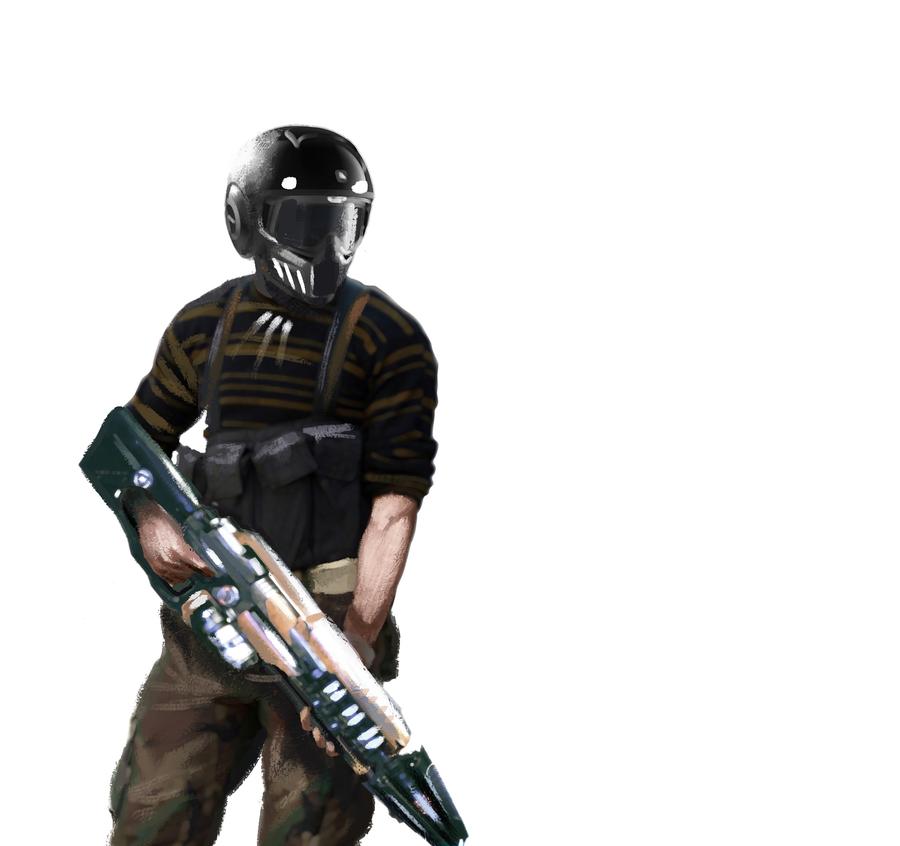
As soon as the Humans and Bactarans establish trade routes through the solar system, others start taking advantage of these trade routes. Stealth is extraordinarily difficult to accomplish in the wide-open vacuum of space, so pirates use cover. They hide in the asteroid belt, and Jupiter's Trojan asteroids, by parking in deep crevasses and tunnels in the rock, but their favorite hiding place is Saturn's rings, where the tiny moonlets make perfect cover. Authorities simply don't have the capacity to search billions of tiny moonlets, and the difficult navigation means they don't even try. As an added bonus, the rings are also quite close to the main shipping lanes which travel through Hyperion Station and the Sirius warp bridge. The Outer Belt Pirates are typically among the best pilots in the system, daring enough to live in a dangerous region like the rings, and obsessed with wealth.
Tech notes: Often uses tech stolen from other, more advanced cultures
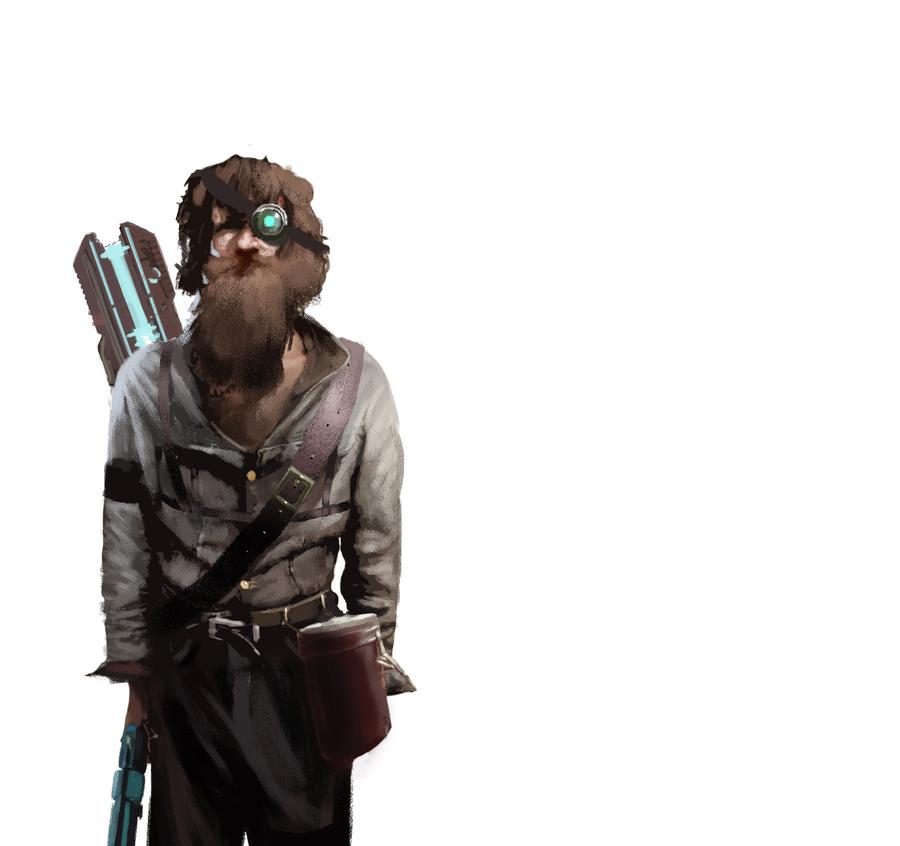
Redland Colonists
| MFR | MED | CPU | WEP | PWR | PRP | PHY |
|---|---|---|---|---|---|---|
| 4 | 4 | 7 | 6 | 5 | 5 | 5 |
Base Income: 200 (Dollar ($)) · Base Price: 0.5
Universal Motivations: Achievement, Attachments, Romance
Universal Interests: Anti-inhumans
Universal Skills: Survival 2
Species: Human · Languages: English; many initial colonists know Spanish, but it falls out of use quickly on Redland, with such a small number of people.
Following their evacuation from Earth, the Redland colonists have settled on a harsh world. At first, survival is the biggest challenge, but as Wellrose's genetic modifications to crops take root, life settles into a rhythm. When the population booms, the small time police are quickly overwhelmed by the rise of organized crime, and the crime syndicates soon define life on Redland.
Tech notes: PRP: Ground Craft, MED: Genetics
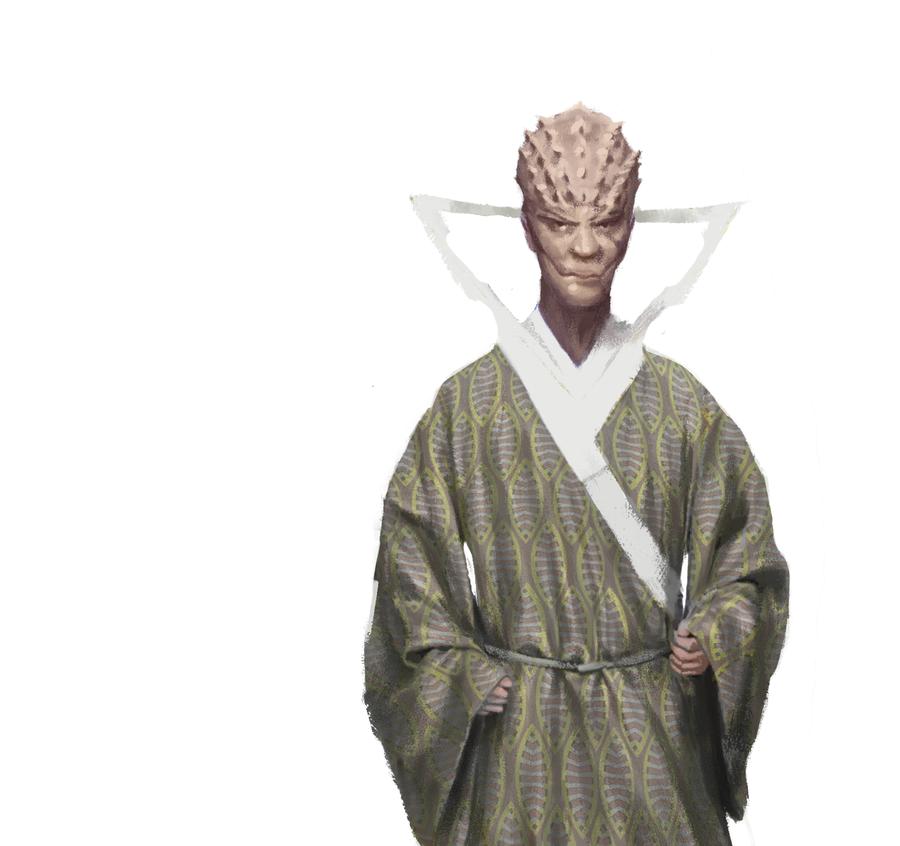
Bactaran Republic
| MFR | MED | CPU | WEP | PWR | PRP | PHY |
|---|---|---|---|---|---|---|
| 6 | 5 | 5 | 6 | 7 | 6 | 5 |
Base Income: 300 (Crone (ç)) · Base Price: 0.5
Universal Motivations: Achievement, Attachments, Manipulator, Romance
Universal Skills: Crafting 1, Influence 1
Species: Bactaran · Languages: Kortona, Martoki, or Klinoto
Bactaran culture is built largely around feudal houses–large family groups who each wield political and military power. The Republic accepts a representative from every house–over 200 in all, including one from the House of Moti–and each is given a number of votes relative to their power. All houses abide by the results of these votes. The most powerful Bactaran house is the Punohmah house, which possesses the ancient Junardm manufacturing device, granting it control over the interstellar fleet as well as the most important interstellar trades. Contrary to the impressions most Humans have of them, Bactarans are not a barbaric warrior race–the Moti subspecies (which is also considered a house as described on Bacto) could fairly be described that way, but not the species at large, most of which are members of the Bactaran Republic. If they have any particular species trait, it’s that of being a social wedge (see the Bactaran species description on Bacto for more details).
Tech notes: MFR: Junardm Manufacturing
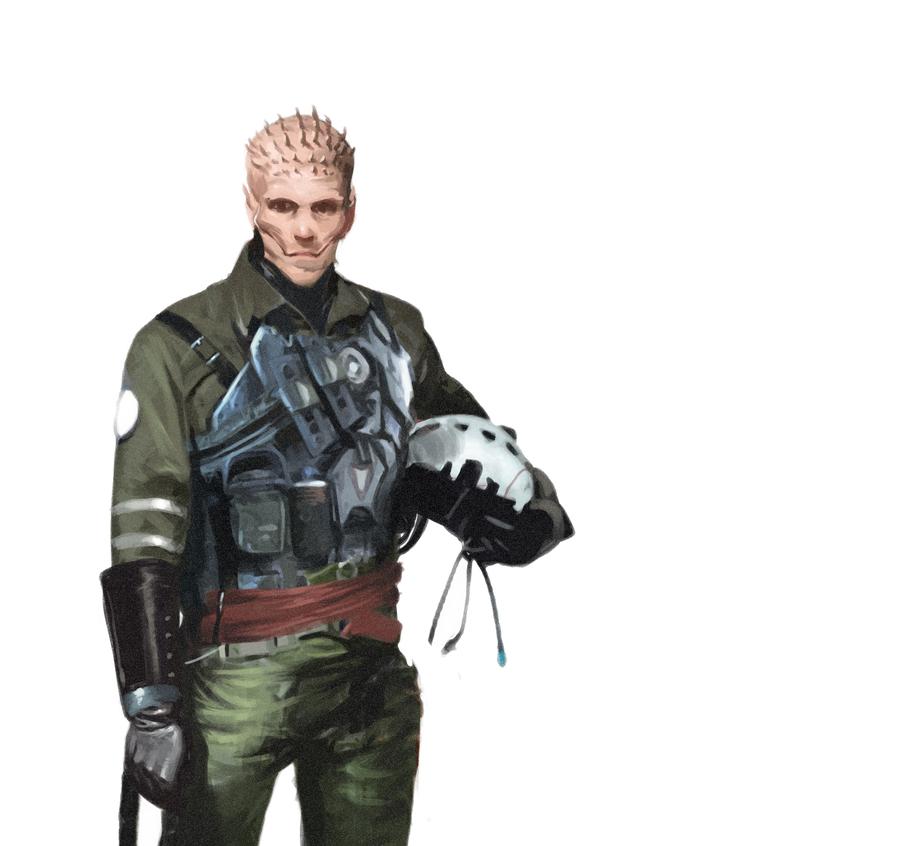
Bactaran Argosy
| MFR | MED | CPU | WEP | PWR | PRP | PHY |
|---|---|---|---|---|---|---|
| 6 | 5 | 5 | 7 | 7 | 7 | 5 |
Base Income: 300 (Crone (ç)) · Base Price: 0.5
Universal Motivations: Achievement, Attachments, Manipulator, Wanderer
Universal Skills: Pilot 1, Influence 1
Species: Bactaran · Languages: Klinoto
There are three major Bactaran militaries relevant to space combat. The largest belongs to the unified Bactaran Republic, which represents all Houses and is primarily meant to serve the interests of the Bactarans as a whole. In addition, the Houses of Punomah and Barohti have their own fleets, which generally protect their own interests. The Argosy has access to better weapons and propulsion technology than the civilization at large.
House of Moti

| MFR | MED | CPU | WEP | PWR | PRP | PHY |
|---|---|---|---|---|---|---|
| 6 | 4 | 4 | 6 | 5 | 7 | 4 |
Base Income: 100 (Crone (ç)) · Base Price: 1
Universal Motivations: Achievement, Attachments, Manipulator, Vengeance
Universal Qualities: Freakish (BOD), Short Fuse, Bad Reputation
Universal Skills: Crafting 2; Melee 1
Species: Bactaran · Languages: Kortona
After their history of violence, the House of Korzof-Moti house is not well-regarded on Bactara. During Korzof’s rule (approximately concurrent with the early 20th century), the Korzof-Moti were his primary army–an army of Bactarans selectively bred to increase physical prowess and fighting instincts, but as an unintended side effect, gained short tempers and other psychological issues. At the time, Korzof maintained control by destroying the lands of the people he controlled, ultimately leading to a massive dust storm that killed hundreds of millions. For generations, the Korzof-Moti are shunned by most Bactaran nations, which is tame compared to what Humans want to do to them following the occupation perpertrated by members of the House of Korzof-Moti. Around the 2080's the house leadership decides to remove "Korzof" from their house name, becoming just the House of Moti as they were before Korzof's reign. Many Moti migrate from their ruined homeland to become mercenaries–the only work that the rest of the world will hire them for. The occupation of Earth–even though most of the Moti were not involved–only worsened their reputation. As a result of this reputation, the House of Moti is a house riddled with famine and poverty. Those that live in the Moti's home nation on Bactara cannot possibly grow enough food there to feed themselves. When the Republic signs a deal with the Humans to mine the Solar asteroid belt, the Moti jump at the chance to get employed as the miners, and there is a mass (though not complete) exodus of Moti from Bactara. By the time the Orion War begins, nearly half of all Moti live and work on Earth's doorstep–and when they learn the origin of these workers, Earth is less than pleased with this development.
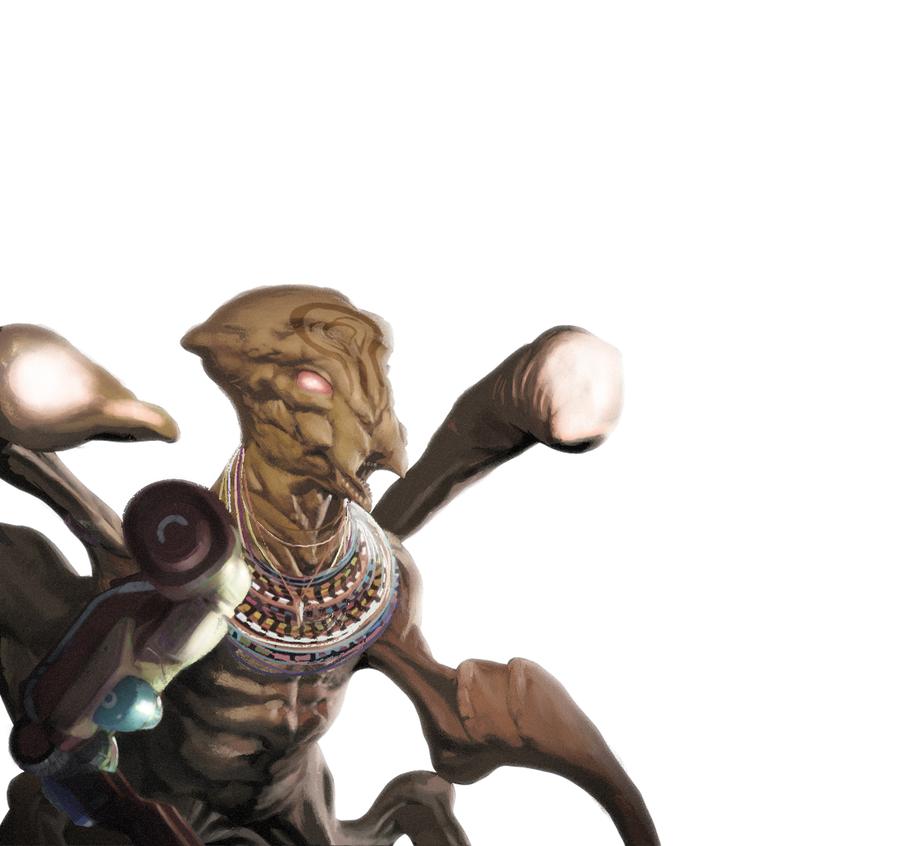
Voran (queens)
| MFR | MED | CPU | WEP | PWR | PRP | PHY |
|---|---|---|---|---|---|---|
| 7 | 7 | 4* | 8 | 6 | 7 | 8 |
Base Income: 500 (Voran Credits (ͽ)) · Base Price: 0.5
Universal Motivations: Achievement, Attachments, Manipulator
Universal Skills: Influence 2
Species: Voran · Languages: Voran Chroma
Vorans are the most technologically advanced of the three major species in most respects. Biologically, their makeup is similar to insects or arachnids, and this shapes the way their society is structured. Queens act as organizers, leaders, and matriarchs, essentially a ruling class.
Tech notes: * Though their Computer TL is only 4, the advanced brains of the queens are capable of detailed computer-like calculation, and can in some scenarios simulate a CPU TL of (INT), which may be superior to their CPU TL.
Voran (drones)
| MFR | MED | CPU | WEP | PWR | PRP | PHY |
|---|---|---|---|---|---|---|
| 7 | 7 | 4 | 8 | 6 | 7 | 8 |
Base Income: 100 (Voran Credits (ͽ)) · Base Price: 1
Universal Motivations: Achievement, Attachments, Broken Will
Universal Skills: Medicine 1
Species: Voran · Languages: Voran Chroma
Though they have the same technology available, the culture of drones among Vorans is unique. Their positions as maintenance of the Queens puts certain requirements on them in terms of skills; specifically, drones are expected to learn skills to serve their Queen.
Voran (M/F)
| MFR | MED | CPU | WEP | PWR | PRP | PHY |
|---|---|---|---|---|---|---|
| 7 | 7 | 4 | 8 | 6 | 7 | 8 |
Base Income: 250 (Voran Credits (ͽ)) · Base Price: 1
Universal Motivations: Achievement, Attachments, Romance
Universal Skills: Influence 1
Species: Voran · Languages: Voran Chroma
After drones, which rarely leave their hive, males and females make up most of Voran Society–so they are the face of Vorans to other species. Females tend to be the more ambitious between the two, as a certain amount of influence is required to earn the ability to mature into a long-lived Queen rather than dying of old age.
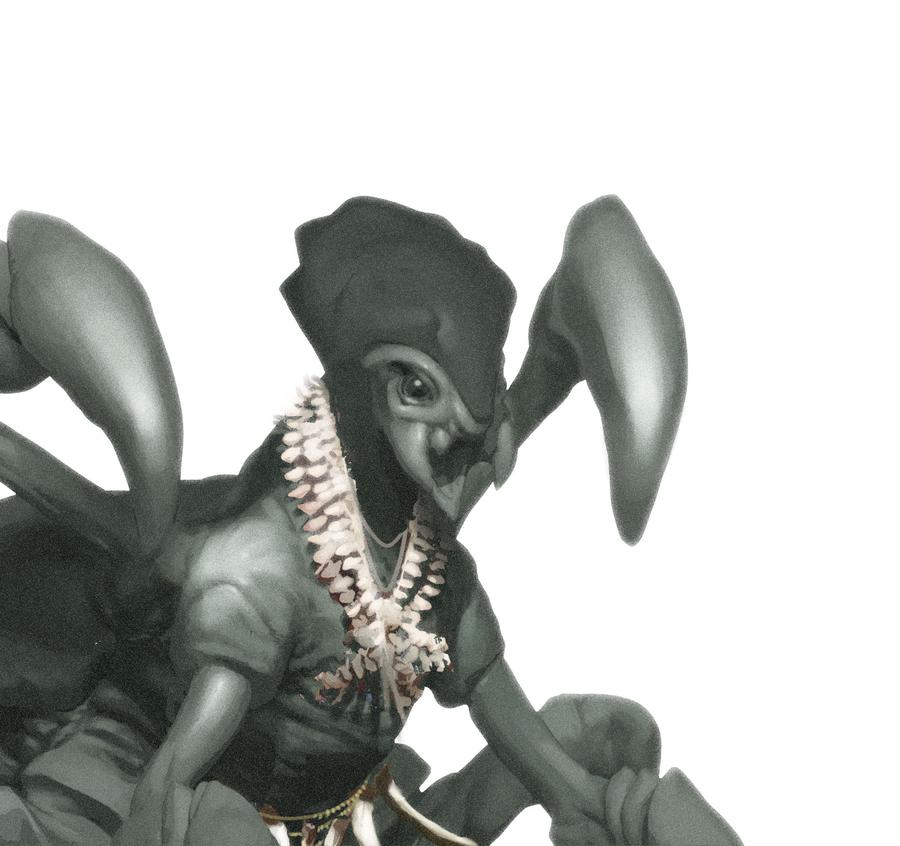
Voran Libertine
| MFR | MED | CPU | WEP | PWR | PRP | PHY |
|---|---|---|---|---|---|---|
| 6 | 7 | 4* | 7 | 6 | 7 | 8 |
Base Income: 100 (Voran Credits (ͽ)) · Base Price: 1.5
Universal Motivations: Achievement, Romance (except drones)
Species: Voran · Languages: Voran Chroma
A minority of Vorans are believers in a new attitude, particularly towards females and sex, as well as a higher degree of independence from the hive structure. Voran Libertines believe that the social dynamics caused by the ability of females to metamorphose into Queens are harmful, and seek to rearrange Voran society in such a way that the three sexes are seen more equally. This philosophy was largely untenable in premodern times, largely due to a veritable army of dependent drones surrounding and supporting every Queen; however, with the advent of synthetic Voran Milk, drones were able to become independent of their Queens, and as a result the social standing of Queens weakened slightly. Despite this, Queens still retain most of the social power in Voran civilization owing largely to their reproductive capacity. Very few Queens are respectful of Libertines, and as a result, they tends to be stricken with poverty, unable to find work and strike deals that other Vorans can. Libertines tend to be much more eager to interact with Humans and Bactarans, who do not hold such animosity, and many of the Vorans emigrating to the Solar System are of this culture.
New Worlds
The Orion Arm
(see the online edition for more information and maps)
The Orion Arm is the name Humans use for the region of the Milky Way we occupy. The Expansion Era is the first time in which Humans put out feelers to the rest of the Arm. Humans gain a reputation for their resourcefulness in this era—they use the Junardms and tech left behind to launch the Sirius Expedition, then leverage the minerals available in the asteroid belt to gain more Junardms to build a fleet.
Although the violent Korzof-Moti (a subspecies of Bactarans) found Earth first, the two major spacefaring civilizations of the Orion Arm—the Bactaran Republic and the Vorans—were usually peaceful and reasonable peoples, more or less. Diplomatic relations between these worlds and the Human newcomers progressed slowly but steadily. There were several diplomatic expeditions to alien worlds during the Expansion Era, most notably the Sirius Expedition in 2070-2071, which established relations with both the Bactaran Republic and the Vorans. The Human consular ships which traveled to Bactara were surreptitiously fitted with advanced scopes, gathering large amounts of data on the star systems they pass through—including, notably, discovering evidence of a second warp bridge in the Bactaran home system that even the Bactarans didn’t know about.
The Bactarans have the most ships spread throughout the Orion Arm; after all, they are the only source of Junardms, required for any interstellar craft. Their own technology is relatively simple—not far past Apollo-era spacecraft, except for some advances in propulsion and weapons tech—and their economy has been slow to recover ever since the destruction wrought by Korzof. Even the first generation of Human frigates with Junardms, the Hammer class, can go toe-to-toe with your average Bactaran vessel, and its successor, the Axe class, can generally outmatch them. That does not stop the Bactaran vessels from outnumbering them ten to one, of course. In stark contrast, the Vorans have incredibly advanced technology of their own accord, but have no access to Junardms except through trade. Voran ships are rare outside the Varhanna system, but formidable.
The Outer Solar System
(see 2065 — Expansion Era for more information)
In the Expansion Era, Humans discover that the Solar system's asteroid belt is unusually rich in natural resources—in most star systems, metals as rich and abundant are few and far between, especially among small bodies where they are easily mined. (While metal exists in huge quantities on many moons and planets, it is costly to get these materials into orbit where they can be made useful.) Humans trade mining rights to specific asteroids to the Bactarans for Junardms, which the Bactarans have in abundance. This deal spurs the Humans' first serious foray into interplanetary travel; the space stations orbiting Ceres and Hyperion are established to facilitate the transfer of mined materials (both to Earth orbit and to the warp bridge orbiting Saturn). Hyperion and other icy Saturnian moons are mined for rocket fuel and oxygen.
On the other side of the law, a cottage industry of space pirates crops up, seeking the refined metals the Bactarans mine in the asteroid belt, as well as the various pieces of advanced technology available in Human, Bactaran, and even occasionally Voran ships. Junardms, fusion ion engines, Bactaran weapons, materials, and reactors are all contraband the pirates will kill for. Pirates will hide anywhere they can, usually among debris and small rocks, with Saturn's ring system being the best hiding place they could ask for.
Redland
(see 2065 — Expansion Era for more information)
Although the world that became Redland was known to exist since the early days of exoplanet hunting, the colonists did not include any astronomers (as the resistance’s astronomers were nearly all killed by the laser attacks just before they launched). Thus, the system was not recognized by the colonists when they emerged from the warp bridge, but the Redland colonists had actually emerged at Gliese 581, and the planet chosen was Gliese 581d, on the outer edge of the star’s habitable zone.
Redland is a planet with slightly higher gravity than Earth, closer to its cool sun. The planet's proximity to the sun causes it to be tidally locked to it, with one side of the planet facing the sun at all times. The entire Redland population lives in a temperate ring around the hot spot of the planet, with the sun hanging in the same place in the sky all the time. There is no night on Redland; or, more accurately, there is no change in the time of day, and night only happens on the parts of the planet which are uninhabitably cold. The temperature differential creates constant gale force winds, constantly blowing from the night side to the hot spot at ground level, and blowing the other direction a few miles above the ground.
The cardinal directions used here are based on the planet's tidal locking. North and South are pretty meaningless on Redland; Redlanders use the directions “clock” and “counter” for going around the rim (as viewed from the sun), and “sunward” and “nightward” to describe going towards or away from the hotspot. A ring around the hotspot approximately 100 miles in width is habitable for Humans. Ultimately, when different states begin to form on Redland in the 22nd century, they all form within this ring, putting each nation in a row around the planet, and no nation borders more than two other countries.
Temperature is not the only factor that influences the habitable area, however. The water cycle on Redland is unusual, thanks to the way the wind blows. Only areas along the habitable ring that have mountains behind them are naturally habitable—the mountains push the winds upward and force moisture to rain down (just like mountains do on any planet), and it is this moisture that provides the rivers that the early colonies depend on. Later colonies develop specialized equipment to harvest ice from the nightward areas, increasing the habitable land area of the planet.
Redland’s infrastructure and architecture are built around these realities, especially the wind and the sun. Most buildings on Redland resemble lean-tos, built to sweep the wind up and away, and none are taller than a few stories high. Underground construction is popular for large population centers.
Between the higher gravity and the wind, it’s extremely difficult to lift off from Redland into orbit, and useful air travel is overly difficult and risky as well (all the winds are crosswinds relative to almost any direction anyone would want to go). Thus, Redland cultures have a specialization in Groundcraft propulsion. Redland cars are heavy, yet efficient; they are sleek and low to the ground to withstand the wind. A rail system is built over the course of the 22nd century, becoming circumglobal in the year 2193.
The Last Ditch (the colony ship) landed on Redland, stayed there for about 2 years while the colony was being built, and ultimately launched in 2068 with a small crew in order to patrol the system—a tidally locked ground colony was practically blind to the rest of the system. Although frozen and lifeless, one of the moons of Travers (a small gas giant on the outskirts of the system) had plenty of frozen water and useful materials in its crust. Rather than repeatedly make the difficult landing and takeoff at Redland, the Last Ditch began taking most of its resources from that moon, which they eventually took to calling Spring. It returned to the colony only twice—first in 2071 (to pick up an efficient strain of oxygen- and food-producing algae) and then in 2083 (for a long-awaited changing of crews)—in its entire lifespan before Second Contact in 2105.
Key Players
M. Luciana Sapatiero (she/her; 2027–2098)
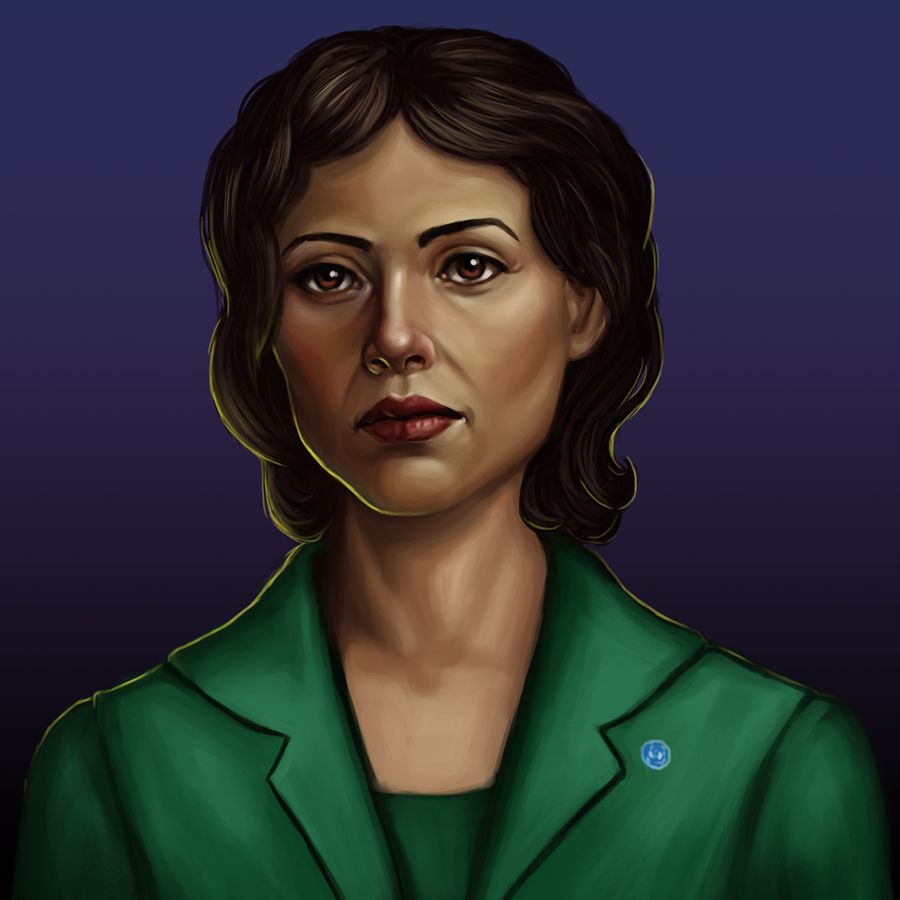
Following her heroics in the final battle of the occupation, Sapatiero became an instrumental figure in the formative years of the ESF. Working closely with Tyson Brooks, Sapateiro led missions to recover parts from orbit following the battle, ultimately salvaging Bactaran and Voran weapons and engines, but most importantly, seven Junardms, the devices which permitted travel through the warp bridges. Over the next 5 years (during the time of the PCEG) the first ESF ships were designed, and the prototypes were launched in 2070, the same year that Sapatiero was elected the first President of the newly formed United Earth Nations.
Sapatiero's administration set as its first priority the retrieval of more alien technology at all costs, and more Junardms in particular. She rightly realized that Earth without Junardms would be defenseless. In this spirit, using navigation data gleaned from the downed ships, she dispatched the Sirius expedition, generally agreed to be the first mission of the ESF, to establish proper first contact with aliens, and to return with a supply of Junardms.
By the time the expedition returned, mankind has reverse-engineered a functional, Human-built fusion ion engine design, and combined with the Junardms returned from the expedition, the ESF began to build a respectable fleet. The first shipment of Junardms came as a gift of contrition from the Bactaran Republic—reparations for the hardships and fatalities endured by Humanity. Following that, Sapatiero and the Bactaran Republic established a trade deal—Junardms for the ESF fleet, in exchange for mining rights to the Solar asteroid belt, beginning in the late 2070's.
After three terms in office, Sapatiero decided not to seek reelection, and retired from the office of UEN President in 2085.
Curt Redland (he/him; 2040–2106)
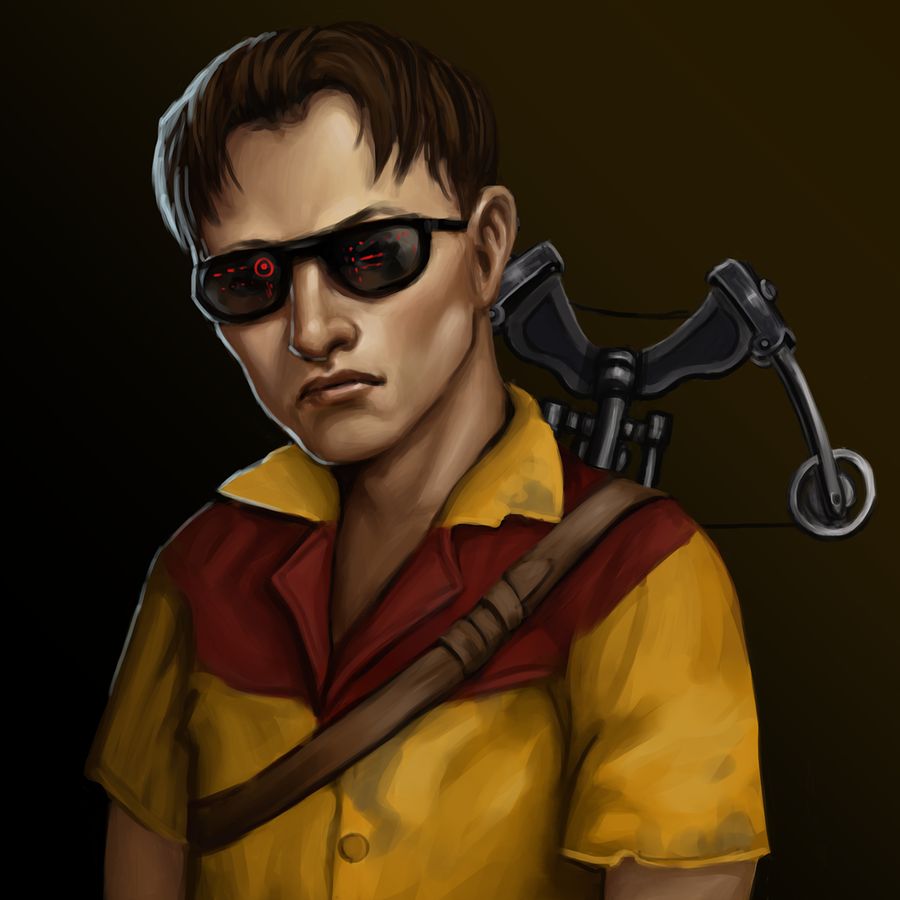
Curt Redland led the settlement ship The Last Ditch to land on the planet that would later be named after him. With his background in the resistance, which grew out of an expertise in organized crime, he ran the new colony in the only way he knew how—as a dictator. Over the decades, as the colony began to grow and Curt's control over it weakened, it began to be controlled primarily by organized crime groups. Curt lives long enough to see the colony reestablish contact with Earth, but not long enough to see the worlds become friends again.
Maxine Wellrose (she/her; 2033–2098)

Maxine Wellrose was a genetic scientist born on Earth in 2033. She excelled in her studies, graduating high school by 15 and earning her first degree in genetics about a month before the Fast War began in 2050. She continued studying during the occupation wherever she could avoid the Bactaran influence. When Curt Redland began searching for vital personnel for his extrasolar colony, the need for a geneticist—someone who could adapt the plant and animal embryos for life on the world they would find—presented itself, and Wellrose stood out as a fine candidate. Wellrose joined the Last Ditch colony ship when it fled Earth at the end of the occupation.
During the early years of the colony she executed her mission with distinction. Her plants and livestock, uniquely well suited to the new world, flourished, making providing food for the colony a minor concern. After several years of research, a consistent crop cycle had been established, and her attentions began to turn to Human engineering, hoping to better adapt the population to this new world. Her first experiments, birthed in 2082, simply removed some obvious genetic weaknesses from the genome of newborn colonists. After a few genetically strong, but still very Human children were born, she began working to add genetic enhancements beyond the existing Human genome.
As the enhanced Humans grew up, they ultimately grew to be resented and hated by the colonists. The colonists, who had previously been driven to pull together to fight a stronger enemy that was not Human, fell into that habit once again. The augmented children and their surrogate parents were driven out of the main settlement and formed a second community in 2092 (at the time, the children ranged from months to 10 years). Wellrose continued her experiments.
Wellrose succombed, ironically enough, to a heriditary respiratory disease in 2098, and over the next few years, one of her apprentices, Roland McCorvey, muscled his way into the leadership of the Wellrose community, positioning himself as Wellrose's successor.
Tyson Brooks (he/him; b. 2031)
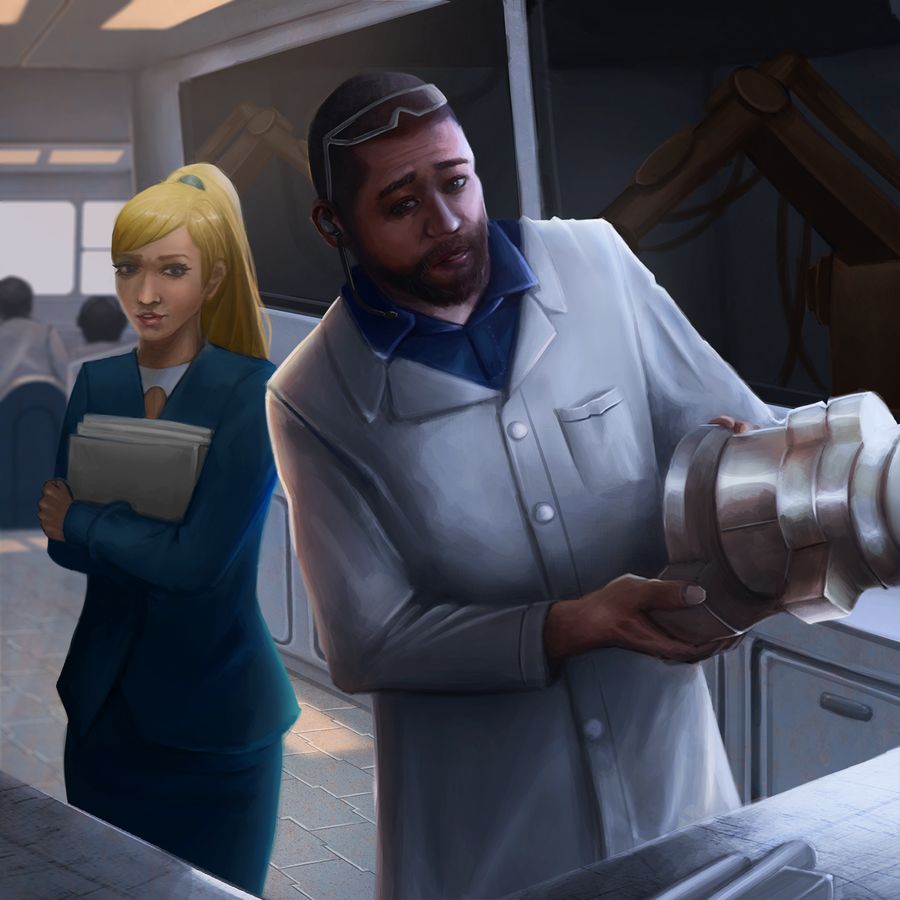
One of the most prominent spaceflight engineers in the world, Tyson Brooks was part of the Resistance in its later years. He was the principal engineer responsible for incorporating Bactaran technologies (especially the Junardms) into Human ships. He was the first head of the research division of the Earth Star Force (ESF), and was responsible for the design and construction of most of the bridge capable ships of the late 21st century.
Xander Alan Day (he/him; 2022–2087)
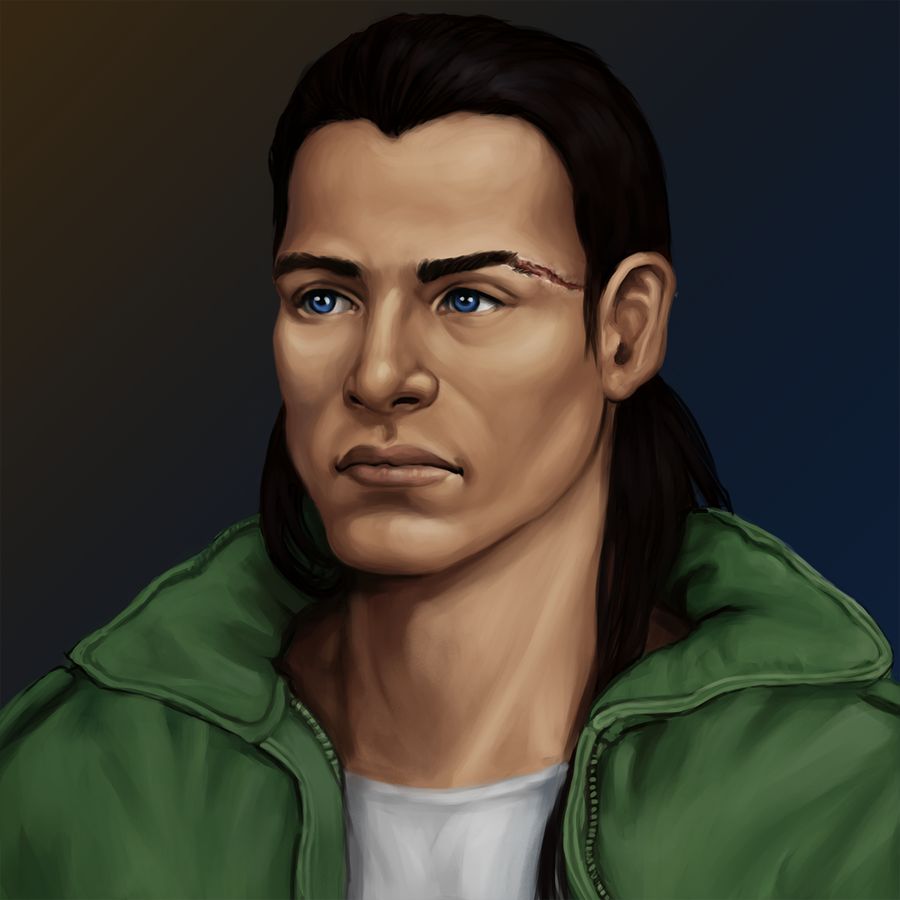
A major leader and fighter of the survivalist resistance during the Occupation, Xander Alan Day chose to lead a calmer life after the defeat of the Bactarans. He became a local leader in the Cascade States region (see 2065 — Expansion Era) of the PCEG largely due to his distrust of the existing leadership, many of which had collaborated with the Bactarans. As the PCEG was formed, the Cascade States (of which Day was a representative) initially planned on being a signatory member, but economic pressure from the tech sector delayed the ratification. Day, wanting to be prepared for the inevitability of another conflict with aliens, secretly began organizing and training a xenophobic spec ops group, the Cascade Brigade.
The Cascade States (now led by Day) never joined with the UEN, not wishing to have anything to do with a government who was making peace with the enemy that had slaughtered so many during the Occupation. The Cascade Brigade began openly serving as the militia of the Cascade States, a key part of their mission being to be prepared for any future alien incursions. Xander served a few more years as governor before retiring, but his influence was long-lasting, and the Cascade States remained an independent nation for generations.
Sample PCs
PCEG Investigator
Separating the righteous from the selfless seemed so easy at first; us versus them, resistance versus collaborators. It's the investigator's job to determine the traitors and their punishment, but with every case, the black and the white seem to keep swirling together until it's a muddy gray mess.
Culture: Earth Public · Species: Human · Homeworld: Earth · XP: 620
Motivations: Achievement [1] Attachments [2] Romance [1] Legacy [2]
Interests: Sleuthing [6] Occupation History [6] Bactaran Propaganda [6] Crime Families [6] Science Fiction Novels [6] Adult Cartoons [6] Police Procedurals [6]
| WIL | INT | PER | CHA | MAN | BEA | BOD | AGI | REA | CTZ |
|---|---|---|---|---|---|---|---|---|---|
| 5 | 5 | 6 | 1 | 4 | 3 | 2 | 2 | 3 | 5 |
Qualities: Enhanced Attribute (PER) [40] Addiction (Media, 3) [-15] Amputee (Left leg) [-15] Freakish [-15] Infirm (2, AGI) [-20]
Skills: Art 1, Computer 4, Crafting 3, Humanities 2, Influence 5, Medicine 1, Science 6, Stealth 4, Tactics 3
Specializations: Chemistry, Forensics
Gear: #N/A
Languages: English
Terraformer
The terraformer believes himself part of Humanity's last hope, the sole surviving colony since the extermination of Earth. With the weight of the world on his shoulders, he carries on, engineering this hostile world to be the best home it can be for the last dregs of Humanity. The rise of organized crime in the colony has complicated his work—it seems that everyone wants this new world to revolve around them, and he's the one who can make it happen.
Culture: Redland Colonists · Species: Human · Homeworld: Earth · XP: 460
Motivations: Achievement [1] Attachments [1] Romance [2] Legacy [2] Environmentalist [1]
Interests: Historical Fiction [6] Fantasy Epics [6] Astronomical Phenomena [5] Extraterrestrial Geology [3] Strategy Games [3] Endangered Species [3]
| WIL | INT | PER | CHA | MAN | BEA | BOD | AGI | REA | CTZ |
|---|---|---|---|---|---|---|---|---|---|
| 7 | 5 | 4 | 2 | 3 | 4 | 2 | 3 | 1 | 5 |
Qualities: Enhanced Attribute (WIL) [40] Hardy (ATM up) [10] Will to Live [5] Freakish [-15] Claustrophobia (3) [-30] Scarred (3) [-6]
Skills: Art 2, Humanities 1, Medicine 2, Pilot 2, Science 8, Survival 5
Specializations: Chemistry, Planetary Science
Gear: #N/A
Languages: English
Exiled Warrior
Once a proud member of the House of Korzof-Moti, the exiled warrior was deeply disturbed to learn of the extent of the Moti's misdeeds on Earth. With many of the Bactaran Houses cutting off economic ties with the Moti, she decided to join the growing numbers of Moti signing up to perform the hard, dangerous work of mining the Solar asteroid belt. But it seems like there's always some trouble cropping up in the belt.
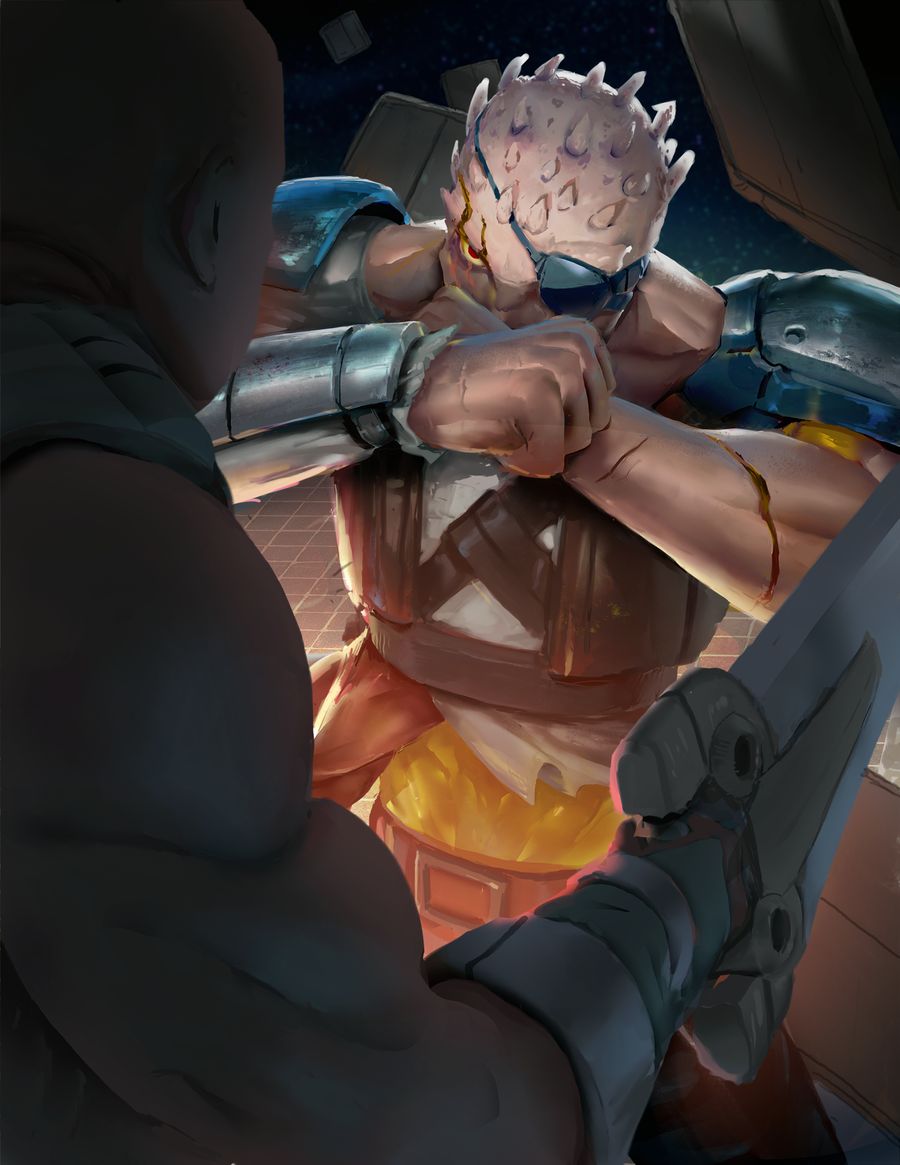
Culture: House of Moti · Species: Bactaran · Homeworld: Bactara · XP: 255
Motivations: Achievement [1] Attachments [2] Manipulator [1] Vengeance [1] Avarice [4]
Interests: Bactaran Sports [6] Interstellar Trade Routes [4] Moti Legends [2]
| WIL | INT | PER | CHA | MAN | BEA | BOD | AGI | REA | CTZ |
|---|---|---|---|---|---|---|---|---|---|
| 5 | 1 | 4 | 0 | 5 | 3 | 6 | 7 | 5 | 2 |
Qualities: Spectroscopic Eyes Brick Wall [10] Will to Live [5] Allergy (Dust, 1) [-5] Freakish (BOD) [-15] Short Fuse (1) [-5] Bad Reputation (1) [-5] Pyrophobia (1) [-5]
Skills: Athletics 2, Crafting 2, Melee 4, Ranged Combat 3
Specializations: Striking
Gear: #N/A
Languages: Kortona
Voran Peacemaker
The peacemaker's first instinct is to bring others together, and this one has made it their purpose to bring together Humans and Bactarans. After helping to negotiate the usage rights in the first place, they decided to roam the belt and arbitrate disputes. But getting their hands dirty becomes a more and more risky proposition as tensions escalate.
Culture: Voran (drones) · Species: Voran (drone) · Homeworld: Voruna · XP: 320
Motivations: Achievement [1] Attachments [1] Broken Will [1] Legacy [3] Promotion (Voran Merchant Corps) [4]
Interests: Interspecies Communications [6] Famous Voran Hives [5] Voran History [2] Human Gender Studies [1]
| WIL | INT | PER | CHA | MAN | BEA | BOD | AGI | REA | CTZ |
|---|---|---|---|---|---|---|---|---|---|
| 4 | 3 | 4 | 6 | 6 | 2 | 6 | 2 | 3 | 5 |
Qualities: First Impression [10] Officer (Operative, Merchant Corps) [25] Nyctophobia (1) [-10] Radiation Sickness (2) [-10]
Skills: Art 1, Computer 1, Crafting 1, Influence 6, Medicine 1, Pilot 1
Specializations: Bargaining, Negotiation
Gear: LIPC [PWR 6] None [0] None [0] None [0] Light Armor [MFR 2] AutoTranslator [5000]
Languages: Northwest
Ship's Doctor
In space, people get hurt. Radiation, exposure to vacuum, and null-gravity sicknesses are all specialties that have yet to be pioneered, and the ship's doctor is in the field, working to gain experience with all of these ailments. She's just doing her part for Humanity.
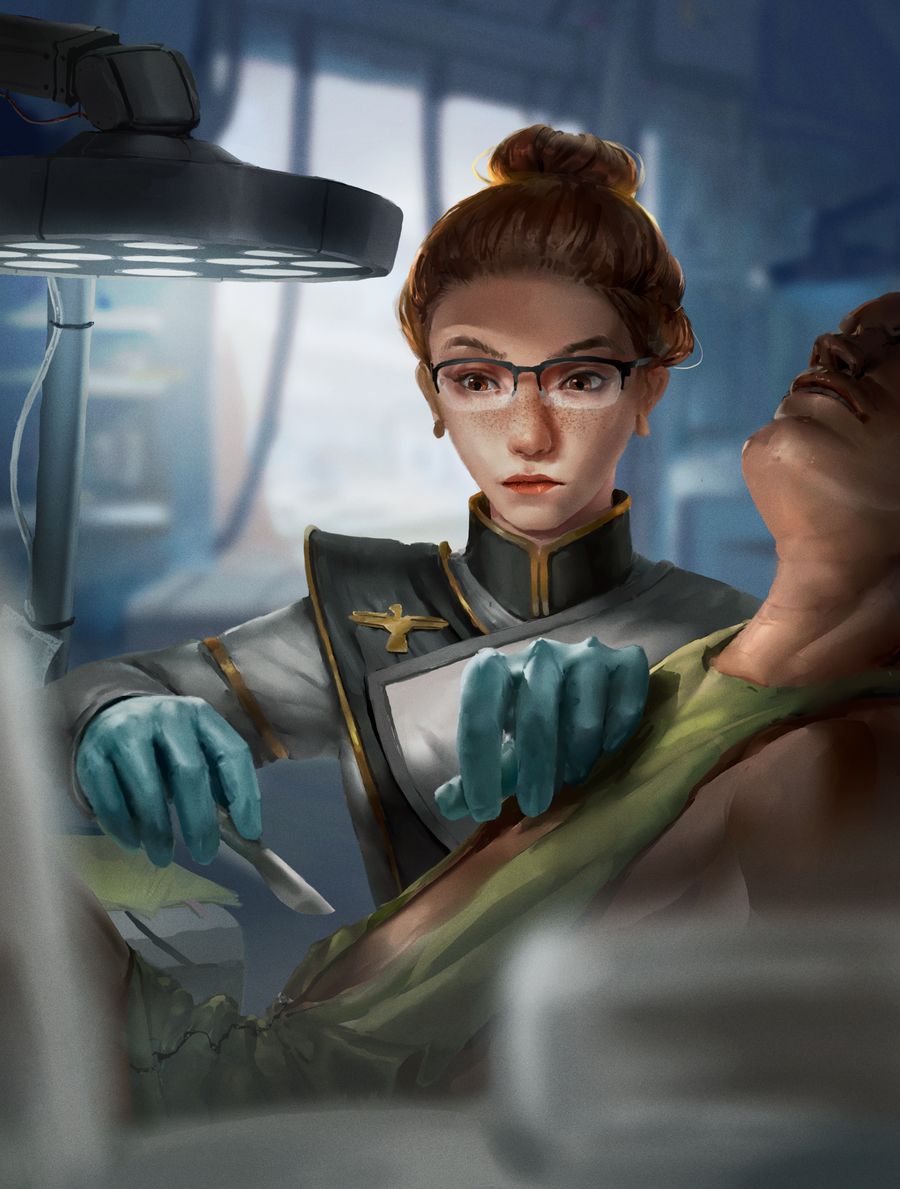
Culture: Stellar Pioneer · Species: Human · Homeworld: Earth · XP: 420
Motivations: Attachments [2] Romance [2] Wanderer [1] Promotion (EGF) [1] Healer [3]
Interests: Medical Dramas [6] Obscure Treatments [6] Alternative Communities Horror Movies [5] Science Trivia [5] Bedside Manner [4] Star Trek [4] Recreational Drugs [4] Herbs [3]
| WIL | INT | PER | CHA | MAN | BEA | BOD | AGI | REA | CTZ |
|---|---|---|---|---|---|---|---|---|---|
| 5 | 6 | 4 | 2 | 3 | 5 | 1 | 2 | 3 | 5 |
Qualities: Officer (Lieutenant, ESF) [15] Low Bone Density (3) [-30] Low Pain Tolerance [-20]
Skills: Computer 2, Humanities 3, Medicine 8, Pilot 2, Science 4, Survival 2
Specializations: Aerospace Medicine
Gear: #N/A
Languages: French
Rookie Engineer
The rookie engineer has little experience with spacecraft, but then, so few people do—especially the kinds of spacecraft that people were flying these days. In some ways, her lack of preconceived notions of the way things are supposed to work actually makes it easier to learn the wholly alien designs of Bactaran engines, so crucial to Humankind's future out here in the black.
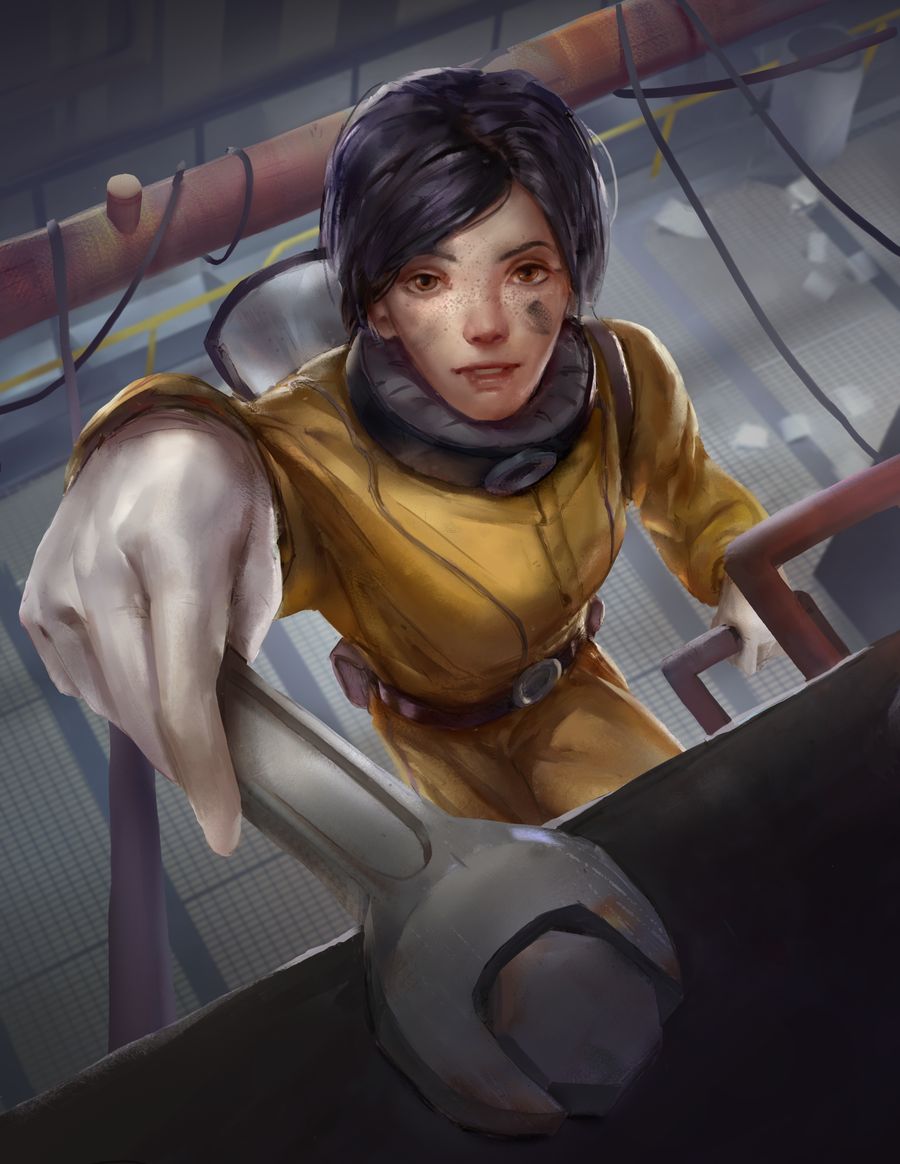
Culture: Stellar Pioneer · Species: Human · Homeworld: Earth · XP: 290
Motivations: Attachments [2] Romance [3] Wanderer [3] Promotion (EGF) [4] Pacifist [3]
Interests: Muscle Cars [6] Cheesy Hacker Movies [5] Star Wars References [4] Tinkerer [4] Moonshine [3] Parades [2]
| WIL | INT | PER | CHA | MAN | BEA | BOD | AGI | REA | CTZ |
|---|---|---|---|---|---|---|---|---|---|
| 3 | 5 | 2 | 5 | 3 | 4 | 1 | 3 | 4 | 6 |
Qualities: Juryrigger [5] Officer (Lieutenant, ESF) [15] Xenophilia (Bactarans) [5] Combat Paralysis [-10] Low Bone Density (3) [-30] Nervous Fidget (Restless Leg) [-5]
Skills: Computer 3, Crafting 6, Pilot 2, Ranged Combat 2, Survival 1
Specializations: Auto Mechanic, Avionics Mechanic
Gear: #N/A
Languages: English