
One Among the Crowd
Cultures
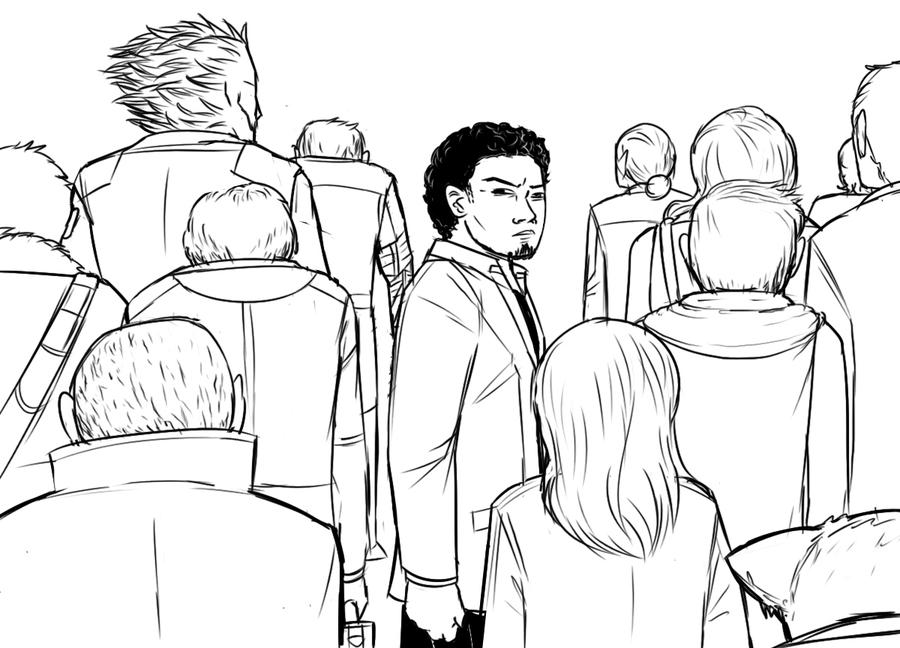
The Culture in which one grows up is formative, as is the Culture one lives in. It shapes our lives, our views, our motivations, and our futures. Every character must have a Culture, although with certain qualities (such as Counterculture), they may be able to ignore some of the aspects of that Culture, at a cost.
Keep in mind that Cultures are not a single, monolithic entity. Just because most of the people in a particular Culture have certain aspects (as described in the Culture’s description) doesn’t mean that all of them do. In addition, only the most common Cultures of a particular era are going to be listed; there simply isn’t room in this book to list every possible Culture. Therefore, it’s expected that gamemasters and players alike will improvise different Cultures.
Which Culture?
It is possible that a character's life could lead to influences from two or more Cultures. For example, the character may have been a Survivalist during the Occupation, joined an expedition as a Stellar Pioneer during the Expansion Era, and finished off his career in the ESF during the Orion War. Your character may use any applicable Culture as his primary Culture, likely whichever one he identifies most strongly with. Be aware, however, that having a different Culture compared to those around you may have a negative impact on your social life (and the dice pools involved therein).
When buying gear, the statistics of one's own Culture are secondary to those of the Culture being purchased from.
Motivations, Qualities, Skills
Each Culture has a certain attitude, and sometimes these attitudes come with expectations. A resident of Redland, for example, is expected to have a Prejudice motivation against any non-Humans. Any character that is a part of a particular Culture must take these skills, qualities, and motivations as a part of their character.
These aspects—Universal Motivations, Qualities, and Skills—are not strictly universal, however. Several qualities, mostly Counterculture, revolve around not taking these when your Culture requires them. Anyone who is known to not conform to the Universals is at a -2 dice pool modifier on all social tests involving other members of that Culture, and is likely to be perceived as not being a “real” member of the Culture.
Base Income
The Base Income of a Culture is essentially a unit of money on which income is predicated. The Base Income is an amount in a particular currency, and this currency is the most common exchange medium for the people in that Culture.
Base Price
The Base Price of a Culture is the price by which all generic item prices get multiplied.
When buying items, use the Base Price for your own Culture, even if you’re buying it from somewhere else. Different Cultures often get goods for different prices, even if they live in the same area. Sometimes this is due to a legitimate difference in quality of goods; sometimes, members of one Culture simply don’t give the good deals to members of another Culture; sometimes, the good deals offered by one Culture are only offered in a neighborhood which other Cultures prefer not to enter; in some cases, the economics of a particular region do not lend themselves to inexpensive goods. For example, the Earth Public Culture in the Occupation era is not likely to sell goods to the Korzof-Moti for reasonable prices.
There are two ways around this. First, you can fake being a member of the Culture in question (see below). Second, you can hire a middleman (or make a friend) who is of the lower priced Culture to make purchases, though they’ll usually take a cut.
Faking Culture
It’s possible, though difficult, to fake being a member of another Culture. This could get you a number of benefits, whether it be a chance to associate with people you normally wouldn’t be able to or getting gear from a Culture that’s cheaper than yours.
Faking a Culture is mostly about faking the motivations, qualities, and skills of that Culture. The character attempting to fake his Culture makes a MAN + Influence (Deception) test opposed by the CHA + PER of anyone from the Culture being faked. He also takes a -2 dice pool modifier for every Universal Motivation, Quality, or Skill that the faked Culture requires that he does not have.
Immersing oneself in the Culture being faked for a long period of time makes it easier. The faking character gets +2 dice after one week in the Culture; +5 dice after one month; or +8 dice after one year.
If the Culture being faked does not include the faker’s species, it’s probably impossible to fake it in person. It may be possible under certain conditions , but these situations are going to be few and far between. If the faker cannot be seen (yelling through a wall or talking online, for example) faking the Culture is possible, at a -4 dice pool modifier, cumulative with all other modifiers.
Subcultures
A Subculture is a group of like minded people, often a group that congregates in a particular place, whether in the real world or the virtual one, or a group that supports a common cause, like militaries. Subcultures may be companies, gangs, volunteer organizations, religions, online message boards, or any other group of people. Subcultures can be used like contacts; posting for help on a network forum about weapons will probably yield useful information. Being a part of a Subculture as a character means that you understand the proper etiquette of that Subculture; you know how to ask for help without looking clueless and worthless; you know how not to draw too much attention to yourself; and you know the “secret handshakes” associated with it. Whether or not you personally know a single member of the Subculture is usually immaterial, although most members of the Subculture will recognize you as “one of them”.
Subcultures have two attributes: Rep and Reach. Rep is usually rated from 1 to 6 (though it can go higher), and represents your reputation in the group, or how well ingrained into the Subculture your character is. At Rep 1, you're an unknown; at Rep 6, you are well-known throughout the community, and other members will go out of their way to win your favor. Reach is usually rated 1 to 6, and represents how much influence the Subculture has over the world. There are some modifiers that can make Reach go above 6. Most Subcultures are specific to a planet or a star system, but a few have wider reach. If two members of the same Subculture are interacting and a social test is required, the difference between their two Rep scores will serve as a social modifier in favor of the higher ranked member.
The XP cost of a Subculture is given by the formula (Reach + Qualities) × Rep, to a minimum value of Rep.
Subcultures can be bought either at character creation or later. To upgrade your Rep within a Subculture, simply pay the difference; this does take time, however, as it generally involves spending time exploring the community and getting to know its denizens. Upgrading the Subculture’s Reach and/or Qualities is usually not possible, although these may change over time with the GM's approval; when they do, the character must pay the XP difference between the values. If he can’t or won’t pay the difference, he may drop his Rep with the group to compensate.
Subcultures can be used to find information or put you in contact with people who are useful. Subcultures have a flipside, however, in that they may lead to a lack of privacy. Anything that is posted on an virtual discussion board, for example, may get logged and searched by the authorities or your enemies. Similarly, if you put out feelers into a large social organization, gossip may come back to haunt you. If someone is searching for information on a character or watching out for him to appear, his use of a particular Subculture during that time adds the Subculture’s Reach as a dice pool modifier to find him.
Subculture Qualities
Anonymity (2)
Due to a peculiarity in the way people interact, nothing said within this Subculture can be tied to any particular person or identity. Using this Subculture does not incur bonuses for anyone searching for the user, and the threshold for detecting an identity imposter via this Subculture is increased by 2.
Black Market (4)
This group knows how to get around the law to get its members what they need. Getting illegal equipment, information, or advice is easier, effectively adding 2 to the Subculture's Reach for this purpose. On the flip side, the authorities will occasionally harass a character that is a part of this Subculture for other members’ crimes.
Local Scope (-2 or -4)
This group is specific to a particular planet (-2) or even a particular region on a planet (-4), and has no noteworthy presence anywhere else. On the plus side, if seeking information relevant to the area and its scope of interest (such as finding a piece of gear for sale locally, for example), the test to find that information will gain a (Reach / 2) bonus for planetary scope, or a (Reach) bonus for sub-planetary scope.
Member Dues (-1 × Level)
This group requires that anyone belonging to it pay a fee. At level 1, the annual fee is equal to the Base Price of the Culture the group is based in multiplied by the group’s Reach; for each level thereafter, the fee doubles. The level of this quality must be at most Reach - 1.
Motivated (-1 × Level)
This group is picky about its members, requiring them all to take a particular motivation at Level.
Time Sink (-2 × Level)
Being a part of this group involves a significant amount of time, at least 10 hours a week per level, being spent on group-related activities. These activities are likely to happen at times inconvenient for the character, and will interfere with any long term activities the character is trying to perform.
Specialty (special)
This Subculture has a particular expertise common among its users. A particular skill Specialization is chosen along with this quality, and the value of the quality is equal to the Specialization's Requisite Level; any person found through this Subculture is overwhelmingly likely to possess this Specialization. When using the Subculture for a purpose helped by this specialization, a character gains +5 dice to find what he is looking for. In order to have a Rep higher than 1 with this Subculture, the character must also have this Specialization.
Military
If a character has taken the Officer quality, the character is a part of a military organization. A military may be governmental or not; the key aspects include a focus on combat and a specified hierarchical structure. A list of militaries is available on Militaries; while this list is not exhaustive, it should provide the most common militaries, and can server as a guide to creating any additional militaries the GM and players would like to improvise.
The Officer quality includes, by default, free XP (in the same amount as the quality) to spend on the Subculture of the military. The military's Subculture is described in its reference section, including the required attributes of the Subculture. The cost of such a Subculture will vary only via modification to the Rep of the character.
Gear in the Military
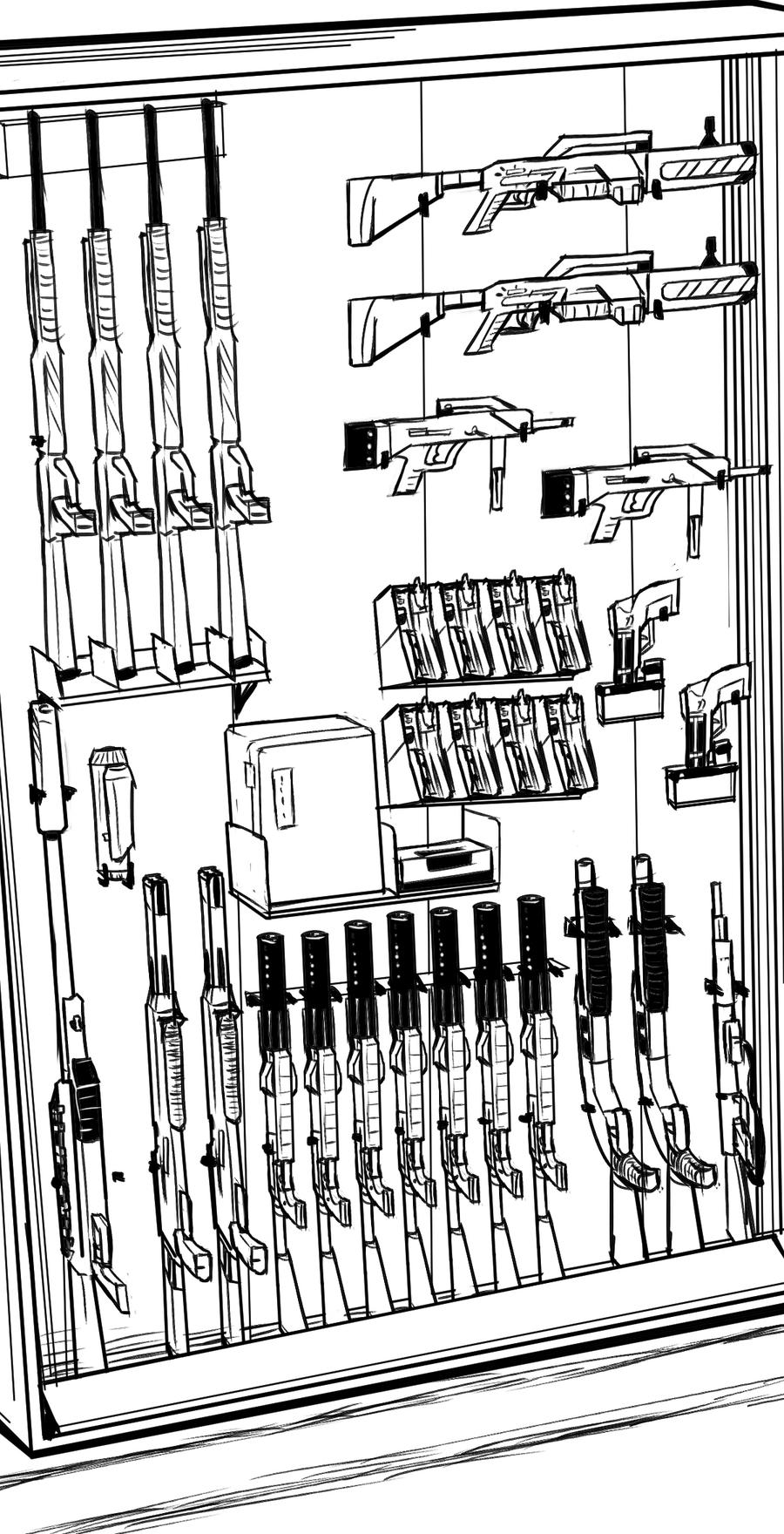
Most militaries provide standard issue gear to its members—items which it provides for use during missions being conducted on the military's behalf. If this standard issue gear is sufficient, the character need not purchase any additional gear at character creation. This comes with a significant caveat, which is that the military typically does not permit this gear to be used for anything other than official business. In addition, the character and player will have no say in what gear is actually provided in this way, and there are often better alternatives available for a price.
Featured Contacts
Contacts are the people your character knows in the world. Most of these will be friends; some will be nemeses. Featured Contacts are fully fleshed out characters, with goals and thoughts of their own; they aren’t simply tools to be used for your own purposes.
Contacts have two attributes associated with them, in addition to Skills and Qualities. The first attribute is Bond, how close you are to this contact and how far each of you will go to maintain that relationship. Keep in mind that Bond works both ways, and a high Bond contact is likely to ask favors of you as well. The second attribute, Favor, serves mostly as a record of who owes whom. Skills are a list of up to three areas of expertise this contact has, which are the same ass the base Skills available to players-with one additional "skill" available to them, Networking, which represents how well connected the contact is and is used for meeting new people through this contact. Each attribute and skill ranks from 1 to 6, except for Favor, which can be positive or negative, and is capped in either direction at one fewer than the contact’s Bond.
The XP cost of a contact is given by the formula (Bond + Favor) × (Sum of all Skills) + Qualities. No contact can be worth less than 5 XP, no matter what negative Qualities he has (except for Enemy).
Contact Attributes
Skills
A contact’s Skills represent the skills he has available "for hire" (not necessarily a complete list of his skills). The contact may have up to three Skills, and each one can be as high as 6 in rating. When using a contact's Skill, the relevant Attribute is generally assumed to be the same as the skill level. No Specializations are allowed.
Favors
The Favor rating of a contact is used to keep track of who has done favors for whom lately. A negative score indicates that the player owes the contact a favor, while a positive score indicates that the contact is the one in debt. Favor is capped, both in the positive and negative directions, at one less than your Bond. For example, if your Bond is 4, then Favor ranges from -3 to 3. If you ask a contact for a favor that would put the Favor rating outside this range, they will generally refuse.
Favors, in general, scale with the quality of the contact. A low level contact might have a Favor satisfied with a nice meal; higher-level contacts will demand more intense favors in return. Most services that are rendered for a fee do not change the Favor value. However, most contacts that owe favors to the player will be more likely to take their calls (unless they have the ‘Deadbeat’ quality, in which case they are more likely to dodge them). Doing favors for long term business contacts early on, and never cashing in on those favors, may be a good way to ensure that one has contacts to call upon in a pinch.
Gamemasters are encouraged to use favors as ways of getting the team into new storylines.
Contact Qualities
Some contacts are really good at getting the good gear; others are really good at getting into trouble. A contact can have up to three Qualities, each of which affects the cost of the contact. Some qualities are attributes of the contact himself, but many of them are attributes of the relationship itself. Blackmailed, for example, only works between a particular player and a particular contact. If another player gains the same contact, the contact will probably not have the same quality.
Black Market Pipeline (2)
This contact is especially good at finding contraband. For all availability tests where the item is Restricted or Forbidden, using this contact adds 4 dice to the test.
Blackmailed (5)
The player character has some kind of dirt on a Blackmailed contact, who as a result has no choice but to perform favors for the player character. While the Blackmailed contact's Favor rating will not decrease with favors done, the contact will be on the lookout for ways to get out from under the PC’s thumb, and if an opportunity presents itself, won’t hesitate to get the PC out of the picture.
Blackmailer (-5)
The Blackmailer contact has some compromising information on the player character. The contact may demand a favor of the player character, and she must make a WIL + CHA (3) test in order to have the option to avoid doing it. Even then, there may be repercussions to the player character. The player gains no Favor for helping this contact if she’s forced to.
Deadbeat (-8)
The Deadbeat contact shirks his personal responsibilities. Anytime he has a responsibility to someone or owes someone a favor, he is likely to vanish; the bigger the favor or responsibility, the higher the chance. When this contact is called, roll a d6; if the number rolled is lower than the current Favor owed by the contact, he will dodge the call. The GM may make the contact unavailable for other responsibilities as well.
Devoted (10)
This contact is absolutely and completely dedicated to the player character, like a parent to a child, or a member of a personality cult. In addition to the cost of the quality, the contact must already be at a Bond of 6, and his Favor rating must be 0 or above. The advantage is that, generally, this contact behaves as though he owes the player many favors, up to and including sacrificing his life for the character. The GM must approve taking this quality on any contact. Generally, only one contact per character may have this quality.
Hurricane (-5)
This contact has a tendency to cause all manner of problems when he comes through, usually destroying property and denying responsibility. This can apply socially as well; when the character shows up, he has a tendency to say the wrong thing and throw a monkey wrench into any delicate negotiations going on.
Jailbird (-2)
A contact with this quality is constantly getting caught and often needs to be bailed out of jail. Each time this happens, the contact will owe the player a favor for it.
Old Chum (-3)
This contact is an old friend that has not been seen in a long time, likely due to distance, but is still friendly with the player character when they meet again.
Phone Tag (-3)
You and this contact tend not to be able to get ahold of each other in a timely fashion, likely due to conflicting schedules. Although they do usually get back to you within a day, it tends to be at inopportune moments for the player character. Actually getting this contact in live communication is nigh impossible.
Uncouth (-4)
Just like the player character quality, the uncouth contact has a tendency to always say the wrong thing at the worst possible time. He’s the kind of guy you don’t want to bring around delicate situations.
Unknown (-3)
You don’t know who this contact is. You’re not sure anyone does. The Bond of an Unknown contact cannot exceed 3, and they may disappear for weeks at a time with no explanation or warning. They use an alias in all their dealings, or more likely many aliases, of which you will be lucky to learn one or two. This quality is popular among bloggers and conspiracy theorists, but a few power brokers have been known to sneak around in the shadows this way.
Well-equipped (4)
This character has a garage, a dojo, a lab, an arsenal of guns, or some other similar asset that helps him with one of his Skills. What this asset is should be chosen with the quality. He gets +3 dice on all tests for his Skills if he’s able to use this asset.
Enemy (Special)
Unlike other contacts, an Enemy actively works against you. An Enemy gives you an XP bonus rather than costing XP; once all the other attributes and qualities of the Contact have been calculated, you gain that amount of XP instead of spending it. A character's Enemy expends a significant amount of effort fighting against the goals of the player character; the "Bond" of an Enemy instead reflects how dedicated the character is to ruining the player character's goals.
An Enemy cannot have any Favor rating, nor the qualities Blackmailed, Blackmailer, Deadbeat, or Devoted.
Generic Contacts & the Social Bank
Any points from the Social Bank not spent on contacts during character creation may be spent in game on Generic Contacts. These contacts are simple, generally one-dimensional characters which the PC knows at an acquaintance level and with no favors. They have a single skill, at maximum one Quality, and can be invented on demand. They may become featured contacts later, or they may be temporary (which will cost fewer points of of the Social Bank). Even temporary generic contacts may be saved by the GM to be used in future stories—if so, a PC may buy them as a permanent Generic Contact or Featured Contact later at the regular Social Bank cost.
To find a new Generic Contact, the player should first determine the desired level of the contact's skill and quality, which added together determine the cost of the contact. The player should also decide at this point whether this will be a permanent or temporary Generic Contact. If this is to be a permanent contact, immediately subtract this cost from the Social Bank and add the contact to the character sheet.
If this is a temporary contact–to be more or less forgotten after the current situation–the player makes a roll to reduce the Social Bank cost. This roll may be based on an Interest– CHA + Interest level–or may be based on a Subculture, in which case the roll is CHA + Subculture's Rep. If neither an Interest or Subculture are relevant to the kind of contact needed, the PC may roll CHA by itself. The GM may apply any other modifiers to this roll he deems fit. After the roll, each hit reduces the cost of the contact by 1 point, to a minimum cost of 1 point; subtract the modified cost from your Social Bank.
Generic contacts do not keep track of favors individually, but do so via the Social Bank instead. If a PC does a favor for any generic contact without being compensated for it, the GM may allow the player to add CHA points to the Social Bank. The same may be true of favors done without compensation for any the player's Subcultures. (But keep in mind that XP earned from the military qualifies as "compensation" in this context, so even if your military is a Subculture, you may not get Social Bank points for following orders–only for doing favors for your fellow officers.) Likewise, a player may spend points from the Social Bank on favors from generic contacts, in the amount of 7 - CHA.
A permanent Generic Contact may be upgraded to a Featured Contact, enabling the addition of more skills and allowing the player to raise the Bond level and/or keep track of favors. This is done simply by paying the cost difference (either in XP or from the Social Bank in any combination).
Languages
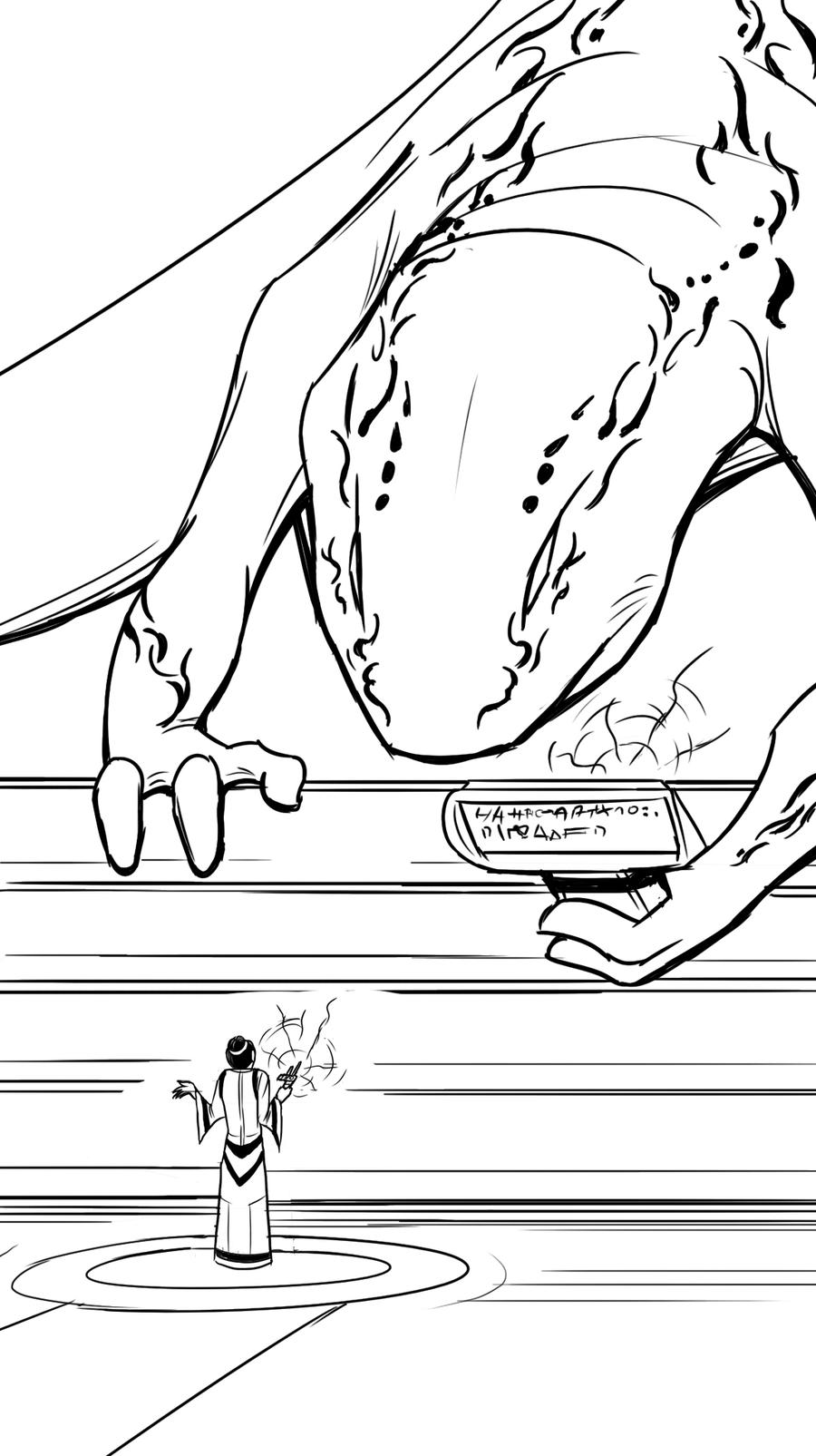
Your character uses the languages she knows to convey information and persuade others. A language is not simply an entity all its own; rather, it is deeply ingrained in the Culture from which it originates. A language has four levels of understanding: World, Family, Language, and Dialect. Each level of the language may be considered a "branch" of the level above it–American is a dialect of English, which is a language in the Germanic family, which is a family based on Earth linguistics.
It is important to note that "World" refers to the world of origin of the language tree; if a colony of Earthlings settles on another planet, that planet's language is still considered to be part of the Earth language "World". On the flip side, isolated colonies will tend to develop their own ways of speaking. As a rule of thumb, a colony will develop its own dialect in 30–100 years (depending on its level of isolation), its own language in 300–1000 years, and its own language family in 2000–5000 years. (Unless all language/speaking skills are completely lost by the civilization at some point, a different language World will never emerge from natural linguistic development.)
Understanding languages closely related to your own is easier than understanding those of a different family or from a different world; and there's usually no problem at all understanding those of a different dialect. When determining whether you can understand someone speaking in a different tongue, the first step is to find what common ground you have. The effects are determined based on that.
When dealing with understanding of different languages, the GM may at any time call for a Language test. In this test, the character rolls INT + PER with a threshold determined by the GM, based on the complexity of the subject matter, and whether or not the speaker is intending to be understood by someone who does not speak the language. This test is subject to all of the GR adjustments described below.
If a character has the Linguistics skill specialization, or if the character has been communicating with the other person for a significant amount of time (the equivalent of working together full-time for at least a week), the GR effects described below are all lessened by 1.
Different dialect: The conversation is more or less carried out as normal; however, the GR of any action dependent on this communication is increased by 2. This GR includes social tests, but also, for example, a separate task that is to be carried out based on the information given in the conversation. In the event of a glitch, it should be treated as if the glitcher misunderstood the other character due to a social or cultural difference they did not anticipate.
Different language: At this point, the conversation is reduced to basic words, simplistic grammar, and often includes a lot of pointing and gesturing; the listener will probably not catch the whole meaning, but with a little luck might be able to figure out a few words based on context and get the gist. All social tests have their dice pools halved, and the GR of any dependent action is increased by 3. In addition, during combat, talking is a Simple Action requiring 1 IP, rather than a free action.
Different language family: Verbal communication between people is practically useless at this stage. However, the two share enough on a cultural or instinctive communication level that, with time and difficulty, very basic concepts can be conveyed. The time required to communicate anything in this scenario is drastically increased (by a factor of 10 or more); communication during combat or anything time sensitive is impossible. The GR of any communication is increased by 4.
Different world: The two characters have no common ground or understanding on which to build any exchange of information. No communication at all is possible unless at least one of the characters learns the World language of the other.
Learning the Lingo
In Afterverse, knowing a language involves four steps, one each for World, Family, Language, and Dialect. Your character can take advantage of the common base between any language he knows and the language he wishes to learn; for example, a native English speaker learning Spanish, for example, requires only that he learn the Language and Dialect. The same character learning to speak Bactaran, however, require that he start from the Bactaran world, and then learn the family, the language, and finally the desired dialect. It is not strictly necessary to learn all the way down to the dialect; a character may only learn the Bactaran world, for example, and will be limited to that level of understanding for any Bactarans he tries to communicate with.
If a character takes the Linguistics specialization, the cost of learning any level of language is reduced. Learning any level of language requires a certain amount of XP (or a different level if the Linguistics specialization is known), and Progress Points, which are gained by using the language or practicing for one day (just as with learning skills). See the online edition for more information on gaining Progress Points.
If attempting to learn a language without the ability to hear or converse with a speaker of the language–if trying to learn a dead language or learn a language simply by reading books in that language, for example–all XP costs are doubled, and the task requires 5 times the normal amount of Progress Points.
| Level | XP Cost | w/ Linguistics | Progress Points |
|---|---|---|---|
| World | 20 | 5 | 2 |
| Family | 20 | 10 | 5 |
| Language | 40 | 30 | 30 |
| Dialect | 15 | 10 | 20 |
Language of the Ancients
Referred to by various names–the Ancients, the Lemurians, the Bridge-builders–little is known about the ancient race that constructed the warp bridge networks, and even less is known of their language. Only with the discovery of the artifacts on Lemuria is deciphering the language is even remotely possible, but even then learners are faced with the difficulty of decoding a dead language. At this stage of history, only one language and dialect (both "Lemurian") of this Language World is known.