
The March of History
Afterverse is a game setting that occupies not just a wide area in space, but also a long swath of time. A single campaign does not necessarily need to be stuck in a single point in time; in fact, many of the most interesting stories are ones told over the course of generations. A single story could begin with a team of scientists in 2042 and run all the way to the Artifact Era and beyond.
A Note on Keeping Time
Even as Humanity leaves Earth, the shadow of our home planet looms large. While many colonies come up with their own time keeping systems based on their own planets' characteristics, most of the people of those colonies who may interact with Earth continue to use Earth's own minutes, hours, days, and years as the basis of their calendar, often as a sort of lingua franca for time. Even on Redland, isolated for two generations, the Earth based calendar remains, though in that case it has more to do with the fact that Redland is tidally locked to its star, and has no days or seasons on which to base its own timekeeping system. An adolescent Martian boy is still referred to as being a teenager, even though he will have only lived through half as many Mars years.
As for other species, their time is tracked using Earth years simply as a convenience for players. Each world has its own time system, and even using terms like "year" may not make sense for some of them—for example, in the Bactaran timekeeping system, the analog for the "month" is the primary unit of time.
Time Skips
The most basic element one can use to this effect is a time skip. The characters simply advance in time. They earn XP and money, and can learn new Skills and make new acquisitions during a time skip. Anytime you skip one year of time or more, use these rules to determine the in-game effects of the time skip. (It’s recommended that players skip time in intervals of 5 years; this makes a number of calculations simpler.)
It’s assumed that the player takes direct control of the character during the critical moments of the character’s life, including the riskiest and most rewarding parts. During a timeskip, there is no real way in terms of gameplay mechanics to get hurt or killed, and likewise your character won’t gain nearly as much XP or money as they do during a game campaign that would've spanned the same length of time.
During a time skip, players should write the intervening years in much the same way as they wrote the character’s backstory when the character was first generated. Work with your GM to create an appropriate story for your character to live out during this time. Motivations may change during a timeskip.
A timeskip is also a good opportunity to replace a character you’ve grown tired of; if you choose to do this, simply create the new character from scratch at the end point of the time skip. If applicable, you may apply any Earned XP from the previous character to a family member of that character (see Bloolines on The March of History for more details).
Salary
It’s presumed that the character will have some sort of income during a time skip. Whether this income takes the form of a 9 to 5 job or randomly occuring spoils of war, this is all abstracted away in terms of game mechanics to a single “Salary” value. To determine the monthly salary of a timeskipping character, use the formula (Experience Score + Profit Score - 2) × Income Base.
Experience Score: Your character's (Total XP - Species Base XP) / 25, rounded down.
Profit Score: The “Profit Score” is either the character’s highest rated Skill, or the Network rating of the contact with the highest total point value, whichever is higher.
Income Base: The Income value of the Culture in which the character is earning a living.
The result of this formula is a monthly salary; multiply it by 12 to turn it into an annual salary. Expenses (your character’s monthly Lifestyle cost) must be subtracted from this, as well. It’s recommended that you calculate these numbers separately (and record their monthly values) so that it’s easier to add and subtract Lifestyle Factors after the fact.
The character can use this money to buy things or simply put it into savings. Note that the Lifestyle Factors (see below) during a time skip can impact both income and expenses during this time.
Just because a salary is presumed to exist doesn’t mean that you shouldn’t give consideration to exactly where your character is working or what they’re working on. Again, treat this career as a part of your character’s new backstory. It’s a chance to add depth and a fresh sense of purpose to your character.
XP Over Time
The character gains XP at a rate of 10 XP per year during a time skip, usually awarded at 5-year intervals. If the time skip’s length is not divisible by 5 years, the remainder of the years are worth 10 XP each, given at the end of the time skip. This value may be modified by Lifestyle Factors during the time skip. This value is added to the character’s Natural XP, not earned XP; it is, of course, also added to the XP Pool (assuming the XP is not spent during the timeskip). This XP affects the character's Salary in the 5-year period following its being awarded.
This XP may be spent upgrading Skills, buying new contacts, and any other XP upgrade you would be able to get in the game. Skill training time applies with the same rules as described in that chapter, although in the case of time skips, this generally only matters for training high level Skills, which can take months or years to learn.
In addition, the gained XP can be used to counteract some of the negative Aging effects.
Aside from the XP, characters get one free Interest level upgrade every year during a timeskip, just as during character creation.
Avoiding Exploitation
It can be tempting for players to exploit timeskips and lifestyle factors to maximize their characters’ XP and cash reserves. Taking any Lifestyle Factors that do not make sense with the character’s personality may be disallowed, at the GM’s discretion.
It’s also possible for a player to choose a lower Lifestyle cost than his financial situation would allow for. If the player wishes to do this, he should be required to make a WIL test each year with a threshold equal to the number of levels of Lifestyle he is living below his means. This test may be avoided if, for example, the character possesses the Miser Motivation (with the catch being that he must now make a WIL test in order to spend any of this saved money on gear).
Lifestyle Factors
Some factors of one’s life during a time skip can have an effect, positive or negative, on both the salary and the XP Over Time of a character during a time skip. Here is a (by no means exhaustive) list of some of the life status factors a character may experience. These factors are sometimes chosen by the player/character, but more often are forced on the character by whatever circumstances are happening at the time of the timeskip.
The modifiers for expenses and income act in units of months per year; a +6 modifier on income means that, every year, your salary is the equivalent of 6 extra months’ worth of your base salary. The XP modifier is a straight addition or subtraction for XP gained every year. “None” is distinct from "0" in that it means that there are no income or expenses at all when that factor is in play; no other modifiers in that category matter.
Corporate Ladder
Income: +2/5yr Expenses: 0 XP: -1/5yr
The character is focused on work for a long period of time; financially rewarding, but soul crushing. The income increase and the XP decrease is cumulative as long as this factor is held; for the first five years, it’s +2 Income and -1 XP per year; for years 6-10, it’s +4 and -2; for years 11-15, it’s +6 and -3; and so on.
Double Life
Income: 0 Expenses: +12 XP: -2
Maintaining two lives is tricky, expensive, and draining. This factor requires the “Double Life” Quality (and if your character has the Quality, he MUST use this factor during a timeskip).
Family Man
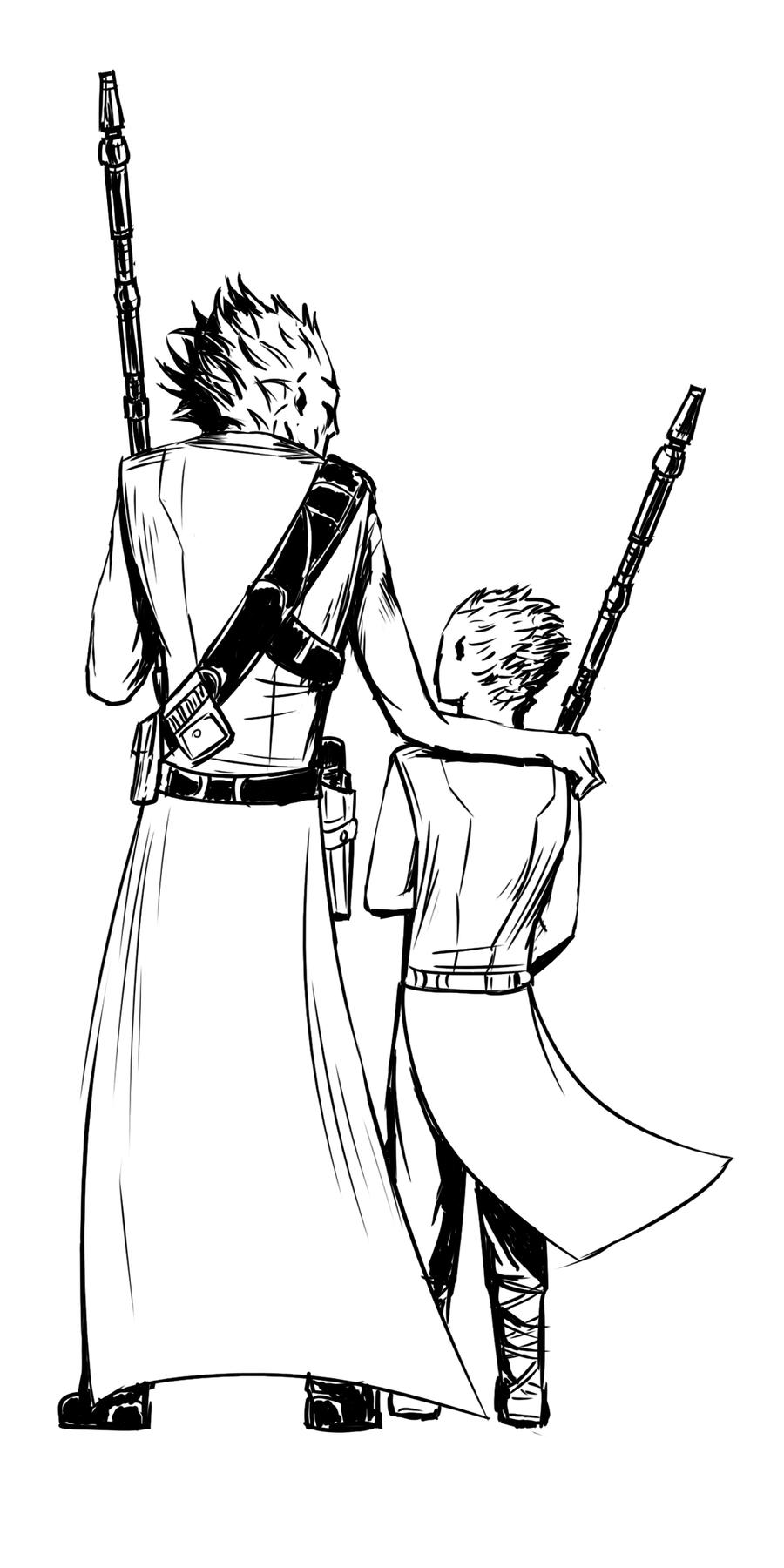
Income: 0 Expenses: +3 XP: +1 Up to 4 times
Being married, having children, and caring for them is expensive and rewarding. Note that marriage and the birth of a child are both major goals in the Romantic and Attachments Motivations respectively, and in this case earn the appropriate amount of XP even during a timeskip. This factor may be taken once for each family member, up to 4 times.
Imprisoned
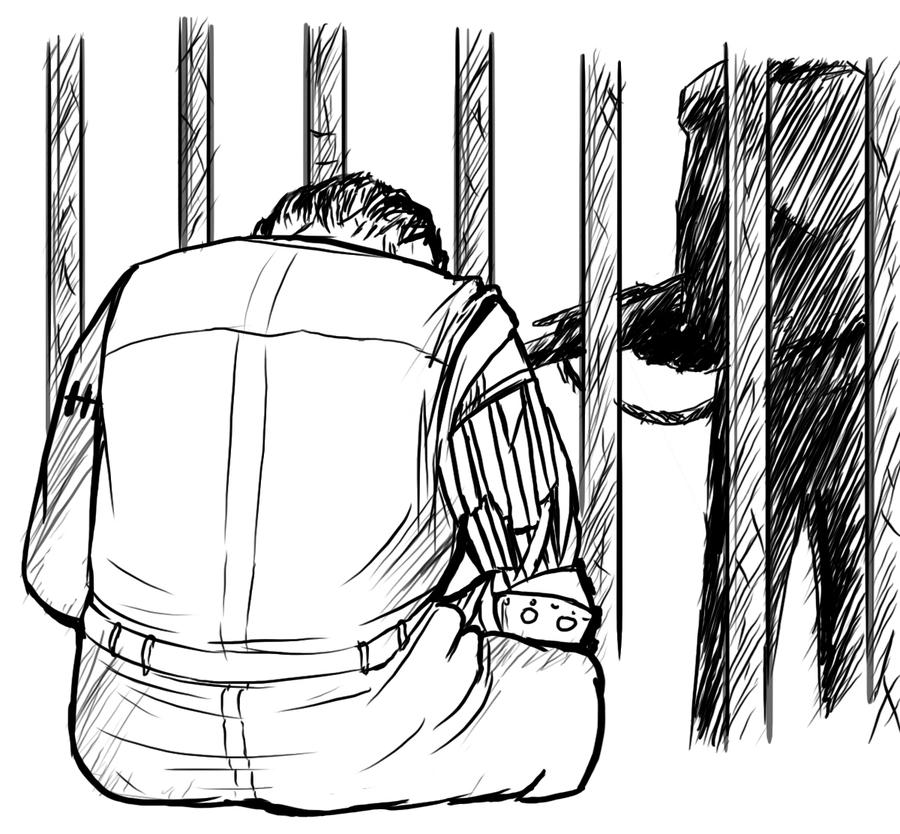
Income: 00 Expenses: -12 XP: +2
A character who is Imprisoned is generally not there by choice, but has been caught and jailed for a crime (whether or not he committed it). In addition to the obvious penalties, a character who is Imprisoned may not father, give birth to, or raise any children, and though XP is earned, there are limitations on which character improvements can be made in prison; most Skills, especially, cannot be improved in prison, if there is no real place to practice them (GM’s discretion).
In Debt
Income: 0 Expenses: +2 XP: 0
If the character’s Expenses exceed his Income to the point where the character has no money (or if he was in debt when the time skip began), the Expenses are increased to reflect the interest on his debts. It’s easy for debts to get out of hand this way. Generally, after this happens, the character will be forced to make some lifestyle changes.
Intensive Training
Income: 0 Expenses: +3 XP: +3
Going into a real-world training montage, this requires a trainer and a location to train, but for every year of intensive training, the character gains a free upgrade of an Active Skill by 2 levels. In some situations, (for example, if they are working for someone who is willing to pay to train them) the expense may be ignored.
On the Lam
Income: -6 Expenses: 0 XP: +2
This factor tends to be forced on the character by the circumstances. A character in this situation is required to hide their identity and often has to move at a moment’s notice, precluding many opportunities to do all that they’re capable of.
Retired
Income: None Expenses: 0 XP: +4
Someone who is retired is simply living off their savings and interest. Their income is no longer based on their Total XP; instead, it is based on interest of whatever they have saved: 5% of their savings per year. They can do what they like, and there are plenty of health benefits.
School
Income: -1 Expenses: +1 XP: +1 Up to 5 times
For every year, the character can upgrade any academic Interest by 2 levels, OR upgrade any one Active Skill by any number of levels for half the normal XP cost. This factor may be taken up to 5 times (representing multiple classes), each affecting a different Skill or Interest.
Stasis
Income: None Expenses: None XP: None
The character is frozen, for whatever reason, and simply ceases to move forward in time. Perhaps he’s cryonically frozen; perhaps he’s moving at relativistic speeds somewhere and stuck in a time dilation field. For whatever reason, time just stops. Make a note of how many years have been passed this way, and take this into account when figuring your character’s biological age. (After a period of stasis, answering the question “how old are you?” in-universe becomes much more complicated; age must still be calculated for purposes of biology, however.)
Walkabout
Income: None Expenses: 0 XP: +10
The character sheds his worldly possessions, and wanders extensively, exploring the world. During a walkabout, no new items may be purchased, and the Bond or Favor of any contacts your character had at the beginning of the walkabout cannot be changed (however, the character may make new, unrelated contacts while on the walkabout). The GM may enforce other restrictions on character advancement during a Walkabout.
Character Aging
Characters age as time skips, earning negative Qualities of the "Aging" type just like at character creation (see Character Creation). Note that this is based on the character's age and species rather than simply the number of years skipped; if skipping a single year causes the player to cross a 5-year threshold in Age, they must take aging Qualities based on that threshold despite skipping only one year.
Death
A character may die during a timeskip. Although each species has a standard life expectancy, character death during a time skip should never be forced as a result of old age (within reason). Players and GMs should decide together what’s best for the character’s ultimate fate once he passes the expected lifespan; consider either replacing the character by the end of the timeskip, or having the elderly character go out in one last hurrah or grand sacrifice at the end of the timeskip.
That said, if a player is determined to continue playing with that character, he should be allowed to. Technology in most eras of the future is advanced far enough that there really isn’t a hard upper age limit, and there are always statistical outliers in terms of longevity. However, an accelerated rate of Old Age effects may be appropriate.
Old Friends and New
Unlike during gameplay, during a timeskip, Featured Contacts (see Gameplay) may be improved by spending XP on them, rather than through roleplaying. To improve a contact, spend the XP difference in cost between their new and old XP costs. Thus, either improving the Bond or buying a point of Favor costs (Skills+Network) XP, and improving either a Skill or their Network value costs (Bond + Favor) XP. Time is also a factor; only one point may be improved in a given contact per year. Contact Qualities generally cannot be changed, although you may ask your GM for an exception if it makes sense for the Quality and that contact; if so, pay the XP cost difference as with the other Attributes, and take one year for each Quality so added or removed. The time restriction is per contact; if you have 3 Featured Contacts, all 3 of them may be improved one point in a year, if you’ve got the XP to do so.
Remember that as you age, your contacts age with you. Old friends grow older and die during timeskips. If a contact with a Bond of at least 3 dies during a timeskip (whether due to old age, as a part of historical events, or simply in their own story), the contact is replaced with a new, free contact; the new contact has a Bond of 1; his Skills must total the same amount as the old contact’s, and the number of points spent on Qualities must be the same. The player character may improve this new contact with XP as normal, if there is more time during the timeskip to do so. The new contact need not have any relationship to the old contact, nor does he necessarily have to provide similar services to the player character that the old contact did.
From Here to There
A time skip might in some cases also be a location skip. If this is the case, make sure that all the players are clear on the time this move takes place, and ensure that the characters are able to make such a transition within the history of the world; for example, although a campaign could follow characters from Earth in 2065 to Redland in 2075 by having the characters be among the Last Ditch colonists, the same characters could not get back to Earth in 2080, because Redland is isolated from Earth at that time. Consult the timeline for each era to determine where migrations are possible.
Prequels and Interquels
As an optional rule for storytelling, a time skip may on occasion run in reverse. It’s recommended that you use a new character sheet if this happens; you’ll want to have a fresh set of stats but will likely wish to keep your older character’s stats on hand in the event the story returns to the present day.
Prequels are delicate in terms of both gameplay and story, and should only be used sparingly. No character that has been seen alive in the future can die, nor be disfigured or hurt in any way that majorly affects behavior that has already been witnessed. Similarly, a character cannot learn Skills or facts in the past that would have majorly affected events in the future. Avoiding plotholes in a prequel is difficult at best. All players should keep this in mind, and it is especially important during a prequel that they not try to “play to win”; but rather, they should try to make their focus understanding the history of the world and their characters better. Players should expect more stringent “railroading” by the GM in these situations; even if it’s not immediately apparent, the GM may be trying to steer the players away from altering history in a huge way.
With all that in mind, should you still decide that a prequel is desired, the setup for it is as follows. These rules only apply to characters that have already been “seen” in the future; if not, then create them just as standard characters, and if they are later seen when you return to the core storyline in the future, use the timeskip rules to advance them to that point.
Building a Character for a Prequel
Start with the same Base XP rules for building a new character at a particular age; if this character was a descendent of another character, he gets the same bonus to this Base XP that he would get otherwise. You should have less XP at this point than when the character was first built.
When you assign these XP to your character, be sure to do so in a way that is an intermediate to what your character will become; no Skill should at this point be raised higher than what it will be in the future, for example. The same applies to Qualities; make sure that any Qualities that have a duration of Lifetime or Hereditary are included. Extra Qualities may be taken, but only if their type is Standard or Temporary (which can be removed later).
Building a Character for an Interquel
For an interquel—a story set in between two established sets of events already depicted—start the character as he was in the most recent depicted time before the interquel, and use the timeskip rules to advance him to the present. The same restrictions as prequels apply—the character may not advance past his future self.
Finally, ensure that the changes you’ve made to your character fit with both the established history of the world and your campaign's story, as well as the backstory of your character.
Featured Contacts
If your character in the future has no Featured Contacts, then you may ignore this section and treat the Social Bank normally.
Make sure that any Featured Contacts that are used from your future self are characters that could be around in the time the prequel or interquel is set; if your arms dealer on Earth in 2110 was born on Redland in 2066, then in the prequel set on Earth in 2084, this character may not play a role because he would necessarily be still on Redland. He may be replaced with a similar character, but ensure that it is plausible for the other character to leave your character’s life before the future time period, as well. Beyond that, your character need not have the same or even similar set of contacts as in the future; it’s always possible to make a completely new set of friends and connections in any given period of time.
If you do have the same contacts, their Network and Favor ratings in the past can be changed in any way. Bond usually doesn’t decrease as time goes on, although it is possible for relationships to sour. Some Contact Qualities can come and go as needed, but pay close attention to Qualities like Unknown—obviously a character cannot be known in the past and Unknown in the future (though the reverse is possible). A contact’s Skills can only increase over time, not decrease, so much like your own Skills, the contact’s Skills must be lower or the same as they are in the future, and higher or the same as they were in the past.
Bloodlines
It’s reasonable that some players may wish to carry on the legacy of their old characters through to the future, and children are the way to do that. For obvious reasons, it’s recommended that birth and most of the time spent raising a child happens during timeskips.
If a player chooses to create a new character that is a descendant of a previous player character, that character can have quite a head start. In addition to the starting XP from the new character’s age, when building the descendant character, add the parent’s Earned XP value to the descendant’s Natural XP value. If both parents are player characters, use the higher of their XP totals.
Note that this transferred XP is not part of the child’s Earned XP, and thus, would not then be transferred to that character’s children. If a new character is created that is a third generation player character, he may be built either as a child of the child, or a grandchild of the first character, whichever gains him more XP. The same is true of any new character that has multiple existing character relations.
A character cannot have children after he has reached Old Age; also keep in mind that the child character must be older than Puberty in order to be playable. However, if your GM approves it, you may introduced a previously unknown child even if your character had not chosen to have children before; for example, perhaps a child of a former lover may come to find his biological father, or a character's genetic material was stolen from her and used as the base for a genetically modified clone. In this case, use the “Blood Relation Only” rules.
Although this situation most often applies to a player replacing an aging character with a younger family member as time marches on, it need not be. For example, a new player joining an existing campaign may join as the son, younger sister, or even parent of an existing player character, while the other player continues to play that character. This could be a way to introduce new players to a long-running, high level campaign without the new player starting with a comparatively weak character.
This is not carte blanche to start a brand new high-level character with complete freedom, however. The restrictions are as follows.
Species
Cross-breeding with aliens is not possible in Afterverse. Genetics simply don’t work that way. Definitionally, only two members of the same species can produce viable offspring, and obviously aliens evolved on different worlds are not the same species (and are often of a different class of creature entirely, and even different kingdoms). Having children of a different species from the parent is possible only through adoption.
Attributes
Arranging a child's Attributes is dependent on the parents' arrangements, and has a bit of flexibility. In any case, the end result must conform to the same base numbers as in character creation: 6, 5, 5, 4, 4, 3, 3, 2, 2, 1, with an optional extra 1 if the species has a special Attribute.
If using two characters as parents: Attribute values are chosen freely, but each Attribute must fall in between the two parents' values of that Attribute (inclusive).
If using a single character as a parent: Simply copy the Attribute priorities directly. Once this is done, the player may rearrange the order, but no Attribute may be more than one number value away from where it started.
If no known character is a biological parent: The character's Attributes are chosen freely.
Skills
Most of the Skills the child character chooses will be of his own choosing, but parents are driven to teach their children what they know, at least until the child leaves the nest. Each parent contributes any 1 from their top 3 Skills, and the child must take those Skills at the same levels (up to a maximum of 6) from each parent, paying the requisite XP cost. If one parent does not have a well defined Skill set, and one cannot be improvised by the GM, then the main parent contributes 2 of her top 4 Skills.
The child is free to upgrade those Skills further, and may buy any available additional Skills beyond those.
Qualities
The transference of Qualities is a much more subjective measure, and subject to few hard requirements. Unless a Quality is explicitly stated to be hereditary, the child character is free to take or not take any Qualities the player sees fit. Children must take any Hereditary Qualities that both their parents have, and may not take Hereditary Qualities that neither parent has. Hereditary Qualities possessed by only one parent may be taken or not; whether this is subject to random chance or a choice of the player is at the GM’s discretion. One exception to this rule: the Genetically Modified Quality is always passed on (even if none of the Genetic Qualities are).
Featured Contacts & Social Bank
There are no restrictions on contacts for descendants. The new character gets a social bank based on the their own CHA Attribute as usual and may buy Featured Contacts with this bank. The parent might introduce their children to their contacts as old family friends; such contacts are likely to be higher loyalty than most contacts. Remember, too, that contacts age with everyone else, and the parent’s friends won’t be around for all of the child’s life. But the new character need not take any of these contacts.
If the parent(s) of the child are still alive, they may be treated as free Featured Contact(s) with a Bond of 6, unless the child’s backstory would prohibit such a strong Bond (at the GM’s discretion, they may either be available for a lower Bond rating, or might not be available at all.) Parent contacts will always have the Devoted Quality; other Qualities and Attributes of the contact will be determined by the GM to approximate the character being represented.
Genetic Modifications
Genetic Qualities that parents have may be passed along to their children just like hereditary Qualities; follow those rules for such modifications. All genetic modifications that the parents had from birth contribute to this, as well as any retroviral modifications that the parents had prior to conception. The child must take the Genetically Modified Quality if either parent has this Quality, even if no Genetic Qualities are inherited.
If the parents have their child genetically modified in utero—adding a new hereditary Genetic Quality that they themselves did not have—then the parents must pay the monetary cost of this modification, while the child buys the modification with XP as would be normal during character creation, along with the Genetically Modified Quality.
Special Rules: Young Children
Most of the rules in this chapter apply to player characters, which means that these are only valid after puberty. If Attributes are needed for a juvenile child (say, if a player character's 10-year-old child is involved in the story as an NPC), then use one of the parents' Attributes as a base (or both, if you want; see Attributes, above), and halve its values.
Skills should be provided based on the Skills section, above; however, the child may not be fully taught these Skills yet, and the GM should reduce the Skill levels to what he deems appropriate. Skills for an NPC under the Puberty age are capped at 4 (unless the child has the Prodigy Quality).
Most Qualities will be present from birth, but not all of them will make sense for a child; the GM may rule Qualities as she deems appropriate.
Gear
A parent may pass on one piece of gear from each class (one weapon, one vehicle, one piece of armor, etc) at no cost to the child. If two player characters are parents, this limit is per child, rather than per parent. Any additional inheritance must be paid for at character creation as normal.
Other Relatives
Relatives other than children follow similar rules for the most part.
Siblings
A character’s sibling is treated the same as a child, except that Skills are not transferred.
Parents
If you need to create a parent of an existing character, the parent should have the full Total XP value of the child as his bonus. The parent will have contributed some Skills to the child, and so should take at least one of the child’s Skills, probably at a higher level than the child.
Blood Relation Only
If a character is a blood relation but had no upbringing in common with the previous character, use the same rules you would otherwise use, except that there are no restrictions on Skill transferrance, and reduce the XP bonus by half. For example, if a PC fathers a son who was raised by his single mother, that son only gets 50% of the father’s Earned XP.
Adoption/surrogates
If a child has no blood relation to the player character that raised him, reduce the XP bonus he would otherwise gain from that parent by half. However, there are no restrictions for Attributes, hereditary Qualities, or even Species.
If the child character has one biological parent as a PC and another PC as the adoptive parent, then the child may get both bonuses, and apply the appropriate restrictions from both relations.
Prized Pupil
It’s possible that a teacher, instructor, or sensei could develop such a close relationship with a student of his that he may perceive this student more like a child than a mere pupil. This should be treated the same as adoption—half the XP bonus, no restrictions on Hereditary Qualities or Attributes.
Grandchildren
Grandchildren follow the same rules as children, except that they receive only 50% of the grandparent’s Earned XP as an XP bonus; they may change their Attributes by two points rather than only one (average the Attributes of all known grandparents when making this calculation); and they are only required to take 1 of each known grandparents’ top Skills.
Multiple Relations
If more than one relation is an established character with stats, use the whichever variation of these rules applies to the closest relation in this order; parent, child, adopted/surrogate parent/child, sibling, grandparent, biological aunt/uncle, cousin. More distant relations may be improvised by the GM. Regardless of which relation is used to determine the restrictions, the player gets the highest possible XP bonus of any single relation unless otherwise stated.
For example, if a new character is a grandchild of a character with 200 Earned XP, and a child of a character with 50 Earned XP, the character should use the restrictions (Attributes, Qualities, etc) of the immediate parent, but gets the XP bonus from the grandparent (which would give 50% of 200 XP, or 100 XP).